


Yahoo Finance and Seeking Alpha are two of the most widely used stock research platforms, each serving different investor needs. Yahoo Finance offers free, comprehensive market data and real-time quotes with a clean interface, making it ideal for casual investors and quick reference checks. Seeking Alpha provides crowdsourced analysis, premium research reports, and detailed earnings call transcripts, catering to investors who want deeper commentary and diverse perspectives. The choice between them depends on whether you prioritize free, straightforward data or are willing to pay for community-driven insights and editorial content.
Key Takeaways
- Yahoo Finance provides free real-time quotes, charts, and financial data for over 40,000 securities with no subscription required
- Seeking Alpha charges $29.99/month for Premium and $39.99/month for Premium+ to access analyst articles, stock ratings, and full earnings transcripts
- Yahoo Finance excels at quick data lookups and portfolio tracking, while Seeking Alpha specializes in long-form analysis and investor commentary
- Seeking Alpha publishes over 10,000 articles monthly from 17,000+ contributors, offering diverse viewpoints not available on Yahoo Finance
- Both platforms can be used together—Yahoo Finance for data verification and Seeking Alpha for qualitative research and thesis development
Table of Contents
- Platform Overview
- Data Coverage and Quality
- Research Features Comparison
- Pricing Structure
- User Interface and Experience
- Analysis Tools and Screeners
- Mobile Apps Comparison
- Which Platform Should You Choose?
- Frequently Asked Questions
- Conclusion
Platform Overview
Yahoo Finance launched in 1997 as a free financial data portal and has grown into one of the most-visited investment websites globally, with over 100 million monthly users. The platform aggregates data from exchanges, news services, and financial databases, presenting it in an accessible format without requiring payment. Yahoo Finance focuses on being a comprehensive reference tool rather than an analysis platform.
Seeking Alpha started in 2004 as a crowdsourced investment research platform where individual investors and independent analysts publish stock analysis articles. The site now features contributions from over 17,000 writers and serves more than 15 million monthly users. Unlike Yahoo Finance's data-centric approach, Seeking Alpha emphasizes qualitative research, thesis-driven articles, and community debate around investment ideas.
The fundamental difference: Yahoo Finance is a financial data provider that happens to include some news and commentary, while Seeking Alpha is an investment analysis platform that includes data to support its articles. This distinction shapes everything from their business models to their typical user base.
Crowdsourced Research: Investment analysis created by a distributed network of individual contributors rather than a centralized team of employed analysts. This approach provides diverse perspectives but requires readers to evaluate author credibility independently.
Data Coverage and Quality
Yahoo Finance provides real-time quotes for U.S. exchanges (with a 15-minute delay for NASDAQ if not logged in), international markets, cryptocurrencies, futures, and forex. The platform covers over 40,000 publicly traded securities and includes historical data going back 30+ years for most major stocks. Financial statements are available for the past five years, sourced from official SEC filings.
Seeking Alpha covers approximately 11,000 stocks with detailed analyst coverage, focusing primarily on U.S. equities and larger international companies. While basic price data is available for more securities, the platform's research content concentrates on companies that generate sufficient investor interest. Financial data on Seeking Alpha comes from third-party providers and typically matches what you'd find on Yahoo Finance, since both draw from similar sources.
Data TypeYahoo FinanceSeeking AlphaReal-time quotesYes (free)Yes (free)Securities covered40,000+11,000 with analysisHistorical data range30+ years10+ years typicalFinancial statements5 years, standardized5 years, with commentaryInternational coverageExtensive (100+ exchanges)Limited (major markets)Earnings transcriptsNot availableFull transcripts (Premium)
For data accuracy, both platforms are reliable since they source from official feeds. Yahoo Finance has an edge for international stocks and alternative assets like cryptocurrency. Seeking Alpha's advantage is in earnings call transcripts—Premium subscribers get access to full, searchable transcripts within hours of calls ending, which Yahoo Finance doesn't offer at all.
What Research Features Do These Platforms Offer?
Yahoo Finance's research features center on news aggregation and basic analyst consensus data. The platform displays average price targets from Wall Street analysts, consensus ratings (buy/hold/sell), and recent analyst actions. News feeds pull from Reuters, Bloomberg, PR Newswire, and other sources, giving you a chronological stream of company-specific developments. Yahoo Finance doesn't produce original research content.
Seeking Alpha publishes 300-400 original articles daily across multiple categories: earnings analysis, dividend coverage, macro commentary, and specific investment theses. Each article includes an author rating system (bullish, bearish, neutral) and a comment section where readers debate the thesis. Premium subscribers access Seeking Alpha's proprietary Quant Ratings, which score stocks from 1-5 across profitability, growth, momentum, and valuation factors.
The research philosophies differ fundamentally. Yahoo Finance assumes you want raw data to form your own conclusions. Seeking Alpha assumes you want to read multiple perspectives and then synthesize your view. If you value seeing how other investors think through their analysis, Seeking Alpha provides that; if you prefer to work directly with numbers, Yahoo Finance keeps opinions out of your way.
Yahoo Finance Research Advantages
- Unbiased news aggregation from multiple sources
- Clean presentation of consensus analyst data
- No subscription required for any research features
- Quick access to technical charts and statistics
Seeking Alpha Research Advantages
- Detailed, thesis-driven investment analysis
- Diverse perspectives from 17,000+ contributors
- Complete earnings call transcripts (Premium)
- Proprietary quantitative stock ratings
- Author tracking to follow analysts you trust
Pricing Structure
Yahoo Finance operates on an advertising-supported model with all core features available free. There's no premium tier, no paywalls on data, and no limit to how many stocks you can track or research. Revenue comes from display ads, sponsored content labeled as "partner insights," and referral fees when users click through to brokers.
Seeking Alpha uses a freemium model. Basic access is free but limited to 5-10 articles per month (depending on registration status) and excludes premium features. Premium costs $29.99/month ($239/year if paid annually) and includes unlimited article access, stock ratings, real-time alerts, and basic earnings transcripts. Premium+ costs $39.99/month ($299/year annually) and adds full earnings transcripts, short interest data, insider trading alerts, and priority customer support.
FeatureYahoo Finance (Free)Seeking Alpha FreeSeeking Alpha PremiumMonthly cost$0$0$29.99Article accessAll news articles5-10/monthUnlimitedStock ratingsAnalyst consensusNot includedQuant Ratings includedPrice alertsYesLimitedAdvanced alertsEarnings transcriptsNoNoFull transcriptsAdsYesYesMinimal
The value calculation depends on your research intensity. If you read 20+ investment analysis articles monthly, Seeking Alpha Premium at $30/month translates to roughly $1.50 per article, which can be worthwhile if the analysis influences better decisions. For casual investors who check stocks weekly, Yahoo Finance's free tier likely provides sufficient information.
User Interface and Experience
Yahoo Finance uses a portal-style layout with the stock quote bar prominently at the top, followed by market indices, trending tickers, and news. Individual stock pages organize information into tabs: Summary, Chart, Conversations, Statistics, Historical Data, Profile, Financials, Analysis, Options, and Holders. The interface prioritizes quick access to specific data points over guided workflows.
Seeking Alpha structures stock pages around the "content feed" concept. When you visit a stock page, you see recent articles about that company first, followed by earnings transcripts, news, and data tabs. The interface encourages reading and discussion—each article page includes comments that often rival the article in length. Navigation emphasizes discovery of new analysis rather than quick data lookup.
Yahoo Finance feels utilitarian. You can scan a full income statement in seconds, pull up a 10-year chart, and check options chains without scrolling through commentary. Seeking Alpha feels editorial. The platform wants you to slow down, read perspectives, and engage with ideas. Neither approach is better; they serve different research styles.
One practical consideration: Yahoo Finance loads faster and works better on slower internet connections because it serves primarily text and simple charts. Seeking Alpha pages with dozens of comments and embedded charts can be slower, particularly on mobile devices or older computers.
Analysis Tools and Screeners
Yahoo Finance offers a stock screener with approximately 100 filter criteria covering market cap, valuation ratios, growth rates, technical indicators, and fundamental metrics. You can save custom screens but can't share them with other users. The screener returns up to 250 results and allows sorting by any column. It's functional but not particularly sophisticated compared to dedicated screening platforms.
Seeking Alpha's stock screener (Premium feature) includes about 150 filter options and adds sector-specific filters for industries like REITs and utilities. The platform also offers pre-built screens created by contributors, like "Dividend Aristocrats under 20 P/E" or "High-momentum small caps." Results integrate directly with Seeking Alpha's Quant Ratings, letting you see how each stock scores on the platform's proprietary factors.
Neither platform offers advanced charting tools comparable to TradingView or thinkorswim. Yahoo Finance provides basic technical indicators (moving averages, Bollinger Bands, RSI, MACD) overlaid on price charts. Seeking Alpha includes similar basic charting but with less customization. Serious technical traders typically use specialized platforms for charting and rely on Yahoo Finance or Seeking Alpha for fundamental data.
For portfolio tracking, Yahoo Finance lets you create unlimited watchlists and model portfolios, manually entering purchase prices and quantities to track performance. Seeking Alpha Premium offers similar functionality with the addition of dividend tracking and portfolio alerts when articles are published about your holdings. If you want automatic portfolio syncing with your brokerage, you'd need to explore dedicated portfolio tracking tools that offer real-time integration.
Quant Ratings: Quantitative stock scores generated by algorithms that analyze financial metrics and compare them to peers. Seeking Alpha's Quant Ratings score stocks from 1 (strong sell) to 5 (strong buy) across multiple factors like growth, profitability, and momentum.
Mobile Apps Comparison
Yahoo Finance's mobile app mirrors the desktop experience with tabs for Watchlists, Markets, and Search. The app loads quickly, works offline for cached watchlists, and sends push notifications for price alerts and breaking news. The interface is clean but sometimes cluttered with sponsored content tiles. The app is free with no premium tier.
Seeking Alpha's mobile app focuses on article consumption, presenting a personalized feed of analysis based on stocks you follow. Premium subscribers can download articles for offline reading—useful for research during commutes or travel. The app includes all the discussion threads from the desktop version, though typing long comments on mobile is awkward. Performance can be sluggish when loading comment-heavy articles.
Both apps cover the basics adequately. Yahoo Finance's mobile app works better for quick price checks and watchlist monitoring. Seeking Alpha's mobile app suits investors who want to read analysis during downtime but isn't ideal for detailed research requiring multiple data points open simultaneously.
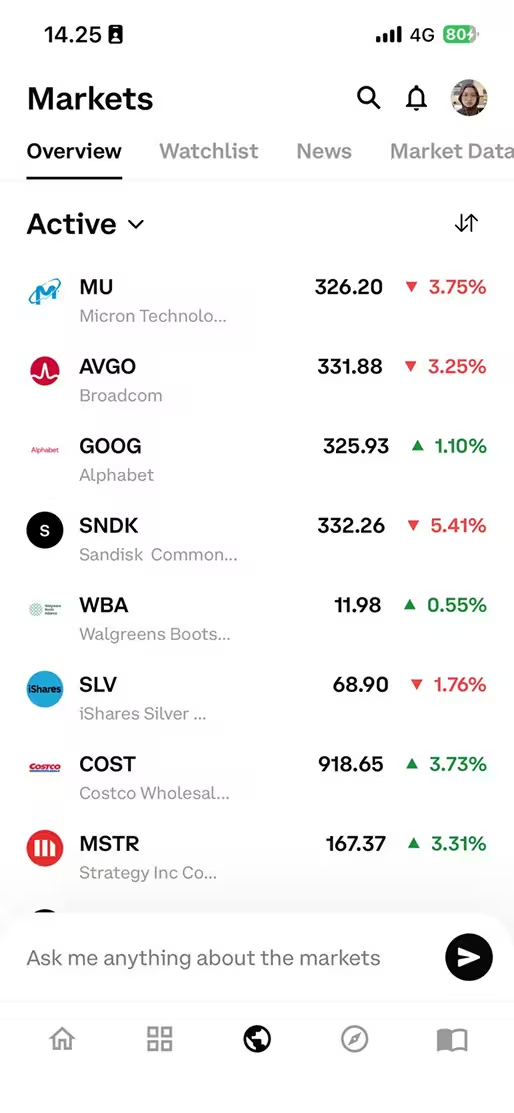
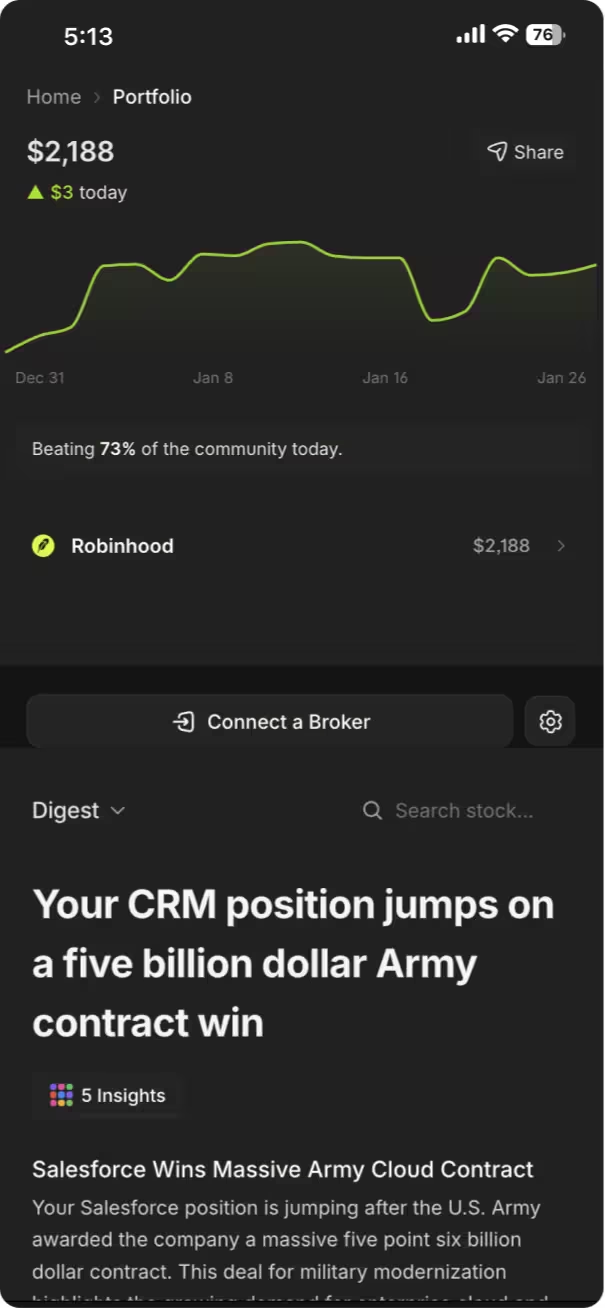
If mobile research is central to your workflow, you might explore apps specifically designed for mobile-first experiences, including AI-powered research tools that let you ask questions in natural language rather than navigating tab structures.
Which Platform Should You Choose?
The decision between Yahoo Finance and Seeking Alpha isn't binary—many investors use both for different purposes. Yahoo Finance works best as your data backbone: checking quotes, reviewing financial statements, scanning news headlines, and maintaining watchlists. Seeking Alpha works best as your analysis layer: reading detailed theses, discovering new investment ideas, and understanding bear/bull cases before making decisions.
Choose Yahoo Finance as your primary platform if you: verify your own analysis using raw data, prefer to form opinions independently without outside influence, invest passively in index funds or ETFs, want completely free access to all features, or trade frequently and need fast quote updates.
Choose Seeking Alpha Premium as your primary platform if you: value reading multiple perspectives before investing, focus on individual stock picking rather than passive strategies, want access to earnings call transcripts without listening to full recordings, appreciate quantitative stock rankings to narrow research focus, or have time to read 20+ articles monthly to justify the subscription cost.
A common workflow: use Yahoo Finance for initial screening and data verification, then move to Seeking Alpha to read what bulls and bears are saying about stocks that pass your screens. This combination costs $30/month (Seeking Alpha Premium) while keeping Yahoo Finance's free features as your data foundation.
Evaluation Checklist
- ☐ Calculate how many research articles you read monthly (if under 10, Seeking Alpha Premium may not be worthwhile)
- ☐ Test Yahoo Finance's free features for your typical research workflow
- ☐ Try Seeking Alpha's free tier to assess article quality and relevance
- ☐ Determine if you need earnings transcripts (a key Seeking Alpha differentiator)
- ☐ Consider using both: Yahoo Finance for data, Seeking Alpha for analysis
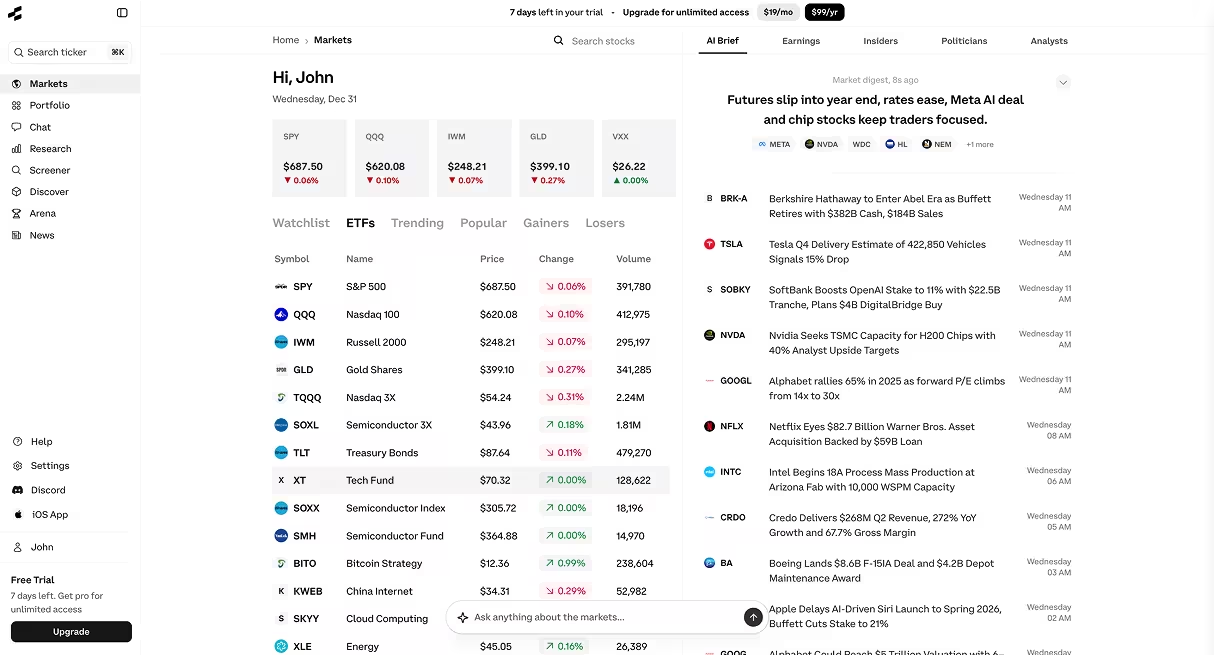
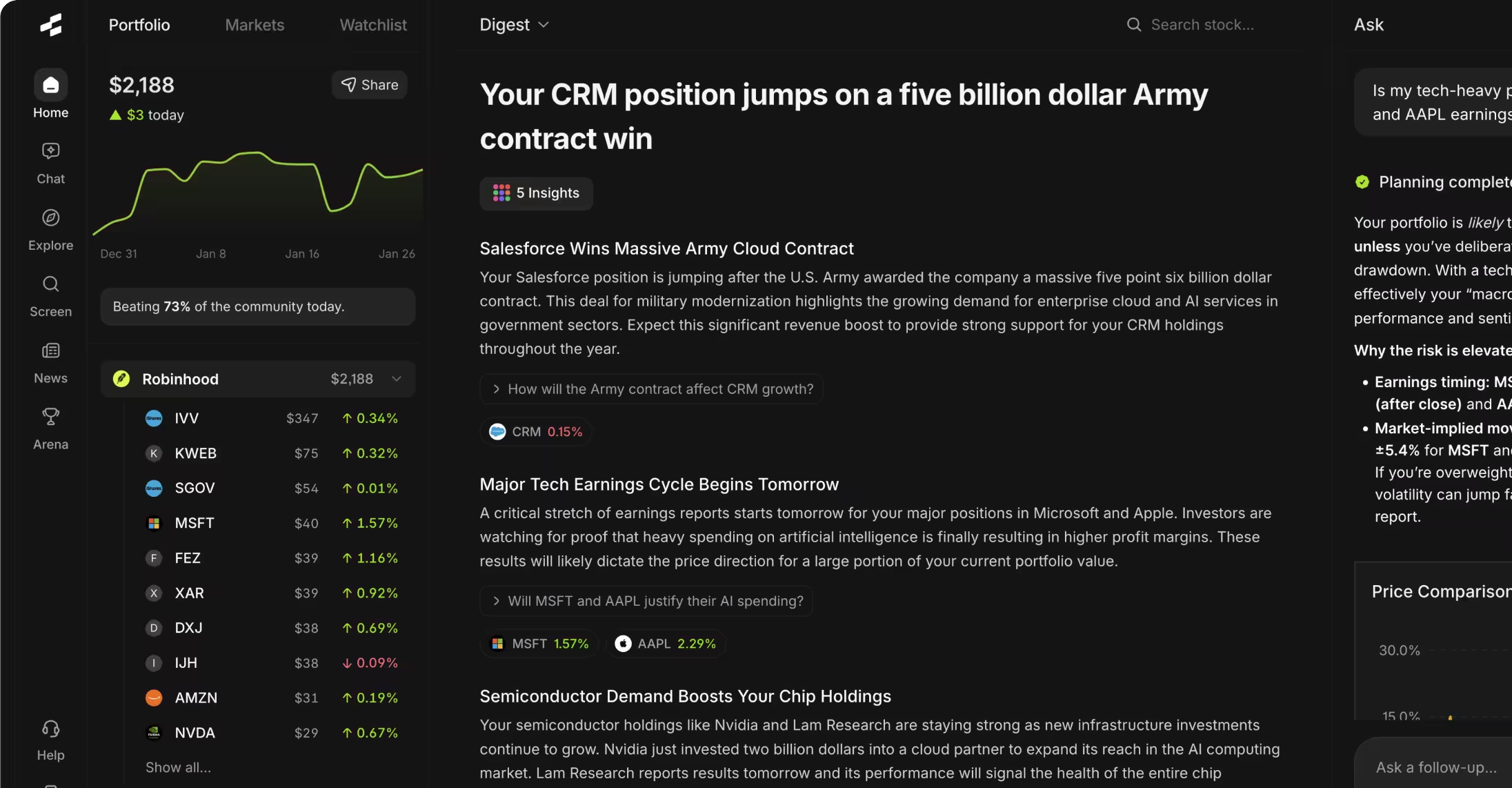
For investors wanting more advanced capabilities, platforms like Rallies.ai offer features neither Yahoo Finance nor Seeking Alpha provide, such as AI-powered research assistants that answer specific questions about stocks in plain English and natural language screeners that let you describe what you're looking for instead of setting manual filters.
Frequently Asked Questions
1. Is Seeking Alpha Premium worth paying for versus using free Yahoo Finance?
Seeking Alpha Premium is worth $30/month if you actively pick individual stocks and read investment analysis articles regularly. The value comes from earnings transcripts (which cost $29/month elsewhere when purchased separately), proprietary stock ratings, and unlimited access to diverse analytical perspectives. If you're a passive index investor or only check stock prices occasionally, Yahoo Finance's free features provide sufficient information and Seeking Alpha Premium wouldn't add meaningful value.
2. Can I access earnings call transcripts on Yahoo Finance?
No, Yahoo Finance does not provide earnings call transcripts. The platform shows earnings dates and summarizes results through news articles, but you cannot read or search full transcripts. Seeking Alpha Premium and Premium+ include full, searchable earnings transcripts posted within hours of calls ending. Alternative sources for transcripts include company investor relations pages (often delayed by several days) or specialized services like AlphaSense and Bloomberg Terminal.
3. Which platform has better stock screening tools?
Seeking Alpha's Premium screener has more filter options (150 vs. 100) and includes contributor-created screens you can use as starting points. However, Yahoo Finance's free screener covers all essential fundamental and technical filters most investors need. Neither platform matches the sophistication of dedicated screeners like Finviz, Stock Rover, or TradingView. For basic screening needs, Yahoo Finance's free option is adequate; for advanced screening with integrated analysis, Seeking Alpha Premium adds value but still has limitations.
4. How accurate is Seeking Alpha's analysis compared to professional analyst reports?
Seeking Alpha's crowdsourced analysis varies widely in quality because anyone can apply to contribute after meeting basic requirements. Some contributors are experienced professionals with decades of investing experience; others are hobbyists with limited track records. The platform tracks author performance, letting you see historical rating accuracy. Professional analysts at institutions like Goldman Sachs or Morgan Stanley have more resources and access but also face conflicts of interest from investment banking relationships. The best approach is to read multiple perspectives—both Seeking Alpha contributors and professional analysts—and verify claims against primary sources.
5. Does Yahoo Finance have ads while Seeking Alpha Premium doesn't?
Yahoo Finance displays banner ads, sponsored content tiles, and video ads throughout the free platform with no way to remove them. Seeking Alpha Premium significantly reduces ads compared to the free tier but doesn't eliminate them entirely—you'll still see some sponsored content. Seeking Alpha Premium+ (the $40/month tier) has the fewest ads of any option. If ad-free experience is important, neither platform fully delivers except at Seeking Alpha's highest tier.
6. Can I use both platforms together effectively?
Yes, many investors use Yahoo Finance for data and Seeking Alpha for analysis in a complementary workflow. A common pattern: screen for stocks using Yahoo Finance's free tools, check financial statements and price charts on Yahoo Finance, then read bull and bear articles about finalists on Seeking Alpha before making decisions. This approach costs only $30/month (for Seeking Alpha Premium) while leveraging Yahoo Finance's free comprehensive data. The platforms cover different aspects of research rather than duplicating functionality.
7. Which platform is better for dividend investors?
Seeking Alpha has stronger features for dividend investors, including detailed dividend scorecards, sustainability analysis, and numerous contributors who specialize in income investing. The platform tracks dividend growth streaks, payout ratios, and provides forward yield projections. Yahoo Finance shows current yield and basic dividend history but lacks the analytical depth. For screening dividend stocks, Yahoo Finance's free screener includes essential filters like yield and payout ratio, but Seeking Alpha Premium adds dividend safety scores and specialized dividend-focused articles.
8. How current is the data on each platform?
Both platforms provide real-time stock quotes during market hours (Yahoo Finance has a 15-minute delay for NASDAQ unless you're logged in). Financial statement data updates within 24-48 hours after companies file with the SEC, and both platforms source from the same underlying databases. News appears in real-time on both platforms. The difference is in analysis: Seeking Alpha publishes articles about earnings within hours of calls ending, while Yahoo Finance relies on third-party news services that may take longer to provide detailed coverage.
Conclusion
Yahoo Finance and Seeking Alpha serve different roles in the research process. Yahoo Finance excels as a free, comprehensive data reference that covers 40,000+ securities without subscription requirements, making it ideal for quick lookups, portfolio tracking, and fundamental data verification. Seeking Alpha differentiates itself through crowdsourced investment analysis, proprietary stock ratings, and complete earnings transcripts, providing value to active stock pickers willing to pay $30-40/month for diverse analytical perspectives.
Most investors benefit from using both platforms in sequence: Yahoo Finance for screening and data gathering, Seeking Alpha for reading detailed theses and understanding different viewpoints. This combination costs $30/month while providing comprehensive coverage of both quantitative data and qualitative analysis. For those wanting more advanced capabilities, exploring AI-powered research platforms can add natural language query features and deeper analytical tools that complement what these established platforms offer.
Want to compare more stock research platforms? Read our complete guide to best stock research tools or ask the AI Research Assistant specific questions about features and pricing.
References
- Seeking Alpha. "About Seeking Alpha - Company Information." seekingalpha.com/page/about
- Yahoo Finance. "Yahoo Finance - Stock Market Live, Quotes, Business & Finance News." finance.yahoo.com
- U.S. Securities and Exchange Commission. "Company Filings Database (EDGAR)." sec.gov/edgar
- SimilarWeb. "Finance.yahoo.com Traffic Analytics & Market Share." similarweb.com
- Seeking Alpha. "Seeking Alpha Premium - Features and Pricing." seekingalpha.com/checkout/premium
Disclaimer: This article is for educational and informational purposes only. It does not constitute investment advice, financial advice, trading advice, or any other type of advice. Rallies.ai does not recommend that any security, portfolio of securities, transaction, or investment strategy is suitable for any specific person.
Risk Warning: All investments involve risk, including the possible loss of principal. Past performance does not guarantee future results. Before making any investment decision, you should consult with a qualified financial advisor and conduct your own research.
Written by: Gav Blaxberg
CEO of WOLF Financial | Co-Founder of Rallies.ai