


Dividend investors should track dividend yield, payout ratio, dividend growth rate, free cash flow coverage, and the company's dividend history to evaluate income sustainability. The most effective monitoring combines yield metrics (current income), safety metrics (payout sustainability), and growth metrics (future income potential). These five core measurements provide a complete picture of dividend quality and help investors identify stocks that can deliver reliable, growing passive income over time.
Key Takeaways
- Dividend yield shows your current income rate, but yields above 8% often signal unsustainable payouts or declining stock prices
- The payout ratio reveals what percentage of earnings goes to dividends—ratios below 60% typically indicate safer, more sustainable payments
- Dividend growth rate matters more than current yield for long-term wealth building, with consistent 5-10% annual increases compounding significantly
- Free cash flow coverage confirms a company can actually afford its dividends from operating cash, not just accounting earnings
- A company's dividend history, including years of consecutive increases, predicts future reliability better than any single quarter's metrics
Table of Contents
- Why Dividend Metrics Matter for Income Investors
- Dividend Yield: Your Current Income Rate
- Payout Ratio: The Sustainability Gauge
- Dividend Growth Rate: Future Income Potential
- Free Cash Flow Coverage: The Reality Check
- Dividend History and Consistency
- How to Track These Metrics Efficiently
- Red Flags That Signal Dividend Risk
- Frequently Asked Questions
- Conclusion
Why Dividend Metrics Matter for Income Investors
Tracking the right dividend metrics helps you distinguish between genuinely strong income investments and dividend traps that could cut payments. A high dividend yield might look attractive at first glance, but without examining payout sustainability and growth potential, you risk investing in companies that slash dividends during downturns.
The best dividend investors monitor multiple metrics because each reveals a different aspect of dividend quality. Yield tells you about current income. Payout ratio shows sustainability. Growth rate indicates future potential. Together, these measurements create a complete picture of whether a dividend stock deserves a place in your income portfolio.
Research from Hartford Funds found that dividend-paying stocks in the S&P 500 generated an average annual return of 9.17% from 1973 to 2023, compared to just 3.95% for non-dividend payers. But this outperformance came primarily from companies with sustainable, growing dividends—not those with temporarily inflated yields.
Dividend Yield: Your Current Income Rate
Dividend yield measures the annual dividend payment as a percentage of the stock's current price. You calculate it by dividing the annual dividend per share by the stock price, then multiplying by 100.
Dividend Yield: The annual dividend payment expressed as a percentage of the stock's current market price. A stock trading at $100 with a $4 annual dividend has a 4% yield.
For most dividend stocks in the S&P 500, yields range from 2% to 4%. The index's average yield hovers around 1.5% to 2%, though dividend-focused portfolios typically target higher yields. Real estate investment trusts (REITs) and utilities often yield 3% to 6%, while technology companies typically pay lower dividends or none at all.
Here's the thing about dividend yield: it moves inversely with stock price. If a company's stock drops 20% but maintains its dividend, the yield automatically increases 25%. This creates what investors call a "dividend trap"—a high yield that reflects market skepticism about the dividend's sustainability rather than genuine income opportunity.
Yield RangeTypical InterpretationInvestment Consideration0-2%Growth-focused or conservative payoutPrioritizes reinvestment over current income2-4%Balanced dividend approachSolid income with room for growth4-6%Income-focused or sector-specificVerify sustainability with other metricsAbove 8%Potential dividend trapHigh risk of dividend cut
When tracking dividend yield, compare a stock to its own 5-year average yield and to industry peers. A company yielding 7% when its historical average is 3% deserves scrutiny—the market may be pricing in a dividend cut.
What Is the Payout Ratio and Why Does It Matter?
The payout ratio shows what percentage of a company's earnings goes toward dividend payments. You calculate it by dividing annual dividends per share by earnings per share, giving you a direct measure of dividend sustainability.
Payout Ratio: The proportion of earnings paid to shareholders as dividends, expressed as a percentage. A company earning $5 per share and paying $3 in dividends has a 60% payout ratio.
Most financial advisors consider payout ratios between 35% and 60% ideal for dividend growth stocks. This range leaves room for the company to reinvest in growth while maintaining a cushion during economic downturns. Companies paying out more than 80% of earnings have little margin for error if profits decline.
Payout ratios vary significantly by sector. REITs must distribute at least 90% of taxable income to shareholders by law, so their payout ratios typically exceed 80%. Utilities often maintain 60-75% payout ratios due to stable, predictable cash flows. Technology companies tend toward lower ratios, around 30-40%, prioritizing growth investments.
Low Payout Ratio (Under 50%)
- Greater dividend safety during recessions
- More funds available for dividend growth
- Room to increase dividends without earnings growth
- Buffer against temporary earnings declines
High Payout Ratio (Over 75%)
- Limited ability to grow dividends
- Vulnerable to earnings fluctuations
- Potential dividend cuts if profits decline
- Less reinvestment in business growth
One limitation: payout ratio uses earnings, which can be manipulated through accounting choices. That's why smart dividend investors also check the free cash flow payout ratio, which divides dividends by free cash flow instead of reported earnings.
How Do You Evaluate Dividend Growth Rate?
Dividend growth rate measures how quickly a company increases its dividend payments over time. Calculate it by comparing the current annual dividend to the dividend from a previous period, typically tracking 1-year, 3-year, and 5-year growth rates.
For building long-term wealth through dividend investing, growth rate often matters more than current yield. A stock yielding 2% that grows its dividend 10% annually will surpass a 5% yielder with no growth in just over 11 years—and the gap widens dramatically over longer periods.
Dividend Aristocrats: S&P 500 companies that have increased dividends for at least 25 consecutive years, demonstrating exceptional dividend reliability and growth consistency.
The Dividend Aristocrats provide a useful benchmark for dividend growth expectations. These 68 companies have increased dividends for at least 25 consecutive years, averaging 5-7% annual growth. During the 2008 financial crisis, Dividend Aristocrats maintained their growth streaks while thousands of other companies cut or suspended dividends entirely.
Growth ProfileAnnual IncreaseBest ForSlow Growth0-3%Current income needs, retireesModerate Growth4-7%Balanced income and growthHigh Growth8-15%Long-term wealth buildingAggressive GrowthAbove 15%Early-stage dividend payers (higher risk)
Watch for consistency alongside absolute growth rates. A company averaging 8% growth with increases in 9 of the last 10 years demonstrates more reliability than one averaging 10% growth with erratic year-to-year patterns. The AI Research Assistant can quickly pull historical dividend growth data when you ask about specific companies' payment histories.
Why Free Cash Flow Coverage Matters More Than Earnings
Free cash flow coverage compares dividend payments to the actual cash a company generates from operations after capital expenditures. This metric reveals whether a company can afford its dividends from real cash flow rather than just accounting profits.
Some companies report positive earnings while generating negative free cash flow—a red flag for dividend safety. They might be borrowing money or selling assets to maintain dividend payments, practices that can't continue indefinitely.
Free Cash Flow: Cash generated from operations minus capital expenditures required to maintain the business. This represents truly available cash for dividends, debt repayment, or other uses.
Calculate the free cash flow payout ratio by dividing total dividends paid by free cash flow from the statement of cash flows. A ratio below 75% indicates comfortable coverage. Ratios consistently above 100% mean the company pays more in dividends than it generates in free cash, an unsustainable situation.
General Electric provides a cautionary example. From 2015 to 2017, GE maintained its dividend while free cash flow declined significantly. The company was paying out more than 100% of free cash flow to shareholders. In late 2017, GE cut its dividend by 50%, then cut again in 2018. Investors who monitored free cash flow coverage saw the warning signs years before the cuts.
Free Cash Flow Analysis Checklist
- ☐ Check free cash flow payout ratio over the past 5 years
- ☐ Compare free cash flow growth to dividend growth
- ☐ Verify free cash flow covers dividends plus essential capex
- ☐ Look for consistent or improving cash generation
- ☐ Review management commentary on cash allocation priorities
You'll find free cash flow data in the cash flow statement section of 10-Q and 10-K filings. The stock research pages on financial platforms typically include free cash flow metrics alongside traditional earnings data.
Dividend History and Consistency
A company's dividend payment history predicts future reliability better than any single quarter's metrics. Track how long a company has paid dividends, whether payments have grown consistently, and how the company responded during previous recessions.
Three key historical metrics matter most: years of consecutive payments, years of consecutive increases, and the number of dividend cuts or suspensions in the company's history. Companies with 10+ years of uninterrupted payments and 5+ years of increases demonstrate commitment to shareholder income.
During the 2020 pandemic, this historical perspective proved valuable. Companies with strong dividend histories—even those in hard-hit sectors—largely maintained payments. Of the 66 Dividend Aristocrats at the start of 2020, only two (Leggett & Platt and Lowe's) paused their streak. Meanwhile, hundreds of companies with shorter dividend histories cut or suspended payments.
Track RecordReliability SignalExample Category25+ years of increasesExceptional reliabilityDividend Aristocrats10-24 years of increasesStrong reliabilityDividend Achievers5-9 years of increasesDeveloping reliabilityDividend Contenders1-4 years of increasesEmerging dividend payerWatch closelyInconsistent historyHigher riskRequires deeper analysis
Also examine ex-dividend dates and payment frequency. Most U.S. companies pay quarterly, though some pay monthly (common among REITs) or annually. Consistent ex-dividend date timing—for example, always going ex-dividend in the first week of March, June, September, and December—signals operational discipline.
Ex-Dividend Date: The cutoff date to receive the next dividend payment. Buy shares before this date to receive the upcoming dividend; buy on or after this date and you'll wait for the following payment.
How to Track These Metrics Efficiently
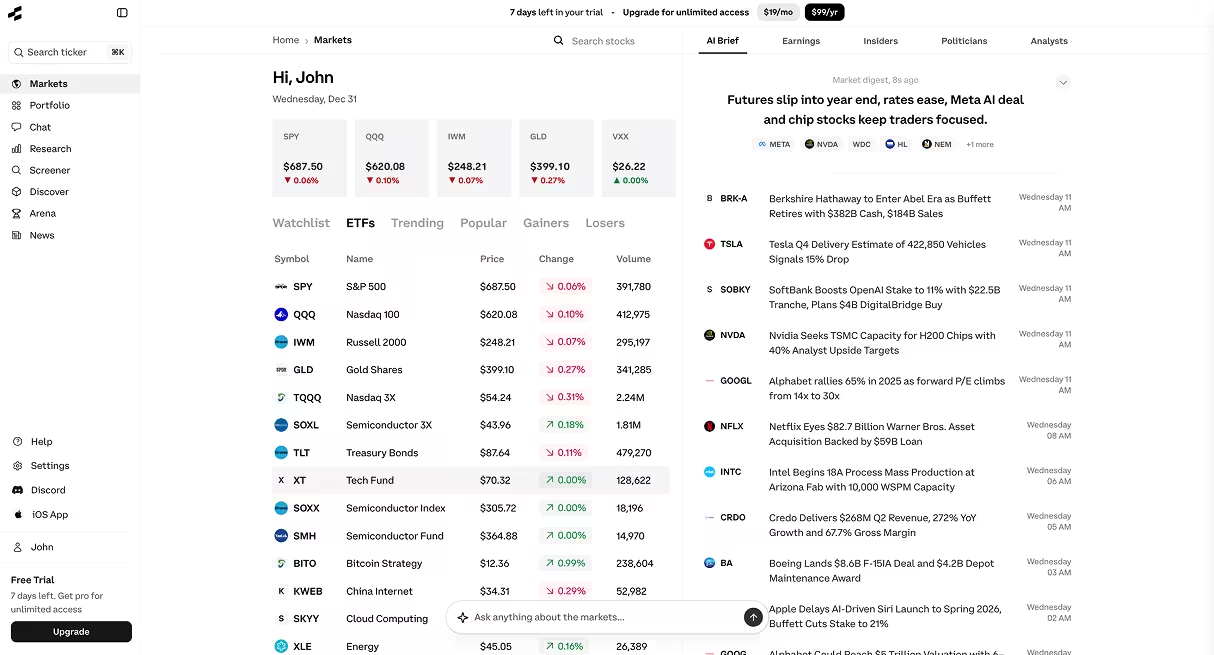
Manually tracking dividend metrics across multiple stocks becomes time-consuming quickly. Most dividend investors use a combination of spreadsheets, portfolio tracking tools, and financial data platforms to monitor their income investments.
Start with a basic tracking spreadsheet that includes current yield, payout ratio, 5-year dividend growth rate, and next ex-dividend date for each holding. Update quarterly after earnings releases. This takes 15-30 minutes per quarter for a 20-stock portfolio and gives you a clear snapshot of your dividend portfolio health.
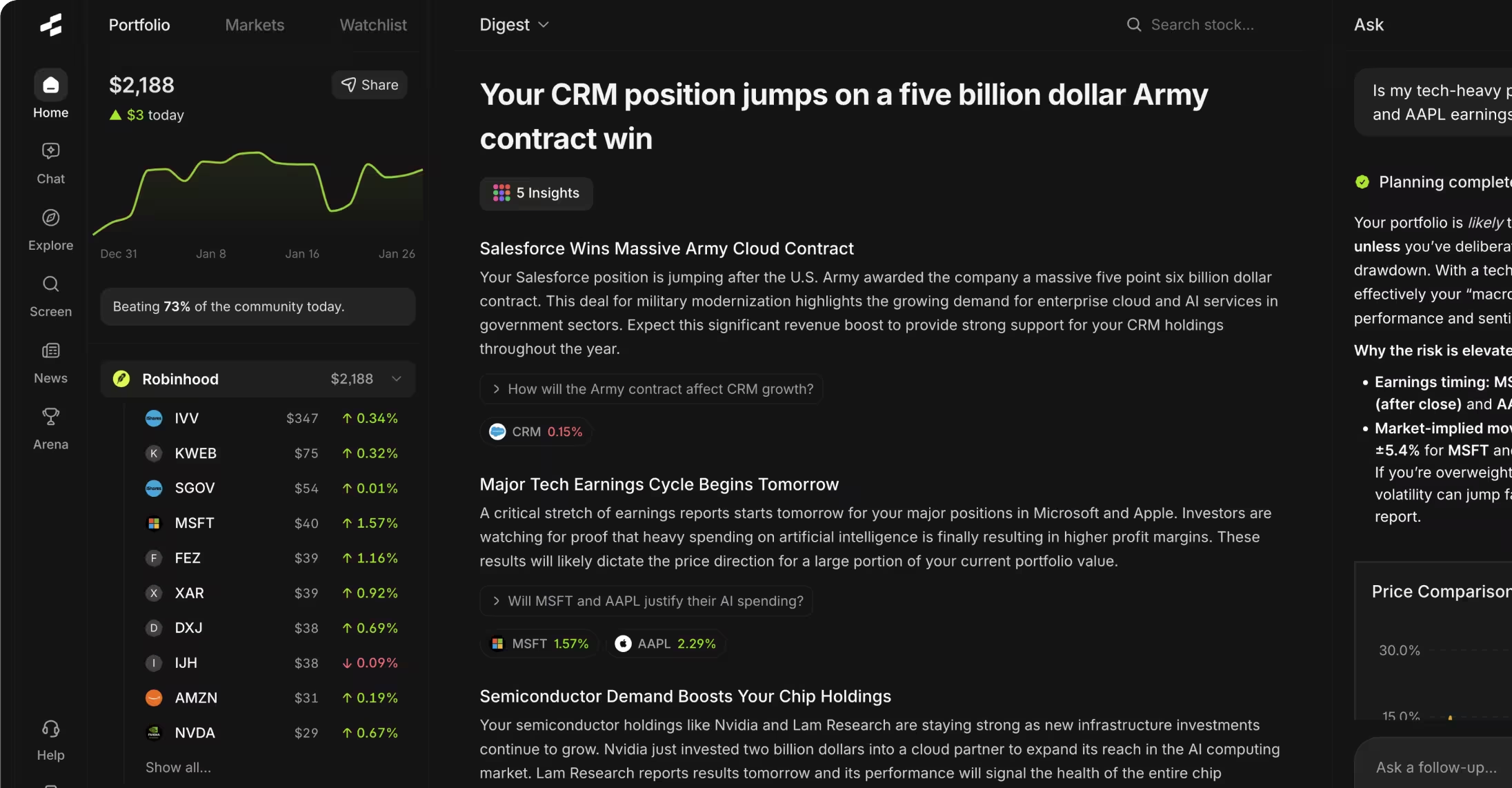
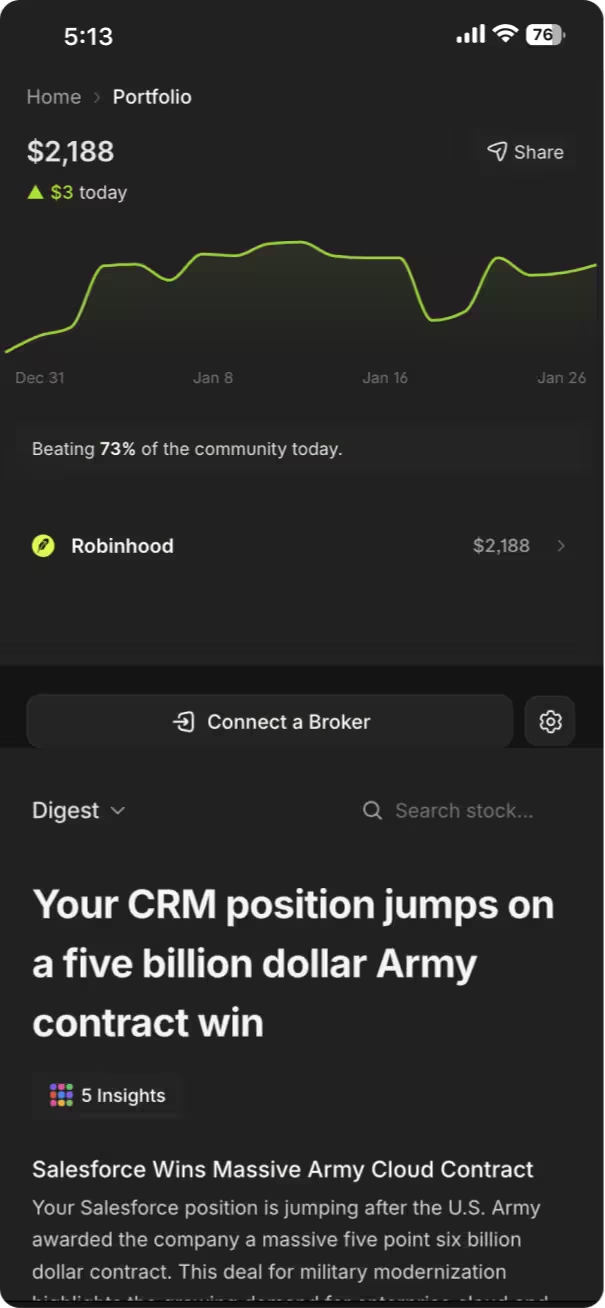
For real-time monitoring, portfolio tracking features can automate much of this work. Many platforms calculate yield on cost (your dividend yield based on your original purchase price rather than current market price), track total dividend income, and alert you to dividend announcements or changes.
Dividend Tracking System Setup
- ☐ Create a spreadsheet with key metrics for each holding
- ☐ Set up alerts for ex-dividend dates and earnings releases
- ☐ Schedule quarterly reviews after earnings season
- ☐ Track yield on cost to measure your actual income return
- ☐ Monitor total portfolio yield and income growth rate
- ☐ Set thresholds that trigger deeper analysis (payout ratio above 75%, yield 50% above historical average, etc.)
Natural language research tools can accelerate dividend analysis significantly. Instead of navigating multiple financial statements, you can ask specific questions like "What's the 5-year dividend growth rate for Johnson & Johnson?" or "Compare the payout ratios of Coca-Cola and PepsiCo." The Rallies.ai platform provides this type of conversational access to dividend metrics and company financial data.
For building a dividend portfolio from scratch, the Vibe Screener lets you describe what you're looking for—"dividend stocks with yields between 3% and 5%, payout ratios under 60%, and at least 10 years of consecutive increases"—rather than setting individual filter parameters.
Red Flags That Signal Dividend Risk
Certain metric combinations signal elevated dividend cut risk. Learning to recognize these patterns helps you avoid significant portfolio damage from sudden dividend reductions.
The most dangerous combination: high yield (above 7%), high payout ratio (above 80%), and declining free cash flow. This triple threat often appears 6-18 months before a dividend cut. The high yield reflects market skepticism, the high payout ratio leaves no margin for error, and declining cash flow removes the fundamental support for payments.
Critical Warning Signs
- Dividend yield 2x higher than historical average
- Payout ratio increasing while earnings flat or declining
- Free cash flow payout ratio consistently above 100%
- Dividend growth rate declining for 3+ consecutive years
- Debt increasing while dividends stay flat or grow
- No dividend increase for 2+ years after consistent growth history
- Management language changes from "committed to dividend growth" to "evaluating capital allocation"
- Industry peers cutting dividends while company maintains payments
Pay special attention to sector-wide stress. When multiple companies in an industry cut dividends, others in that sector often follow within 6-12 months. The 2020 airline dividend cuts and 2015 energy sector cuts demonstrated this contagion effect.
Management commentary provides qualitative signals that complement quantitative metrics. Read earnings call transcripts for phrases like "evaluating our dividend policy," "prioritizing balance sheet strength," or "reviewing capital allocation." These diplomatic phrases often precede dividend cuts.
Sudden dividend increases can also signal trouble. If a company raises its dividend 20% after years of 5% increases, this might indicate management trying to support a falling stock price rather than genuine confidence. Sustainable dividend growth is steady and predictable, not erratic.
Frequently Asked Questions
1. What is the most important dividend metric to track?
No single metric tells the complete story, but free cash flow coverage provides the most reliable indicator of dividend sustainability. A company can manipulate earnings through accounting choices, but cash flow shows actual funds available for dividends. Combine this with payout ratio, yield, and dividend history for a complete assessment. Most dividend cuts happen when free cash flow payout ratios exceed 100% for multiple quarters.
2. How often should I review dividend metrics for my holdings?
Review key metrics quarterly after earnings releases for each position. Schedule a comprehensive portfolio review twice yearly to assess overall income growth and identify positions requiring closer monitoring. Set up alerts for dividend announcements, ex-dividend dates, and earnings releases so you can respond quickly to significant changes. Between formal reviews, monitor news for your holdings to catch sector-wide developments that might affect dividend safety.
3. Is a high dividend yield always risky?
Not always, but yields significantly above sector averages deserve careful analysis. REITs and utilities can sustainably yield 4-6% due to their business models, while a 6% yield for a technology stock would be unusual and potentially concerning. Compare a company's current yield to its 5-year average and peer group. Yields that have doubled from historical norms often signal the market pricing in a dividend cut rather than an attractive income opportunity.
4. What's a safe payout ratio range for dividend stocks?
For most companies, payout ratios between 35% and 60% balance current income with growth potential and provide a safety buffer during downturns. Sector norms vary significantly—REITs typically pay out 80-90% due to regulatory requirements, utilities often run 60-75%, while technology companies might maintain 30-40% ratios. Focus on whether the payout ratio is stable or improving rather than hitting a specific number.
5. How much dividend growth should I expect annually?
Dividend Aristocrats—companies with 25+ years of consecutive increases—average 5-7% annual dividend growth over long periods. High-quality dividend growth stocks typically increase payments 4-8% annually, roughly matching or slightly exceeding inflation to maintain purchasing power. Growth rates above 15% often prove unsustainable unless the company recently initiated dividends from a very low base. Consistency matters more than occasionally high growth rates.
6. Should I reinvest dividends or take them as cash?
Reinvesting dividends accelerates wealth building through compounding, turning 3% yields into potentially 6-7% total returns over decades when combined with dividend growth. Most investors under 55 benefit from automatic dividend reinvestment unless they need the income for living expenses. As you approach retirement, gradually shifting from reinvestment to cash income aligns with changing financial needs. The choice depends on your time horizon and income requirements rather than market conditions.
7. Do dividend cuts always mean I should sell the stock?
Not necessarily, though cuts warrant immediate analysis. Evaluate why the company reduced its dividend and whether the business remains fundamentally sound. During the 2020 pandemic, several strong companies suspended dividends to preserve cash during unprecedented uncertainty, then restored payments within 12-18 months. However, cuts accompanied by deteriorating fundamentals, rising debt, or industry decline often signal deeper problems. Review the company's plan to restore dividend growth before deciding whether to hold or sell.
8. How do I find stocks with sustainable high yields?
Start by screening for yields in the 4-6% range rather than chasing the highest yields. Then apply quality filters: payout ratios under 75%, positive free cash flow coverage, at least 5 years of dividend history, and manageable debt levels. Look at sectors known for higher yields—REITs, utilities, consumer staples, and telecommunications. Research the business model to confirm the company generates stable, predictable cash flows that can support continued payments through economic cycles.
Conclusion
Tracking the best dividend metrics requires monitoring five core measurements: dividend yield for current income, payout ratio for sustainability, dividend growth rate for future potential, free cash flow coverage for genuine affordability, and dividend history for reliability. No single metric provides complete information, but together they reveal whether a dividend stock offers genuine income quality or potential disappointment.
Set up a quarterly review system that updates these metrics after earnings releases, and establish thresholds that trigger deeper analysis—like payout ratios exceeding 75% or yields doubling historical averages. For investors building passive income portfolios, consistent monitoring of these dividend metrics separates companies that will fund retirement from dividend traps that will destroy wealth. Start by analyzing your current holdings against these five metrics, then use the insights to refine your dividend investing strategy.
Want to dig deeper into dividend investing strategies? Learn how to build a complete income portfolio, or ask the AI Research Assistant to analyze dividend metrics for specific stocks you're researching.
References
- Hartford Funds. "The Power of Dividends: Past, Present, and Future." hartfordfunds.com
- S&P Dow Jones Indices. "S&P 500 Dividend Aristocrats." spglobal.com
- U.S. Securities and Exchange Commission. "How to Read a 10-K/10-Q." sec.gov
- Financial Accounting Standards Board. "Statement of Cash Flows." fasb.org
- Internal Revenue Service. "Publication 550: Investment Income and Expenses." irs.gov
- CFA Institute. "Equity Valuation: A Survey of Professional Practice." cfainstitute.org
Disclaimer: This article is for educational and informational purposes only. It does not constitute investment advice, financial advice, trading advice, or any other type of advice. Rallies.ai does not recommend that any security, portfolio of securities, transaction, or investment strategy is suitable for any specific person.
Risk Warning: All investments involve risk, including the possible loss of principal. Past performance does not guarantee future results. Before making any investment decision, you should consult with a qualified financial advisor and conduct your own research.
Written by: Gav Blaxberg
CEO of WOLF Financial | Co-Founder of Rallies.ai