


What Are Earnings Calls and Why They Matter
Earnings calls are quarterly conference calls where publicly traded companies report their financial results and discuss business performance with analysts and investors. These calls typically happen within a few weeks after each quarter ends and provide crucial insights into a company's health, strategy, and future outlook.
During these calls, company executives present key financial metrics, discuss business highlights and challenges, and then open the floor for analyst questions. The Q&A portion often reveals the most valuable information, as analysts press management on specific issues, guidance changes, and strategic decisions.
For investors, earnings calls are goldmines of information that go far beyond the basic numbers in press releases. Management's tone, confidence level, and specific commentary about market conditions can be just as important as the actual revenue and profit figures.
The Challenge of Earnings Call Transcripts
While earnings call transcripts contain incredibly valuable information, they present a significant challenge for individual investors. A typical earnings call transcript can run 15-20 pages or more, filled with detailed financial discussions, industry jargon, and lengthy Q&A sessions.
Reading through every transcript for the stocks in your portfolio would be a full-time job. Most retail investors simply don't have the time to digest dozens of lengthy transcripts each quarter, which means they often miss critical insights that could impact their investment decisions.
This information gap puts individual investors at a disadvantage compared to institutional investors who have teams of analysts dedicated to parsing through these transcripts and extracting key insights.
How AI Changes the Earnings Analysis Game
Artificial intelligence has revolutionized how we can process and understand earnings calls. Instead of spending hours reading through dense transcripts, AI can quickly identify the most important points, summarize key themes, and highlight potential red flags or positive developments.
AI-powered summarization doesn't just save time - it can also catch nuances and patterns that human readers might miss. By analyzing sentiment, identifying recurring themes, and comparing current results to historical patterns, AI provides a more comprehensive understanding of what's really happening with a company.
This democratizes access to sophisticated earnings analysis that was previously only available to professional investors with large research teams.
Real-Time AI Summaries: Getting Insights Immediately
The most powerful application of AI in earnings analysis is the ability to get instant summaries as soon as earnings are released. As shown in this Google earnings example from Rallies, AI can immediately process the results and provide key insights within hours of the announcement.
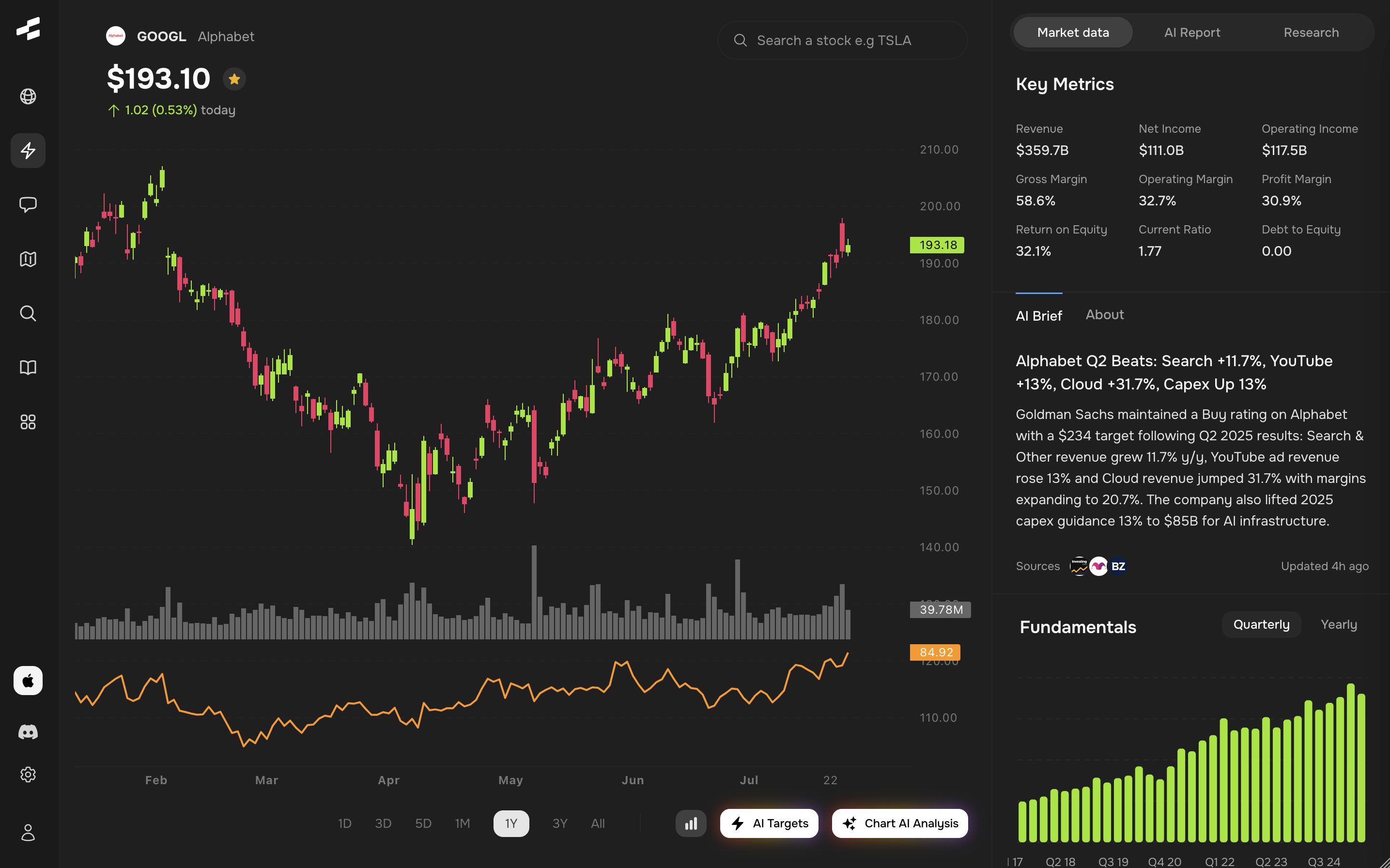
The AI brief quickly highlights that "Alphabet Q2 Beats: Search +11.7%, YouTube +13%, Cloud +31.7%, Capex Up 13%" - giving you the essential takeaways in seconds rather than requiring you to read through pages of financial data.
You can also see important analyst reactions, like Goldman Sachs maintaining their Buy rating with a $234 target, and key forward-looking statements about capex guidance for AI infrastructure. This type of instant analysis helps you understand both the results and market reaction immediately.
Detailed AI-Powered Earnings Analysis
For investors who want more depth, AI can provide comprehensive earnings summaries that go beyond just the headlines. This detailed Google analysis shows how AI can break down complex earnings into digestible sections covering strengths, weaknesses, and key financial metrics.
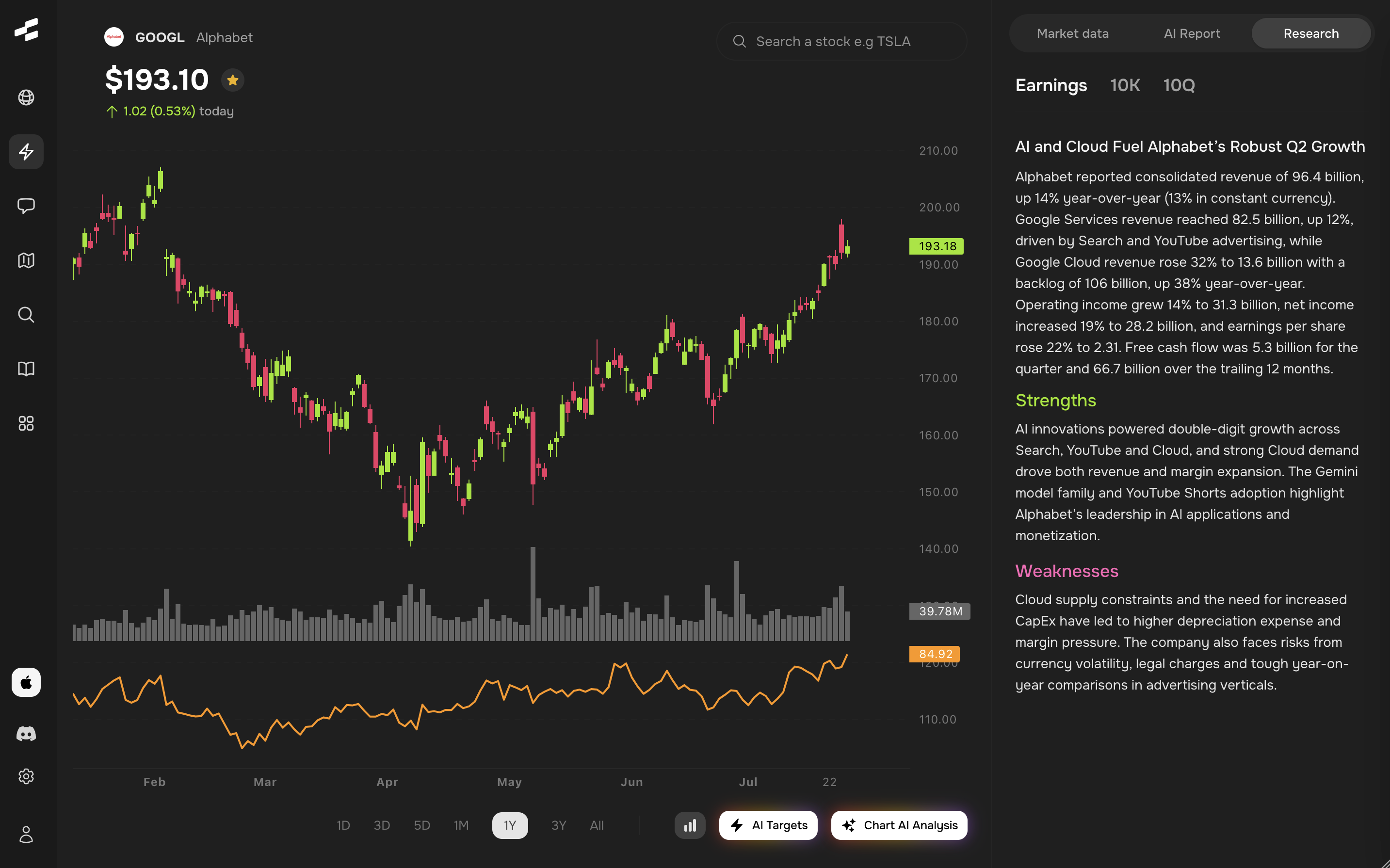
The summary identifies specific growth drivers like "AI innovations powered double-digit growth across Search, YouTube and Cloud" while also noting challenges such as "Cloud supply constraints and the need for increased CapEx." This balanced analysis gives you a complete picture without having to read the full transcript.
Notice how the AI also provides context about margin pressures and currency headwinds - exactly the type of nuanced information that's crucial for investment decisions but often buried deep in earnings calls.
Interactive AI Analysis: Ask Anything About Earnings
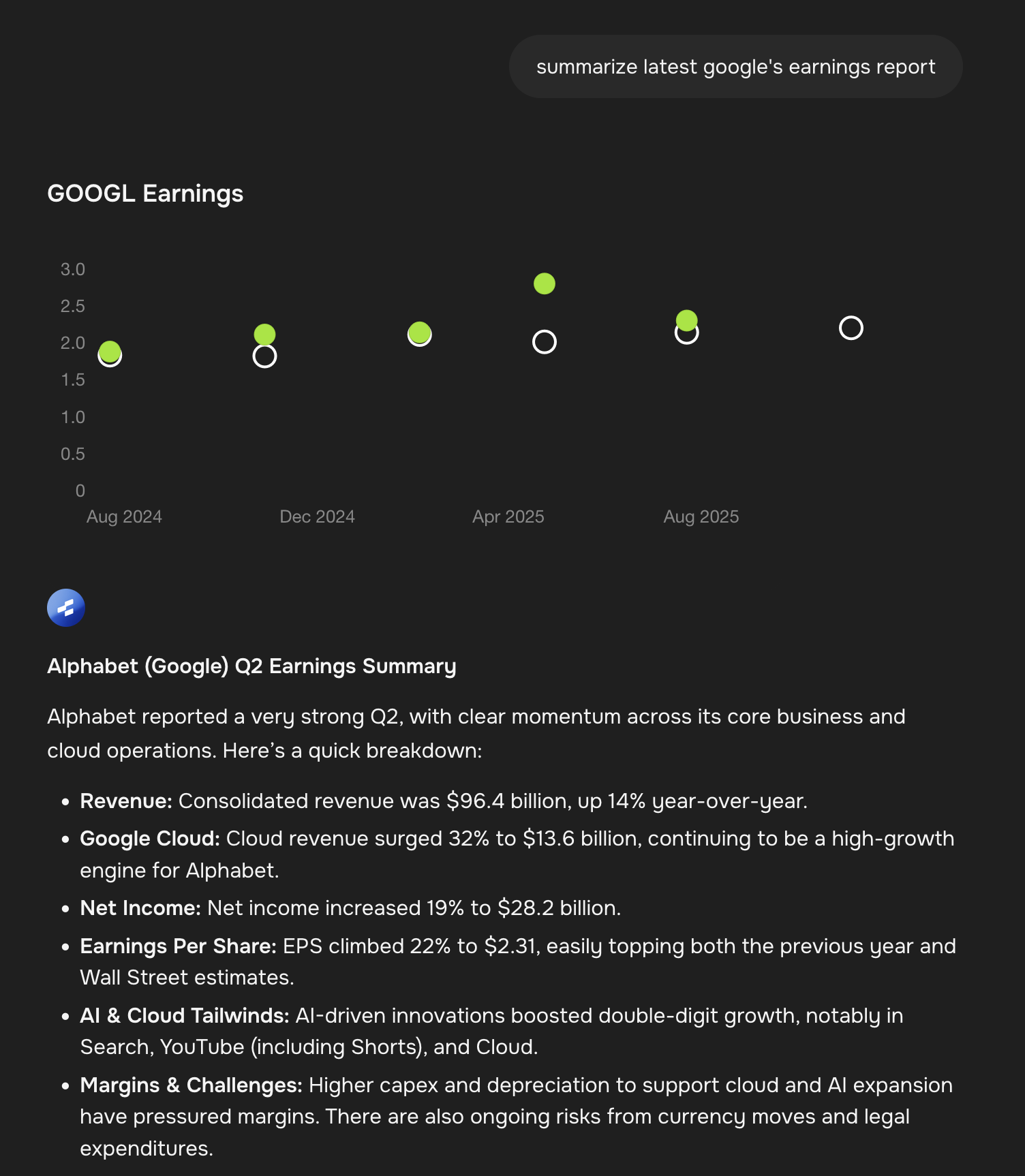
Perhaps the most powerful feature is the ability to have conversational interactions with AI about earnings results. Instead of searching through transcripts for specific information, you can simply ask questions and get immediate, accurate answers. Rallies allows you to ask such questions and get answers right away, all backed by real time data.
The Google earnings chart shows how AI can visualize earnings trends over time, making it easy to spot patterns and compare current results to historical performance. You can see both actual results (green dots) and estimates (white circles), giving you instant context about whether the company beat or missed expectations.
The detailed breakdown shows exactly what investors need to know: revenue growth of 14%, cloud revenue surging 32%, net income up 19%, and EPS climbing 22%. But more importantly, it explains the drivers behind these numbers and potential challenges ahead.
The Future of Earnings Analysis
As AI continues to improve, we can expect even more sophisticated earnings analysis capabilities. Future developments might include real-time sentiment analysis of management's tone, automatic comparison to competitor results, and predictive modeling based on earnings trends.
The goal isn't to replace human judgment but to augment it with powerful analytical tools that can process vast amounts of information quickly and accurately. This allows investors to focus their time on higher-level strategic thinking rather than data processing.
For retail investors, this represents a fundamental shift in access to professional-grade investment research and analysis capabilities.