


Portfolio performance tracking measures how your investments change in value over time by calculating total returns, comparing results against benchmarks, and monitoring individual holdings. Effective tracking requires recording contributions and withdrawals, calculating time-weighted returns to isolate investment performance from cash flows, and regularly reviewing asset allocation against your target mix. Most investors track performance monthly or quarterly using portfolio management software or brokerage tools that automatically calculate returns, visualize allocation, and generate performance reports.
Key Takeaways
- Time-weighted returns provide the most accurate performance measurement by eliminating the distorting effects of deposits and withdrawals on your results
- Benchmark comparison reveals whether your portfolio outperforms or underperforms relevant market indexes like the S&P 500 or a 60/40 stock-bond blend
- Track both absolute returns (total gain or loss) and risk-adjusted metrics like the Sharpe ratio to understand returns relative to volatility
- Review your current asset allocation quarterly and compare it to your target allocation to identify when rebalancing is needed
- Document all contributions, withdrawals, dividends, and fees to ensure accurate performance calculations and tax reporting
Table of Contents
- Why Portfolio Performance Tracking Matters
- Key Performance Metrics to Monitor
- How to Calculate Portfolio Returns
- Choosing the Right Benchmark
- Methods for Tracking Performance
- How Often Should You Track Performance?
- Common Tracking Mistakes to Avoid
- Tools and Software Options
- Frequently Asked Questions
- Conclusion
Why Portfolio Performance Tracking Matters
Portfolio performance tracking shows whether your investment strategy is working and helps you make informed decisions about adjustments. Without systematic tracking, you can't tell if your portfolio is meeting your financial goals or if you're taking on excessive risk for your returns.
Tracking performance serves several practical purposes. It reveals which holdings contribute most to your gains and losses, identifies when your asset allocation drifts from your target, and provides data for tax planning. If you hold a mix of stocks, bonds, and other assets across multiple accounts, tracking gives you a complete picture of your portfolio construction rather than fragmented views of individual accounts.
Performance data also helps you evaluate whether active management or individual stock picks justify their costs and risks compared to passive index funds. According to SPIVA research, 88% of actively managed U.S. equity funds underperformed the S&P 500 over 15 years through 2023, making objective performance measurement critical for strategy evaluation.
Asset Allocation: The distribution of your investment portfolio across different asset classes like stocks, bonds, real estate, and cash. Your allocation determines most of your portfolio's risk and return characteristics.
Key Performance Metrics to Monitor
Total return is the primary metric, representing the percentage change in your portfolio's value including dividends, interest, and capital gains. A portfolio that grows from $100,000 to $108,000 while generating $2,000 in dividends has a total return of 10%.
Risk-adjusted returns provide context by measuring performance relative to volatility. The Sharpe ratio divides your excess return above the risk-free rate by your portfolio's standard deviation. A Sharpe ratio above 1.0 generally indicates good risk-adjusted performance, while below 0.5 suggests you're not being adequately compensated for the volatility you're experiencing.
Maximum drawdown measures the largest peak-to-trough decline during a specific period. If your portfolio grew from $100,000 to $120,000, then fell to $90,000 before recovering, the maximum drawdown is 25% (calculated from the $120,000 peak). This metric helps you understand the worst-case scenario you experienced and whether you can tolerate similar declines.
Sharpe Ratio: A measure of risk-adjusted return calculated by dividing excess returns over the risk-free rate by the portfolio's standard deviation. Higher Sharpe ratios indicate better returns per unit of risk taken.
Advantages of Multiple Metrics
- Total return shows overall growth regardless of path taken
- Sharpe ratio reveals efficiency of returns relative to risk
- Maximum drawdown indicates worst-case volatility experienced
- Alpha measures outperformance versus a benchmark index
Limitations
- Single metrics miss important aspects of performance
- Risk metrics require sufficient history to be meaningful
- Past volatility doesn't predict future drawdowns
- Metrics can be manipulated by selective date ranges
Alpha and beta measure your portfolio's relationship to a benchmark. Beta indicates sensitivity to market movements (a beta of 1.2 means your portfolio typically moves 20% more than the market). Alpha represents excess return above what beta would predict. Positive alpha suggests skill or beneficial positioning, while negative alpha indicates underperformance.
How to Calculate Portfolio Returns
Simple return divides the change in value by the starting value, but this only works accurately when you make no deposits or withdrawals. If your portfolio grows from $100,000 to $110,000 with no cash flows, your simple return is 10%.
Time-weighted return eliminates the distorting effects of contributions and withdrawals by breaking the measurement period into sub-periods around each cash flow. This method isolates investment performance from your deposit and withdrawal decisions. For example, if you start with $100,000, it grows to $105,000, you add $20,000, and the total grows to $130,000, the time-weighted return is 4.17% despite the large dollar gain.
Money-weighted return (also called internal rate of return) accounts for the timing and size of cash flows. This method better reflects your actual experience as an investor because it weights periods when you had more money invested more heavily. Money-weighted returns will differ significantly from time-weighted returns if you made large deposits before poor performance or large withdrawals before strong performance.
MethodBest Use CaseCalculation ComplexitySimple ReturnSingle period, no cash flowsVery easyTime-WeightedEvaluating manager/strategy skillModerateMoney-WeightedMeasuring your personal outcomeComplexAnnualized ReturnComparing multi-year periodsEasy with calculator
Most portfolio tracking software calculates these returns automatically, but understanding the differences helps you interpret the results. Financial advisors typically report time-weighted returns because this shows how the investment strategy performed independent of your contribution timing.
Choosing the Right Benchmark
A benchmark provides context for your returns by showing what a passive alternative would have delivered. If your portfolio gained 8% but an appropriate benchmark returned 12%, your strategy underperformed despite positive absolute returns.
Match your benchmark to your portfolio allocation and risk profile. A portfolio with 70% U.S. stocks and 30% bonds should compare against a blend of 70% S&P 500 and 30% Bloomberg U.S. Aggregate Bond Index, not the S&P 500 alone. Using a pure equity benchmark for a balanced portfolio makes your results look artificially weak during bull markets and artificially strong during bear markets.
Common benchmarks include the S&P 500 for large-cap U.S. stocks, the Russell 2000 for small-caps, the MSCI EAFE for international developed markets, and the Bloomberg U.S. Aggregate Bond Index for investment-grade bonds. A classic 60/40 portfolio typically benchmarks against a 60% S&P 500 / 40% Bloomberg Aggregate blend.
Benchmark: An index or standard used to measure the relative performance of an investment portfolio. Benchmarks should match your portfolio's asset allocation and investment style.
Some investors create custom benchmarks that weight multiple indexes to precisely match their target allocation. If you hold 40% U.S. large-cap, 20% U.S. small-cap, 25% international stocks, and 15% bonds, your custom benchmark would blend those indexes in the same proportions. This approach requires more effort but provides the most accurate performance comparison.
Methods for Tracking Performance
Brokerage account statements provide basic performance data, showing your account value over time and often calculating simple returns. Most brokerages now include performance charts and return calculations in their online platforms, making this the easiest starting point for investors with holdings at a single firm.
Spreadsheet tracking gives you complete control and works well if you hold investments across multiple accounts. Create columns for date, account value, contributions, withdrawals, and returns. Calculate time-weighted returns by breaking periods at each cash flow and chain-linking the sub-period returns. This method requires discipline to update regularly but costs nothing and handles any portfolio structure.
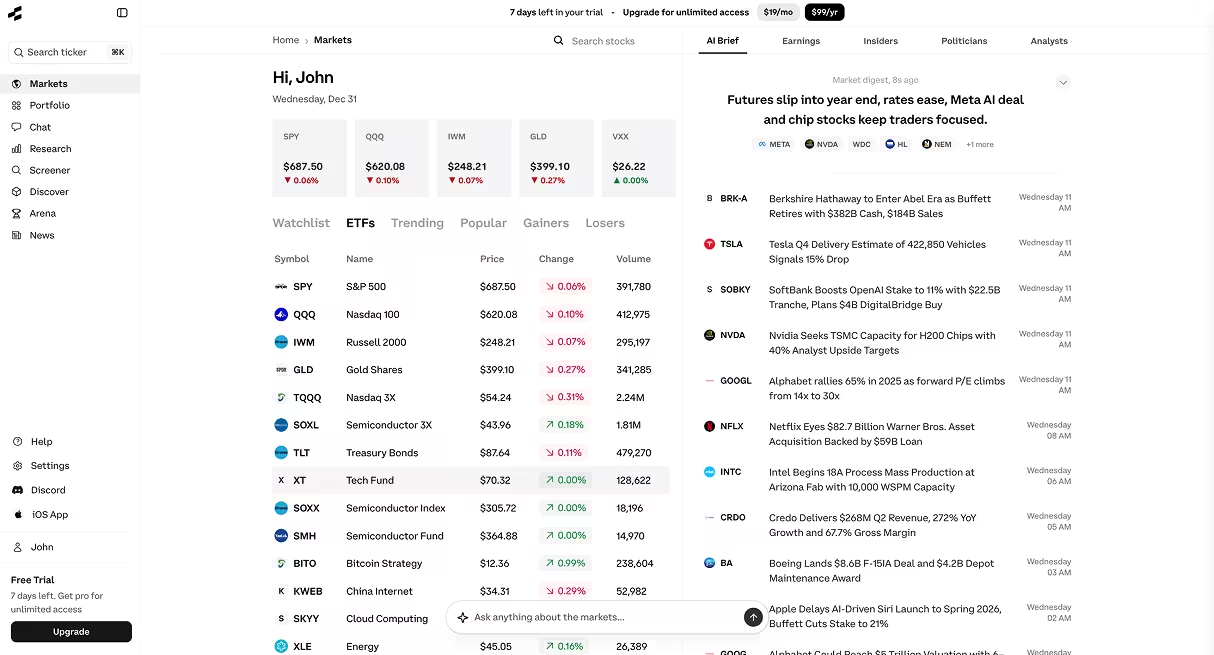
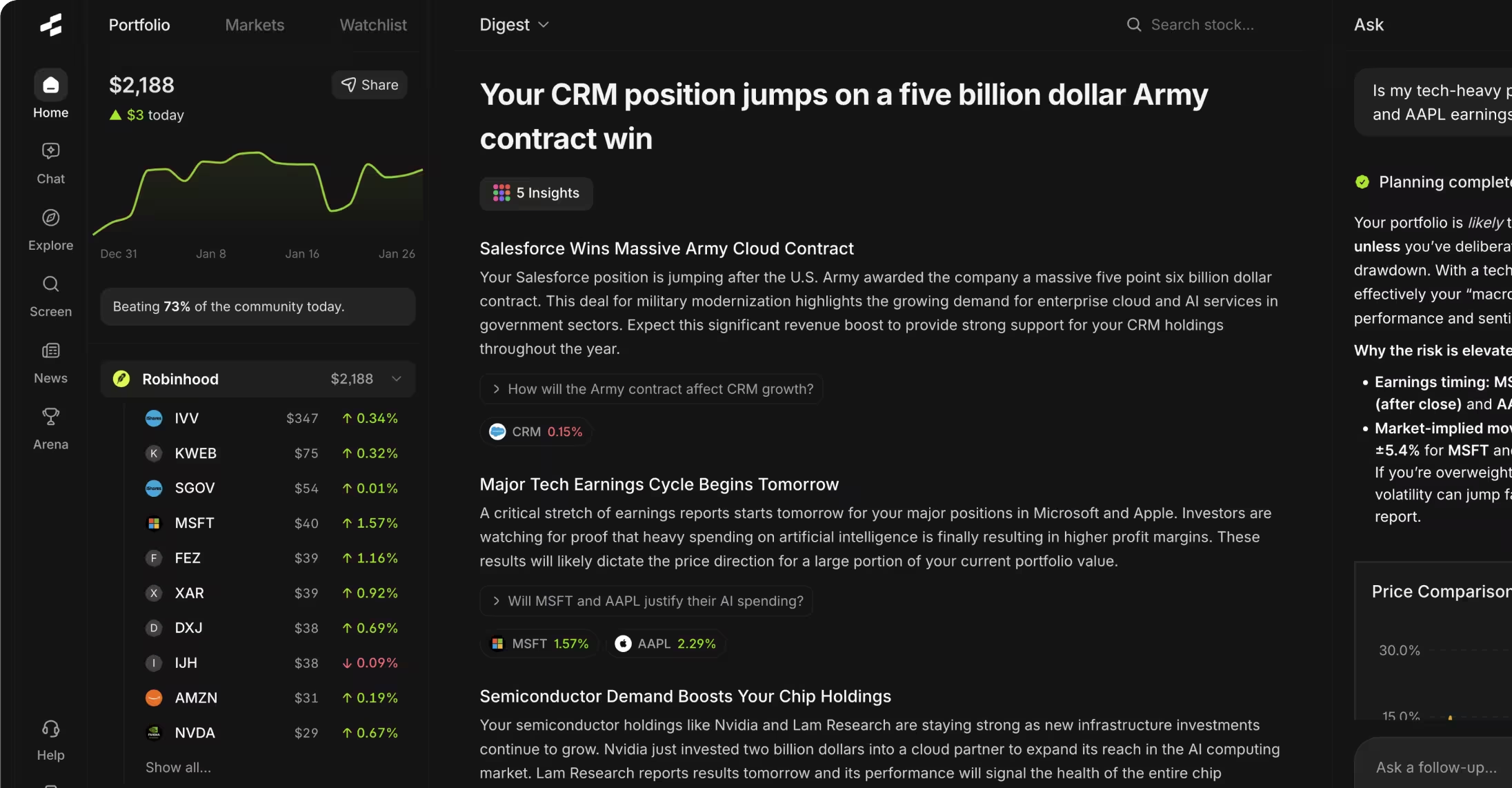
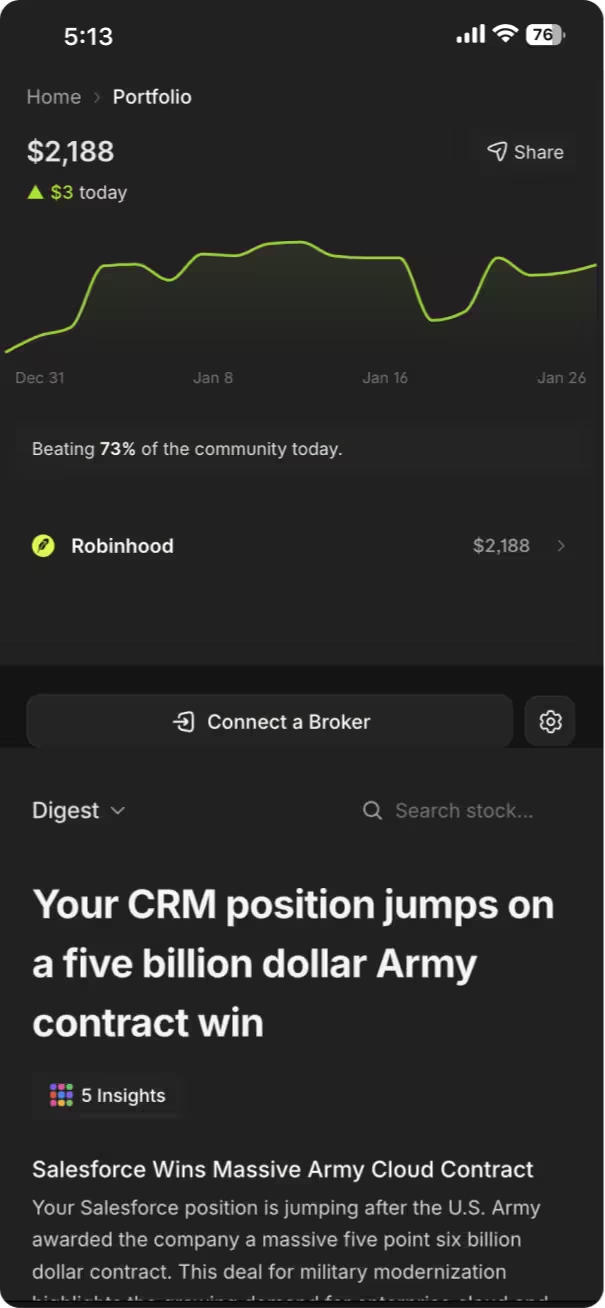
Portfolio management software automates calculations and provides visualizations. Tools range from free options that sync with major brokerages to professional platforms with advanced analytics. Features typically include automatic return calculations, asset allocation pie charts, performance graphs, and benchmark comparisons.
Portfolio Tracking Setup Checklist
- ☐ List all investment accounts and their current values
- ☐ Record your target asset allocation percentages
- ☐ Select appropriate benchmarks for your allocation
- ☐ Choose tracking method (brokerage tools, spreadsheet, or software)
- ☐ Document initial portfolio value and date
- ☐ Set calendar reminders for regular performance reviews
- ☐ Create system to record all contributions and withdrawals
- ☐ Establish process for capturing dividend and interest payments
Portfolio tracking tools can visualize your current allocation and highlight when it drifts from your targets. If you're targeting 60% stocks but your actual allocation has grown to 68% due to market gains, the software will flag this deviation and help you determine if rebalancing is appropriate.
For investors who want AI-powered analysis, portfolio tracking platforms can answer specific questions about your holdings, performance drivers, and allocation in plain English. This makes it easier to understand complex portfolio data without building custom spreadsheets.
How Often Should You Track Performance?
Monthly or quarterly tracking strikes the right balance for most long-term investors. This frequency provides enough data points to identify trends without encouraging overreaction to short-term volatility. Checking performance weekly or daily often leads to unnecessary anxiety and impulsive decisions based on normal market fluctuations.
Annual reviews should be more comprehensive, including full performance attribution (which holdings drove returns), rebalancing strategy evaluation, and tax-loss harvesting opportunities. This is also when you should compare your results against benchmarks and assess whether your overall investment strategy remains appropriate for your goals and risk tolerance.
Track certain events immediately regardless of your regular schedule. Record deposits and withdrawals when they occur, as these cash flows are critical for accurate return calculations. Document stock splits, mergers, and other corporate actions that affect your holdings. Log any changes to your contribution strategy or asset allocation targets.
The data shows that frequent monitoring can hurt performance. A 2023 study by Vanguard found that investors who checked their accounts daily were 30% more likely to make impulsive trades and averaged 1.5 percentage points lower annual returns compared to those who reviewed quarterly. Daily price swings feel significant but rarely indicate meaningful changes to your long-term thesis.
Common Tracking Mistakes to Avoid
Ignoring cash flows is the most common calculation error. If you add $10,000 to a portfolio that grows from $100,000 to $111,000, your actual return is 1%, not 11%. Failing to account for contributions makes performance look much better than it really is, while ignoring withdrawals has the opposite effect.
Cherry-picking date ranges distorts performance measurement. Starting your tracking period right after a market bottom makes returns look artificially strong, while starting at a peak makes them look weak. Use consistent measurement periods (calendar years or rolling 12-month periods) and avoid adjusting start dates to make results look better.
Forgetting to include dividends and interest understates your total return significantly. The S&P 500's price return averaged 7.3% annually from 1928-2023, but total return including reinvested dividends averaged 10.2%—a difference of nearly 3 percentage points per year that compounds dramatically over time.
Comparing against inappropriate benchmarks creates misleading conclusions. A conservative portfolio with 40% bonds should never be measured solely against the S&P 500, as this ignores the risk reduction benefits of diversification. Match your benchmark to your actual allocation and risk profile.
MistakeImpactSolutionIgnoring cash flowsInaccurate return calculationsUse time-weighted or money-weighted returnsSelective date rangesArtificially inflated performanceUse consistent measurement periodsMissing dividendsUnderstated total returnsTrack total return including all incomeWrong benchmarkMisleading comparisonsMatch benchmark to your allocationOvertrading from monitoringHigher costs, lower returnsReview monthly or quarterly, not daily
Neglecting fees and expenses reduces your net returns but often gets overlooked in tracking. A portfolio with 8% gross returns and 1.5% in fees and expenses only delivers 6.5% net returns. Track your all-in costs including expense ratios, advisory fees, trading commissions, and any other investment-related expenses.
Tools and Software Options
Free brokerage tools work well if you keep all investments at one firm. Vanguard, Fidelity, Schwab, and other major brokerages provide performance tracking, allocation analysis, and basic benchmark comparison at no additional cost. The limitation is that these tools only see holdings at their own firm.
Personal Capital (now Empower) offers free portfolio tracking across multiple accounts with automatic syncing to most brokerages. The platform provides net worth tracking, allocation analysis, retirement planning tools, and a fee analyzer that calculates your total investment costs. The tradeoff is aggressive marketing of their paid advisory services.
Morningstar's portfolio manager provides detailed analytics including X-ray allocation views, overlap analysis for multi-fund portfolios, and extensive benchmark comparisons. The free version covers basic tracking, while the premium subscription ($249/year as of 2024) adds research reports and advanced analytics.
Spreadsheet templates from Vanguard, Bogleheads, or similar sources let you build custom tracking without software costs. These require manual data entry but offer complete flexibility. Templates typically include pre-built formulas for calculating returns, tracking contributions, and comparing against benchmarks.
For comprehensive analysis, tools that integrate AI research capabilities can answer specific questions about your portfolio performance. Rather than just viewing charts and tables, you can ask things like "What's driving my underperformance this quarter?" and get explanations based on your actual holdings and sector exposures. The AI Research Assistant approach applies to portfolio analysis alongside individual stock research.
Frequently Asked Questions
1. What's the difference between time-weighted and money-weighted returns?
Time-weighted returns measure investment performance independent of cash flows by breaking the period into segments at each deposit or withdrawal and chain-linking the results. Money-weighted returns account for the timing and size of cash flows, better reflecting your personal experience. Financial advisors typically report time-weighted returns because this isolates strategy performance from your contribution decisions, while money-weighted returns show what you actually earned given when you invested your money.
2. Should I include my home equity when tracking portfolio performance?
No, most investors exclude primary residence equity from investment portfolio tracking because your home serves a consumption purpose rather than being a pure investment. Track your home value separately for net worth calculations, but keep your investment portfolio focused on liquid assets allocated across stocks, bonds, and other securities. Investment real estate held for income or appreciation should be included in portfolio tracking.
3. How do I track performance across multiple brokerage accounts?
Use portfolio aggregation software that syncs with multiple brokerages automatically, or maintain a spreadsheet that consolidates all accounts. Record the total value across all accounts at regular intervals, document all contributions and withdrawals regardless of which account they affect, and calculate returns on your combined portfolio rather than individual accounts. Most free tracking tools like Personal Capital support automatic syncing with major brokerages.
4. What return should I expect from a balanced portfolio?
A traditional 60% stock / 40% bond portfolio historically returned approximately 8.5% annually from 1926-2023 according to Vanguard research, though returns varied significantly by decade. More conservative allocations like 40/60 averaged around 7%, while aggressive 80/20 portfolios averaged about 9.5%. Your actual returns will depend on your specific allocation, the mix of domestic and international holdings, and the time period measured.
5. How do I account for cryptocurrency in my portfolio tracking?
Include cryptocurrency holdings at their current market value and track them as a separate asset class in your allocation. Calculate returns the same way you would for stocks, but recognize that crypto's high volatility will significantly impact your overall portfolio risk metrics. Most traditional portfolio software doesn't automatically sync crypto exchange accounts, so you may need to manually enter values or use specialized crypto tracking tools alongside your primary portfolio tracker.
6. Should I track pre-tax or after-tax returns?
Track pre-tax returns for regular performance monitoring to keep calculations simple and comparable to published benchmarks. Calculate after-tax returns annually for accounts in taxable brokerage accounts to understand your true net benefit. Tax-advantaged accounts like 401(k)s and IRAs should be tracked on a pre-tax basis since you won't pay taxes on gains until withdrawal. After-tax return tracking requires accounting for your specific tax situation including capital gains rates and dividend tax treatment.
7. What tools automatically calculate time-weighted returns?
Most major brokerage platforms including Fidelity, Schwab, and Vanguard calculate time-weighted returns automatically for accounts held at their firms. Third-party tools like Morningstar, Personal Capital, and specialized portfolio trackers also provide time-weighted return calculations. Spreadsheet users can calculate time-weighted returns using formulas that break the measurement period at each cash flow and chain-link sub-period returns, though this requires more manual work.
8. How do I benchmark a portfolio with alternative investments?
Create a custom blended benchmark that includes indexes for each asset class in your portfolio, including alternatives. For example, if you hold 50% stocks, 30% bonds, and 20% real estate, blend the S&P 500, Bloomberg Aggregate Bond Index, and a REIT index like the FTSE NAREIT in those proportions. For truly unique alternatives like private equity or hedge funds, you may need to compare against strategy-specific benchmarks or peer group averages rather than public market indexes.
Conclusion
Effective portfolio performance tracking requires systematic measurement of total returns, comparison against appropriate benchmarks, and regular monitoring of your asset allocation versus targets. Time-weighted returns provide the most accurate view of investment strategy performance, while tracking your actual allocation helps you identify when rebalancing is needed to maintain your intended risk profile.
Start with your brokerage's built-in tracking tools if your holdings are concentrated at one firm, or implement portfolio aggregation software if you maintain multiple accounts. Review performance quarterly to stay informed without overreacting to short-term market volatility, and conduct comprehensive annual reviews that examine attribution, costs, and benchmark comparison. For additional guidance on portfolio construction and management, read our complete guide to portfolio management.
Want to dig deeper? Read our complete guide to portfolio management or ask the AI Research Assistant your specific questions about tracking and analyzing performance.
References
- U.S. Securities and Exchange Commission. "Beginners' Guide to Asset Allocation, Diversification, and Rebalancing." https://www.sec.gov/investor/pubs/assetallocation.htm
- Vanguard Research. "Vanguard's framework for constructing diversified portfolios." https://corporate.vanguard.com/content/corporatesite/us/en/corp/who-we-are/sets-us-apart/research.html
- CFA Institute. "Global Investment Performance Standards (GIPS)." https://www.cfainstitute.org/en/ethics-standards/codes/gips-standards
- S&P Dow Jones Indices. "SPIVA U.S. Scorecard." https://www.spglobal.com/spdji/en/research-insights/spiva/
- Federal Reserve Economic Data (FRED). "Historical market returns and economic data." https://fred.stlouisfed.org/
Disclaimer: This article is for educational and informational purposes only. It does not constitute investment advice, financial advice, trading advice, or any other type of advice. Rallies.ai does not recommend that any security, portfolio of securities, transaction, or investment strategy is suitable for any specific person.
Risk Warning: All investments involve risk, including the possible loss of principal. Past performance does not guarantee future results. Before making any investment decision, you should consult with a qualified financial advisor and conduct your own research.
Written by: Gav Blaxberg
CEO of WOLF Financial | Co-Founder of Rallies.ai