


ChatGPT for stock research has significant limitations including outdated financial data, inability to access real-time market information, lack of integration with financial databases, hallucination of incorrect figures, and no ability to perform complex financial calculations. While ChatGPT excels at explaining financial concepts and answering general investment questions, it cannot replace specialized AI tools built specifically for stock analysis that connect directly to current market data and company filings.
Key Takeaways
- ChatGPT's training data cutoff means it cannot provide current stock prices, earnings reports, or financial statements—critical information for investment decisions
- The model lacks direct access to SEC filings, financial databases, and real-time market feeds that specialized investment research tools connect to automatically
- ChatGPT can generate plausible-sounding but completely incorrect financial figures without warning, a phenomenon known as "hallucination"
- Complex financial calculations like discounted cash flow analysis or options pricing require precision that general-purpose language models cannot consistently deliver
- ChatGPT works best for educational purposes—explaining financial concepts, investment terminology, and general market principles rather than specific stock research
- Purpose-built AI investing tools combine language processing with direct financial data connections, offering both conversational interfaces and accurate, current information
Table of Contents
- Data Access and Timeliness Limitations
- The Hallucination Problem in Financial Data
- Calculation and Analytical Constraints
- No Real-Time Market Information
- Missing Financial Context and Nuance
- What ChatGPT Does Well for Investors
- Purpose-Built AI Tools for Stock Research
- Best Practices When Using ChatGPT for Finance
- Frequently Asked Questions
- Conclusion
Data Access and Timeliness Limitations
ChatGPT's training data has a fixed cutoff date, typically several months or more behind the current date depending on the version you're using. This creates a fundamental problem for stock research, where decisions depend on the most recent earnings reports, guidance changes, and financial statements. A company's situation can change dramatically in a quarter—revenue growth can slow, margins can compress, or new competitive threats can emerge—but ChatGPT won't know about any of it.
The model doesn't connect to financial databases like Bloomberg Terminal, FactSet, or even free resources like Yahoo Finance or SEC EDGAR. When you ask ChatGPT about a company's current P/E ratio or latest quarterly revenue, it's working from memory of older training data, not pulling live information. This makes it functionally useless for questions like "What's Tesla's current valuation?" or "Did Apple beat earnings estimates last quarter?"
Training Data Cutoff: The date after which an AI model has no information because it was trained on data only up to that point. For ChatGPT, this typically ranges from several months to over a year behind the current date, depending on the version.
Even when ChatGPT had information about a company during its training period, that data becomes stale quickly. A stock trading at $150 six months ago might be at $200 or $100 today. Financial metrics shift quarterly. Credit ratings change. Dividend policies get adjusted. None of these updates reach ChatGPT after its training cutoff.
This isn't a flaw unique to ChatGPT—it's true of any large language model not specifically designed with live data connections. General-purpose AI models prioritize broad knowledge over real-time accuracy in specialized domains like finance. For educational explanations of how markets work, this trade-off makes sense. For actual stock research, it's a dealbreaker.
The Hallucination Problem in Financial Data
ChatGPT can generate financial figures that sound authoritative and specific but are completely fabricated. This "hallucination" happens when the model fills gaps in its knowledge by predicting plausible-sounding information rather than admitting uncertainty. In stock research, this is dangerous because wrong numbers lead to wrong decisions.
Ask ChatGPT for a company's exact revenue in a specific quarter, and it might confidently provide "$2.3 billion" when the real figure was $1.8 billion—or when it has no basis for any number at all. The response looks identical whether the model is recalling accurate training data or making an educated guess. You can't tell the difference without external verification, which defeats the purpose of using the tool for research.
AI Hallucination: When an AI model generates information that sounds plausible and is presented confidently but is factually incorrect or entirely fabricated. In financial contexts, this can include fake stock prices, invented financial ratios, or non-existent company events.
The hallucination risk increases with specificity. General statements like "Apple is a large technology company" are safe because they're well-represented in training data. But questions requiring precise numbers—"What was Microsoft's operating margin in Q2 2023?" or "How much debt does Ford carry?"—push the model into territory where it may invent answers rather than acknowledge gaps in knowledge.
This limitation stems from how large language models work. ChatGPT predicts the next most likely token (word fragment) based on patterns in training data. It doesn't "know" facts in the way a database does. It doesn't have a certainty score telling it when it's guessing. The same confident tone appears whether the model is 99% certain or 10% certain.
Some ChatGPT versions attempt to reduce hallucinations by saying "I don't have access to real-time data" or "I cannot provide current stock prices." But this safeguard isn't perfect. The model can still hallucinate historical data or mix up companies with similar names. Always verify any specific financial figure from ChatGPT against primary sources like company filings or financial data providers.
Calculation and Analytical Constraints
ChatGPT struggles with complex financial calculations that require precision and multi-step mathematical operations. While it can explain how to calculate a discounted cash flow valuation or walk through the Black-Scholes options pricing formula, actually performing these calculations accurately is inconsistent. The model can make arithmetic errors, lose track of intermediate steps, or apply formulas incorrectly.
Financial analysis often requires chaining together multiple calculations. To value a stock using DCF, you need to project future cash flows, select an appropriate discount rate, calculate terminal value, and sum present values. Each step involves assumptions and mathematical operations. ChatGPT might get close, but "close" isn't acceptable when you're making investment decisions with real money.
Task Type ChatGPT Capability Limitation Simple ratio calculation Usually accurate if given exact inputs Cannot retrieve the inputs automatically Multi-step DCF analysis Can explain methodology Prone to errors in execution, lost steps Options pricing Knows formulas conceptually Implementation often contains mistakes Portfolio optimization Understands concepts like efficient frontier Cannot perform actual optimization calculations Statistical analysis Can describe methods Calculations lack precision, may hallucinate results
The model also can't maintain state across long calculation sequences. If a valuation requires tracking dozens of variables across multiple years of projections, ChatGPT may lose consistency. Variables might change values unexpectedly, or the model might forget earlier assumptions by the time it reaches later steps.
Specialized financial tools handle this better because they're built on deterministic calculation engines. When you input revenue growth assumptions and margin targets into a proper DCF model, the software performs exact arithmetic every time. There's no risk of the tool "forgetting" your discount rate halfway through or accidentally mixing up operating income and net income.
No Real-Time Market Information
ChatGPT cannot tell you what's happening in markets right now. Stock prices, trading volumes, intraday movements, breaking news—all of this is invisible to the model. For investors who need to react to earnings surprises, economic data releases, or geopolitical events, this limitation makes ChatGPT nearly useless as a research tool.
Real-time information matters in several research contexts. If you're evaluating whether to buy a stock, knowing it's up 15% today on an FDA approval versus down 20% on a guidance cut is critical context. If you're assessing technical indicators, you need current price action and volume data. If you're screening for stocks meeting specific criteria, the universe of qualifying companies changes daily.
Market-moving events happen constantly. A Federal Reserve announcement shifts interest rate expectations. A company surprises with a major acquisition. An economic report comes in much weaker than forecasts. These developments change the investment landscape immediately, but ChatGPT remains frozen at its training cutoff date, unaware any of it happened.
Some investors try to work around this by copying and pasting news articles or earnings reports into ChatGPT and asking it to analyze the text. This helps with interpretation but doesn't solve the data access problem. You still need to manually feed the model current information, verify its accuracy, and fact-check any numerical claims it makes about the data you provided.
Tools built specifically for stock research solve this by connecting directly to market data feeds. The AI Research Assistant pulls current prices, financial metrics, and company filings automatically, combining conversational AI with up-to-date information that ChatGPT simply cannot access.
Missing Financial Context and Nuance
Stock research requires understanding industry-specific context, regulatory environments, competitive dynamics, and company-specific situations that extend beyond what general training data captures well. ChatGPT can explain broad concepts like "what makes a good balance sheet," but it often misses the nuances that matter for specific investment decisions.
Different industries have different normal ranges for financial metrics. A 5% net margin might be excellent for a grocery retailer but terrible for a software company. A debt-to-equity ratio of 2.0 could be conservative for a utility but alarming for a technology startup. ChatGPT knows these principles in general but can't consistently apply them to specific companies without current data and deep sector knowledge.
Accounting nuances create another gap. Revenue recognition rules vary by industry. Some companies use non-GAAP metrics that require careful interpretation. Off-balance-sheet liabilities, one-time charges, and adjusted earnings figures all need context to evaluate properly. ChatGPT may explain these concepts when asked directly but won't automatically flag them when analyzing a specific situation.
Non-GAAP Metrics: Financial measures that companies report outside of Generally Accepted Accounting Principles, often excluding certain expenses or one-time items. These require careful evaluation because companies have discretion in what they exclude, potentially painting an overly optimistic picture.
Competitive positioning matters enormously but changes rapidly. A company's moat can erode as new competitors enter, technology shifts, or regulations change. ChatGPT's static knowledge can't track these evolving competitive dynamics. It might describe a company's advantages based on training data from a year ago while missing that a new competitor has since disrupted the market.
Management quality and corporate governance are critical factors that don't reduce to simple metrics. Has the CEO consistently delivered on promises? Is the board aligned with shareholders? Has the company been transparent about challenges? These qualitative factors require current information about recent actions, not just historical patterns.
What ChatGPT Does Well for Investors
Despite its limitations for specific stock research, ChatGPT excels at educational tasks that don't require current data or precise calculations. Understanding these appropriate use cases helps investors get value from the tool without falling into traps where it performs poorly.
Explaining financial concepts is where ChatGPT shines. If you don't understand what EBITDA means, how stock buybacks work, or why the yield curve matters, ChatGPT can provide clear, accessible explanations tailored to your level of knowledge. It can break down complex topics into simpler components and answer follow-up questions as you learn.
Good Uses for ChatGPT in Finance
- Explaining investment terminology and financial concepts
- Describing how different investment strategies work generally
- Walking through the logic behind valuation methodologies
- Generating ideas for further research based on your interests
- Summarizing financial principles or historical market patterns
- Drafting investment thesis frameworks (without specific recommendations)
Poor Uses for ChatGPT in Finance
- Getting current stock prices, financial metrics, or market data
- Performing precise valuations or complex financial calculations
- Analyzing specific companies' recent performance or situations
- Screening for stocks meeting quantitative criteria
- Getting investment recommendations or "buy/sell" guidance
- Tracking your portfolio performance or calculating returns
ChatGPT can help you think through investment frameworks. If you're trying to develop a checklist for evaluating dividend stocks or want to understand different approaches to value investing, the model can describe various methodologies and help you organize your thinking. Just remember to verify any specific claims and don't rely on it for actual stock analysis.
The tool also works for generating research questions. If you're interested in the semiconductor industry but don't know where to start, ChatGPT can suggest angles to explore: supply chain dynamics, capital intensity, cyclicality patterns, or key competitive factors. You then need to research these topics using sources with current information, but ChatGPT provides useful starting points.
For educational purposes, working through hypothetical examples with ChatGPT can build your financial literacy. You might ask it to walk through how to read a cash flow statement or explain the difference between various valuation multiples. These explanations don't require current data and play to the model's strengths in clear communication.
Purpose-Built AI Tools for Stock Research
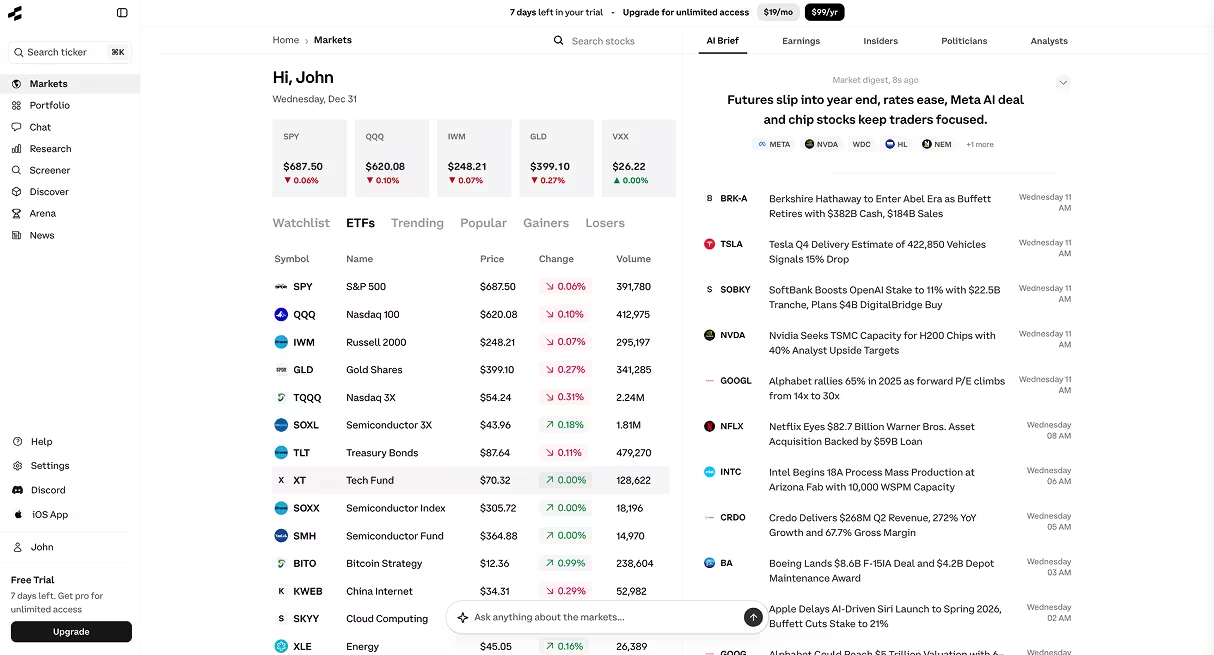
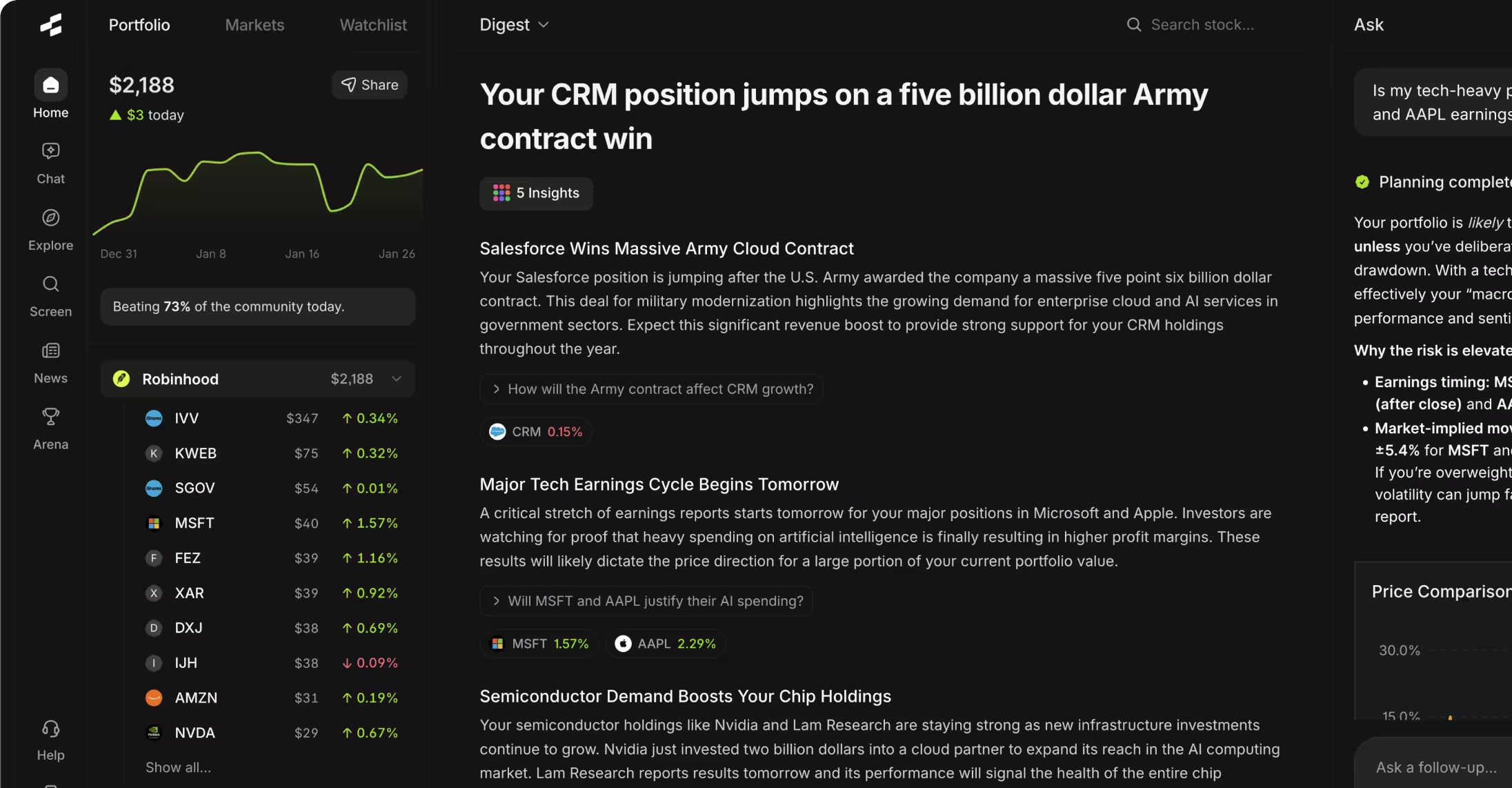
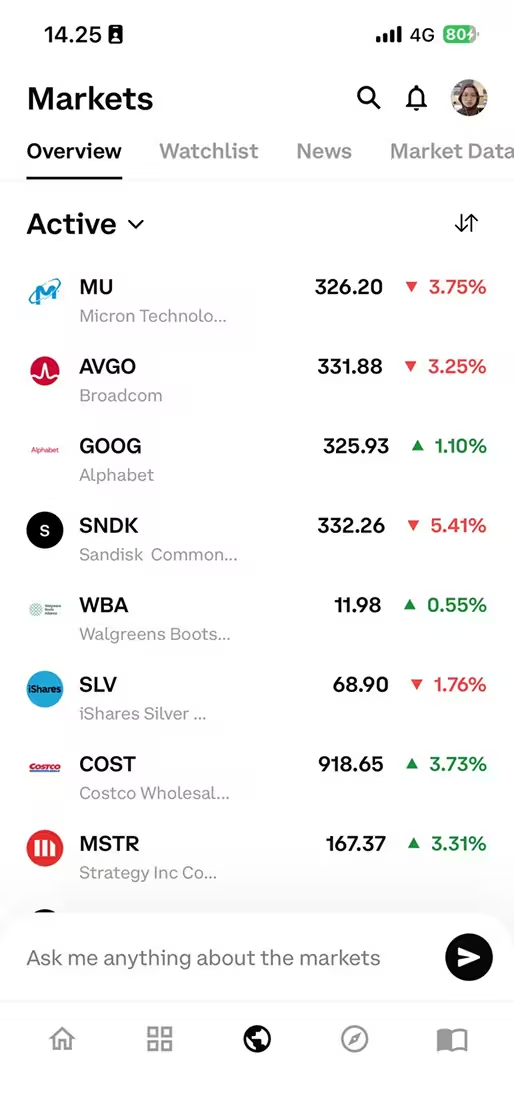
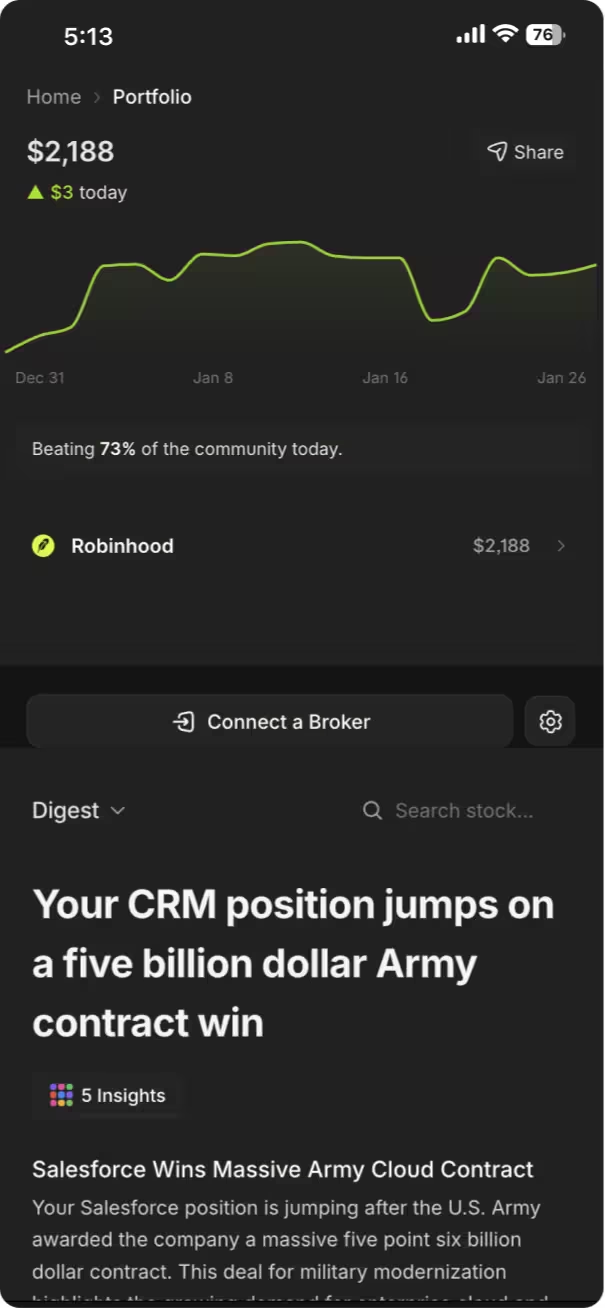
AI investing tools designed specifically for stock research combine natural language interfaces with direct connections to financial databases, real-time market feeds, and SEC filings. These purpose-built systems address ChatGPT's limitations while keeping the conversational, accessible interaction style that makes AI tools appealing.
The key architectural difference is data access. While ChatGPT relies solely on static training data, specialized investment research platforms connect to live financial information sources. When you ask about a company's P/E ratio or latest earnings, these tools query current databases rather than trying to recall old information from training. The AI handles language understanding and response generation, but the underlying data comes from authoritative, up-to-date sources.
Platforms like Rallies.ai let you ask research questions in plain English—similar to ChatGPT's interface—but return answers grounded in current financial data. You can ask "What's Microsoft's revenue growth over the past three years?" and get accurate figures pulled from actual financial statements, not hallucinated approximations. The conversational experience feels similar to ChatGPT, but the information is reliable.
AI-Powered Investment Research: Tools that combine artificial intelligence for natural language processing and analysis with direct access to financial databases, enabling conversational queries that return accurate, current market data and company information.
These tools also handle calculations correctly. Valuation models, financial ratios, growth rate calculations—all of these run on deterministic code that produces the same accurate result every time, while the AI layer helps you understand what the numbers mean and why they matter. You get both precision and accessibility.
Capability ChatGPT Purpose-Built AI Research Tools Natural language queries Yes, very flexible Yes, finance-optimized Current stock prices No Yes, real-time Financial statement access No direct access Direct SEC filing integration Accurate calculations Inconsistent Precise, verified Concept explanations Excellent Good, finance-focused Historical data analysis Limited by training cutoff Full historical access Portfolio tracking No Often included
Automated stock research tools also offer features ChatGPT cannot: watchlists with price alerts, portfolio tracking, custom screening based on quantitative criteria, and visualization of financial metrics over time. You might use natural language to set up these features—"Alert me if Tesla drops below $200"—but the system then monitors actual market data continuously.
The Vibe Screener demonstrates this integration of conversational AI with robust data. You can describe what you're looking for in plain English—"profitable tech companies with strong revenue growth and reasonable valuations"—and the system translates your natural language into precise screening criteria, then searches current financial data to find matches. ChatGPT can't do this because it lacks both the data access and the structured query capabilities.
Best Practices When Using ChatGPT for Finance
If you do use ChatGPT for investment-related tasks, following specific practices reduces risks and helps you extract value while avoiding the tool's weaknesses. The key is matching your use case to what the model actually does well rather than trying to force it into roles it can't fill.
Safety Checklist for Using ChatGPT in Finance
- ☐ Never make investment decisions based on ChatGPT output alone
- ☐ Verify every specific number, date, or financial figure from primary sources
- ☐ Cross-check company names and ticker symbols (the model can confuse similar names)
- ☐ Use it only for educational explanations, not specific stock research
- ☐ Assume any financial data is outdated or potentially incorrect
- ☐ Don't ask for or follow investment recommendations or "buy/sell" guidance
- ☐ Fact-check general claims about market history or financial principles
- ☐ Verify calculation results with financial calculators or spreadsheets
Frame your questions to play to ChatGPT's strengths. Instead of "Should I buy Apple stock?" (which requests advice the model shouldn't give and would base on outdated data anyway), ask "What factors do investors typically consider when evaluating large-cap technology companies?" This gets you educational value without inappropriate recommendations or data dependency.
When ChatGPT provides numerical examples in explanations, treat them as hypothetical illustrations rather than facts. If it says "For example, if a company has a P/E ratio of 25..." recognize that's a made-up teaching example, not a claim about any real company's actual valuation. The model often generates plausible numbers to illustrate concepts without intending them as factual data points.
Combine ChatGPT with reliable data sources. You might use ChatGPT to understand what free cash flow yield means and why it matters, then go to financial data providers or company filings to get actual free cash flow numbers for companies you're researching. This workflow uses the tool appropriately for concept explanation while getting data from proper sources.
Be skeptical of confident-sounding statements. ChatGPT often presents information with certainty even when it's guessing or working from incomplete knowledge. Phrases like "According to recent reports..." or "Current data shows..." from ChatGPT should trigger verification rather than trust, since the model has no access to recent reports or current data.
For complex analytical tasks, use purpose-built tools instead. If you need to screen stocks, run valuations, or analyze financial statements, tools designed for those tasks will outperform ChatGPT significantly. Trying to force ChatGPT into these roles wastes time and produces unreliable results when specialized alternatives exist.
Frequently Asked Questions
1. Can ChatGPT provide real-time stock prices?
No, ChatGPT cannot access real-time or even recent stock prices. The model's training data has a cutoff date, typically several months to over a year behind the current date. It has no connection to live market data feeds or financial databases. If ChatGPT appears to provide a stock price, it's either recalling old training data or hallucinating a plausible-sounding number. Always check current prices through financial websites, brokerage platforms, or tools specifically designed for market data.
2. Is ChatGPT accurate for financial calculations like DCF valuations?
ChatGPT is inconsistent and often inaccurate for complex financial calculations. While it can explain the methodology behind discounted cash flow analysis or other valuation approaches, actually performing multi-step calculations often results in errors. The model can lose track of intermediate values, make arithmetic mistakes, or apply formulas incorrectly. For precise valuations, use spreadsheets, financial calculators, or dedicated valuation software rather than relying on ChatGPT's calculations.
3. What's the biggest risk of using ChatGPT for stock research?
The biggest risk is hallucination—when ChatGPT generates plausible but completely incorrect financial information. The model might confidently state specific revenue figures, earnings data, or financial ratios that are wrong or entirely fabricated. Because the output looks authoritative regardless of accuracy, users can easily mistake hallucinated data for facts. This becomes dangerous when making investment decisions based on false information that you believed was reliable because it was presented confidently.
4. Can ChatGPT analyze a company's latest earnings report?
ChatGPT cannot analyze a company's latest earnings report on its own because it cannot access recent financial filings or press releases. However, if you copy and paste the earnings report text into ChatGPT, it can help interpret and summarize that information. Even then, be cautious—verify any specific numbers or calculations the model extracts from the text, as it may misread figures or make errors in analysis. Purpose-built investment research tools that connect directly to SEC filings will provide more reliable analysis of recent reports.
5. What should I use ChatGPT for in my investment research process?
Use ChatGPT for educational purposes: understanding financial concepts, learning about investment methodologies, clarifying terminology, and exploring general market principles. It works well for questions like "How does dividend yield work?" or "What are the components of a balance sheet?" Avoid using it for specific stock analysis, current data, precise calculations, or investment recommendations. Think of it as a financial tutor for building knowledge, not as a research tool for making actual investment decisions.
6. How are AI tools built specifically for stock research different from ChatGPT?
Purpose-built AI stock research tools combine natural language interfaces with direct connections to financial databases, real-time market feeds, and SEC filings. Unlike ChatGPT, which relies solely on static training data, these specialized platforms query current information sources when you ask questions. They provide accurate, up-to-date financial metrics, perform precise calculations, and integrate features like portfolio tracking and stock screening that ChatGPT cannot offer. The conversational experience may feel similar, but the underlying data access and accuracy are fundamentally different.
7. Will ChatGPT warn me when it doesn't have current information?
Sometimes, but not consistently. Newer ChatGPT versions often include disclaimers like "I don't have access to real-time data" when asked about current stock prices or recent events. However, these safeguards aren't perfect. The model can still provide outdated information from its training data without clearly marking it as old, or it may hallucinate figures without acknowledging uncertainty. Don't rely on ChatGPT to flag its own limitations—assume any specific financial data it provides is potentially outdated or incorrect unless you verify it independently.
8. Can I use ChatGPT to screen stocks based on specific criteria?
No, ChatGPT cannot screen stocks based on quantitative criteria because it lacks access to current financial databases. While it can explain what screening criteria mean or suggest factors to consider, it cannot search through actual company data to find stocks meeting specific requirements like "P/E ratio below 15 and revenue growth above 20%." Stock screening requires querying up-to-date financial databases, which tools like the Vibe Screener are built to handle but ChatGPT cannot access.
Conclusion
ChatGPT for stock research limitations are substantial: no access to current data, risk of hallucinating financial figures, inconsistent calculation accuracy, and lack of real-time market information. These constraints make it unsuitable for specific investment analysis, stock selection, or portfolio decisions. The model excels at educational tasks—explaining concepts, describing methodologies, and helping investors build financial literacy—but cannot replace tools designed specifically for stock research.
Understanding these limitations helps you use AI tools appropriately in your investment process. ChatGPT serves as a financial educator, not a research analyst. For actual stock analysis, current data, precise calculations, and reliable metrics, purpose-built AI investing tools that connect to live financial databases provide the accuracy and timeliness that investment decisions require. Match the tool to the task: ChatGPT for learning, specialized platforms for researching.
Want more reliable AI-powered stock research? Read our complete guide to AI stock research or try the AI Research Assistant for accurate, current financial data and analysis.
References
- U.S. Securities and Exchange Commission. "EDGAR Database." https://www.sec.gov/edgar
- OpenAI. "ChatGPT: Optimizing Language Models for Dialogue." https://openai.com/blog/chatgpt
- Ji, Ziwei, et al. "Survey of Hallucination in Natural Language Generation." ACM Computing Surveys, 2023. https://dl.acm.org/doi/10.1145/3571730
- Financial Industry Regulatory Authority. "Investment Analysis Tools." https://www.finra.org/investors
- CFA Institute. "Standards of Practice Handbook." https://www.cfainstitute.org/ethics-standards/codes
Disclaimer: This article is for educational and informational purposes only. It does not constitute investment advice, financial advice, trading advice, or any other type of advice. Rallies.ai does not recommend that any security, portfolio of securities, transaction, or investment strategy is suitable for any specific person.
Risk Warning: All investments involve risk, including the possible loss of principal. Past performance does not guarantee future results. Before making any investment decision, you should consult with a qualified financial advisor and conduct your own research.
Written by: Gav Blaxberg
CEO of WOLF Financial | Co-Founder of Rallies.ai