


```html
Building a stock portfolio involves selecting individual stocks, determining position sizes, and allocating capital across different sectors and market capitalizations. The process starts with defining investment goals and risk tolerance, then researching companies using fundamental analysis, and finally implementing a diversified mix of holdings that align with your strategy. Most experts recommend starting with 15-25 stocks across at least 8-10 sectors to balance diversification with manageability.
Key Takeaways
- Begin with 15-25 individual stocks to achieve meaningful diversification without creating an unmanageable portfolio
- Allocate no more than 5-10% of your portfolio to any single stock to limit company-specific risk
- Spread investments across at least 8-10 different sectors to avoid concentration in one area of the economy
- Use a mix of market capitalizations—typically 50-70% large-cap, 20-30% mid-cap, and 10-20% small-cap stocks
- Document your investment thesis for each stock purchase to maintain discipline and track your decision-making process
Table of Contents
- What Is Portfolio Construction?
- Defining Your Investment Goals and Risk Tolerance
- How Do You Determine Position Sizes?
- Selecting Individual Stocks for Your Portfolio
- Diversification Strategies That Work
- Building Your First Portfolio: A Step-by-Step Process
- When and How to Rebalance Your Portfolio
- Common Portfolio Construction Mistakes
- Frequently Asked Questions
- Conclusion
What Is Portfolio Construction?
Portfolio construction is the process of selecting and combining individual stocks into an investment portfolio that matches your financial goals and risk tolerance. It involves deciding which companies to own, how much capital to allocate to each position, and how to spread investments across different industries and market segments.
The goal of building a stock portfolio isn't just to pick winners—it's to create a collection of investments that work together to generate returns while managing risk. A well-constructed portfolio considers correlation between holdings, sector exposure, company size distribution, and how each position fits into your overall investment strategy.
Portfolio Allocation: The distribution of capital across different investments in your portfolio, typically expressed as percentages. Proper allocation helps balance potential returns against the level of risk you're willing to accept.
Academic research from the Journal of Finance shows that asset allocation decisions account for approximately 90% of portfolio return variability over time, making how you build a stock portfolio more important than individual stock selection in many cases.
Defining Your Investment Goals and Risk Tolerance
Before purchasing your first stock, you need to establish what you're investing for and how much volatility you can handle. Your investment timeline, financial objectives, and emotional comfort with market swings should shape every portfolio decision you make.
Investment goals typically fall into three timeframes: short-term (less than 3 years), medium-term (3-10 years), and long-term (over 10 years). Money needed within 3 years generally shouldn't be in stocks due to volatility risk. For goals 10+ years away, you can typically accept more short-term fluctuation in exchange for higher long-term growth potential.
Assessing Your Risk Tolerance
Risk tolerance has two components: risk capacity (how much loss you can afford) and risk preference (how much volatility you can stomach emotionally). A 25-year-old investing for retirement has high risk capacity due to decades of recovery time, but might still have low risk preference if market swings cause anxiety.
Risk Profile Stock Allocation Typical Holdings Expected Volatility Conservative 40-60% Large-cap dividend stocks, utilities, consumer staples 8-12% annual swings Moderate 60-80% Mix of large and mid-cap growth and value stocks 12-18% annual swings Aggressive 80-100% Growth stocks, small-caps, emerging sectors 18-25%+ annual swings
According to Vanguard research, investors who clearly define their goals and risk tolerance before investing are 2.3 times more likely to stick with their strategy during market downturns, which significantly impacts long-term returns.
How Do You Determine Position Sizes?
Position sizing determines what percentage of your portfolio each stock represents. Most investment professionals recommend limiting individual positions to 5-10% of your total portfolio value to prevent any single company's problems from derailing your overall returns.
The simplest approach is equal weighting—dividing your capital evenly across all holdings. If you own 20 stocks, each starts at 5% of your portfolio. This method removes emotional bias and prevents over-concentration, though it means your highest-conviction ideas get the same allocation as your lowest.
Position Sizing: The process of determining how much capital to allocate to each investment in your portfolio. Proper position sizing helps manage risk by preventing overexposure to any single stock or sector.
Core-Satellite Position Sizing
A more sophisticated approach uses core-satellite positioning. Your core holdings—typically 50-70% of your portfolio—consist of 8-12 established large-cap stocks in essential sectors. These provide stability and consistent returns. Satellite positions—the remaining 30-50%—allow for higher-conviction bets on growth opportunities or smaller companies.
Position Sizing Guidelines
- ☐ Limit any single stock to maximum 10% of portfolio at purchase
- ☐ Keep your top 5 holdings under 40% combined
- ☐ Allocate larger positions to less volatile, established companies
- ☐ Use smaller positions (2-3%) for speculative or high-risk stocks
- ☐ Consider your sector exposure when sizing new positions
- ☐ Document why you chose each position size
Research from the CFA Institute indicates that position sizes above 15% significantly increase portfolio volatility without proportionally increasing expected returns, suggesting an optimal cap around 10% for most individual investors.
Selecting Individual Stocks for Your Portfolio
Stock selection involves analyzing companies to identify businesses with strong fundamentals, competitive advantages, and reasonable valuations. The process combines quantitative analysis of financial metrics with qualitative assessment of business quality and industry position.
Start by screening for companies that meet basic quality criteria: positive earnings growth over the past 3-5 years, manageable debt levels (typically debt-to-equity below 1.0 for most industries), and returns on equity above 15%. These filters eliminate financially troubled companies and help you focus on businesses with track records of profitability.
Fundamental Analysis Factors
When evaluating individual stocks, examine both quantitative metrics and qualitative factors. On the numbers side, look at revenue growth trends, profit margins compared to competitors, free cash flow generation, and valuation ratios like P/E and price-to-sales relative to industry averages.
Metric Category What to Look For Red Flags Growth Revenue growth 10%+ annually, consistent earnings increases Declining sales, negative earnings trends Profitability Gross margins 40%+, net margins 15%+, ROE 15%+ Shrinking margins, ROE below 10% Financial Health Current ratio above 1.5, debt-to-equity below 1.0 Current ratio under 1.0, debt-to-equity above 2.0 Valuation P/E below industry average, PEG ratio under 2.0 P/E 2x+ industry average without justification
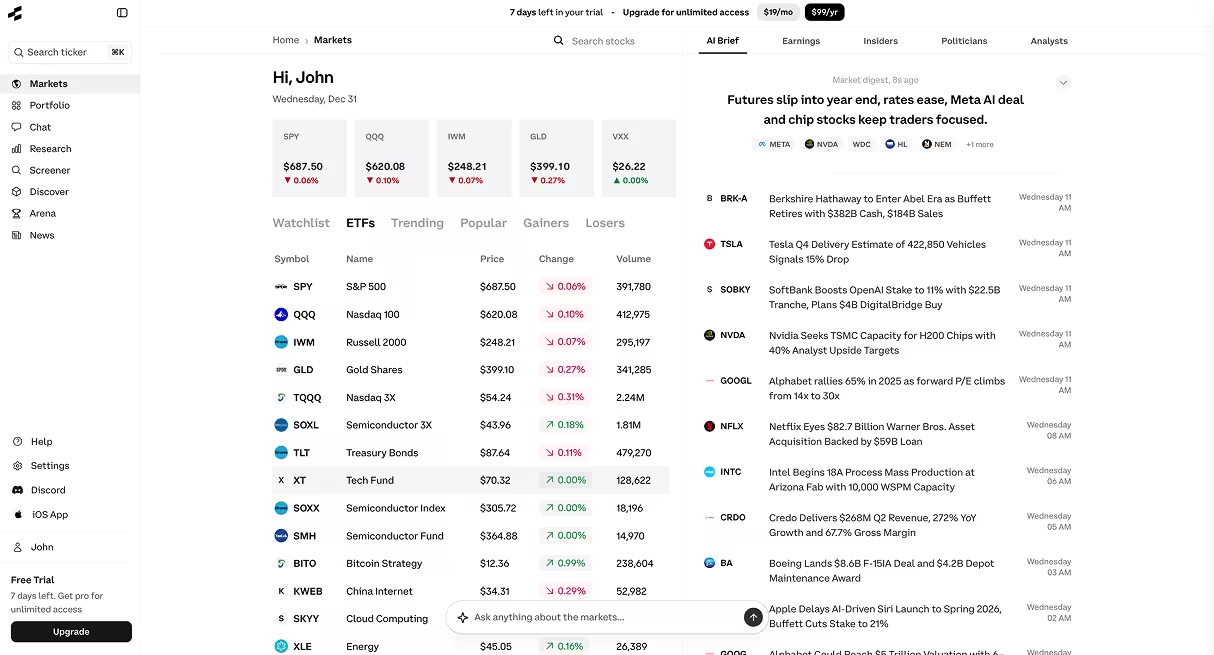
Tools like Rallies.ai's Vibe Screener let you describe the type of stocks you're looking for in plain English, making it easier to find companies that match your criteria without manually filtering through thousands of options.
Qualitative Assessment
Numbers only tell part of the story. You also need to evaluate the business itself: Does the company have a durable competitive advantage? Is management shareholder-friendly and transparent? Does the industry have favorable long-term trends? Is the business model simple enough for you to understand?
Warren Buffett's "circle of competence" concept applies here—focus on industries and business models you understand. If you can't explain how a company makes money in two sentences, you probably shouldn't own it regardless of how attractive the metrics look.
Diversification Strategies That Work
Diversification reduces risk by spreading investments across companies, sectors, and market segments that don't all move together. The goal is to build a portfolio where poor performance in one area gets offset by stability or gains elsewhere.
Research published in the Journal of Financial Economics found that holding 15-20 stocks eliminates approximately 90% of company-specific risk, while portfolios with 30+ stocks show diminishing marginal benefits. This suggests a sweet spot between 15-25 holdings for most investors building a stock portfolio.
Portfolio Diversification: The practice of spreading investments across different assets to reduce exposure to any single source of risk. Proper diversification means your holdings don't all rise and fall together.
Sector Diversification
The S&P 500 divides the market into 11 sectors. A well-diversified portfolio typically includes exposure to at least 8-10 of these sectors, with no single sector representing more than 25-30% of your holdings.
Sector S&P 500 Weight Suggested Portfolio Range Characteristics Technology 28-30% 15-25% High growth, high volatility Healthcare 13-15% 10-15% Defensive, demographic tailwinds Financials 11-13% 10-15% Cyclical, rate-sensitive Consumer Discretionary 10-12% 8-12% Cyclical, economy-dependent Communication Services 8-10% 5-10% Mixed growth and value Industrials 8-9% 5-10% Cyclical, infrastructure exposure
Market Capitalization Mix
Don't just own large companies. A diversified investment portfolio includes exposure to different market capitalizations: large-cap (over $10 billion), mid-cap ($2-10 billion), and small-cap (under $2 billion). Historical data shows small-caps outperform over long periods but with higher volatility.
A common allocation is 60-70% large-cap for stability, 20-30% mid-cap for growth potential, and 10-15% small-cap for higher-risk opportunities. Adjust these percentages based on your risk tolerance and investment timeline.
Geographic Diversification
While this article focuses on building a stock portfolio of individual companies, consider that many U.S. large-cap stocks already have significant international revenue exposure. Companies like Apple, Microsoft, and Coca-Cola generate 40-60% of revenue outside the U.S., providing indirect geographic diversification.
Building Your First Portfolio: A Step-by-Step Process
Constructing your first investment portfolio can feel overwhelming, but breaking it into specific steps makes the process manageable. This systematic approach helps you avoid common mistakes and build a solid foundation.
Step 1: Determine Your Total Investment Amount
Decide how much capital you'll invest initially. Most advisors recommend having 3-6 months of expenses in an emergency fund before investing in stocks. Only invest money you won't need for at least 3-5 years, as shorter timeframes increase the risk of selling during a market downturn.
Step 2: Choose Your Number of Holdings
For portfolios under $10,000, start with 10-15 stocks. For $10,000-$50,000, aim for 15-20 stocks. Above $50,000, you can expand to 20-25 holdings. More than 25 becomes difficult to monitor and research effectively for most individual investors.
Step 3: Design Your Sector Allocation
Before selecting individual stocks, decide your target sector weights. A balanced approach might allocate 15-20% to technology, 10-15% to healthcare, 10-15% to financials, 8-12% to consumer discretionary, and smaller positions across other sectors. Write these targets down—they'll guide your stock selection.
Step 4: Select Core Holdings First
Start with 8-12 established large-cap stocks that form your portfolio's foundation. Look for companies with 10+ year track records, dominant market positions, and consistent profitability. These might include industry leaders in technology, healthcare, consumer goods, and financial services.
Step 5: Add Diversifying Positions
Fill out your portfolio with mid-cap and growth-oriented stocks that add diversification and return potential. These should represent different sectors and business models than your core holdings. Aim for companies with strong competitive positions in growing markets.
Step 6: Document Your Investment Thesis
For each stock, write 3-4 sentences explaining why you're buying it. What competitive advantage does it have? What growth drivers do you see? At what price would you reconsider the position? This documentation helps you make rational decisions during market volatility.
First Portfolio Construction Checklist
- ☐ Confirmed emergency fund is in place
- ☐ Determined total investment amount
- ☐ Decided on number of holdings (15-25 recommended)
- ☐ Established target sector allocations
- ☐ Selected 8-12 core large-cap positions
- ☐ Added diversifying mid-cap and growth positions
- ☐ Verified no position exceeds 10% at purchase
- ☐ Confirmed coverage of at least 8 sectors
- ☐ Documented investment thesis for each holding
- ☐ Set up tracking system for performance monitoring
Step 7: Execute Purchases Gradually
Consider building your portfolio over 2-3 months rather than investing everything on day one. This dollar-cost averaging approach reduces the risk of entering at a market peak. You might invest one-third of your capital immediately, another third after 4 weeks, and the final third after 8 weeks.
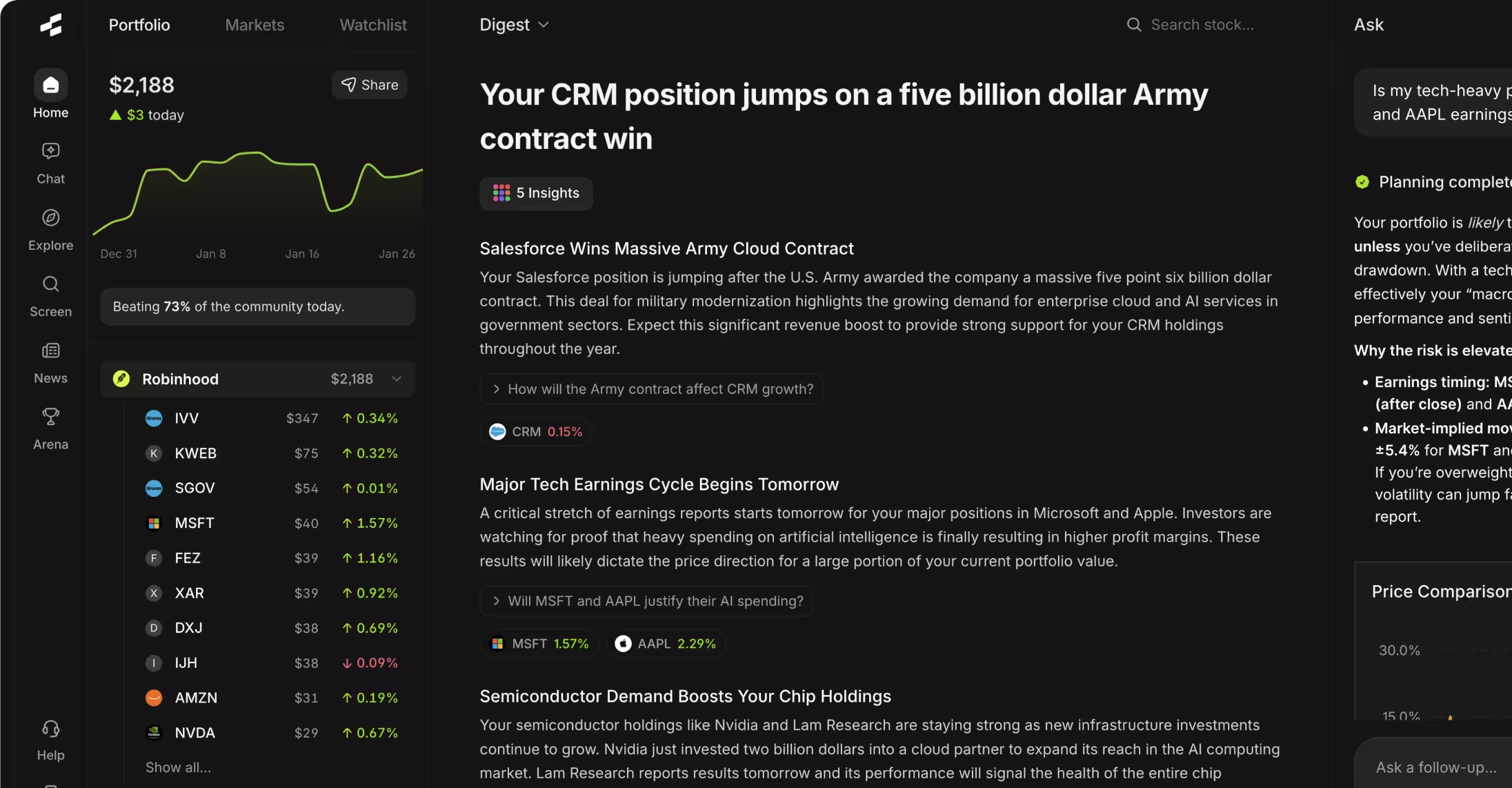
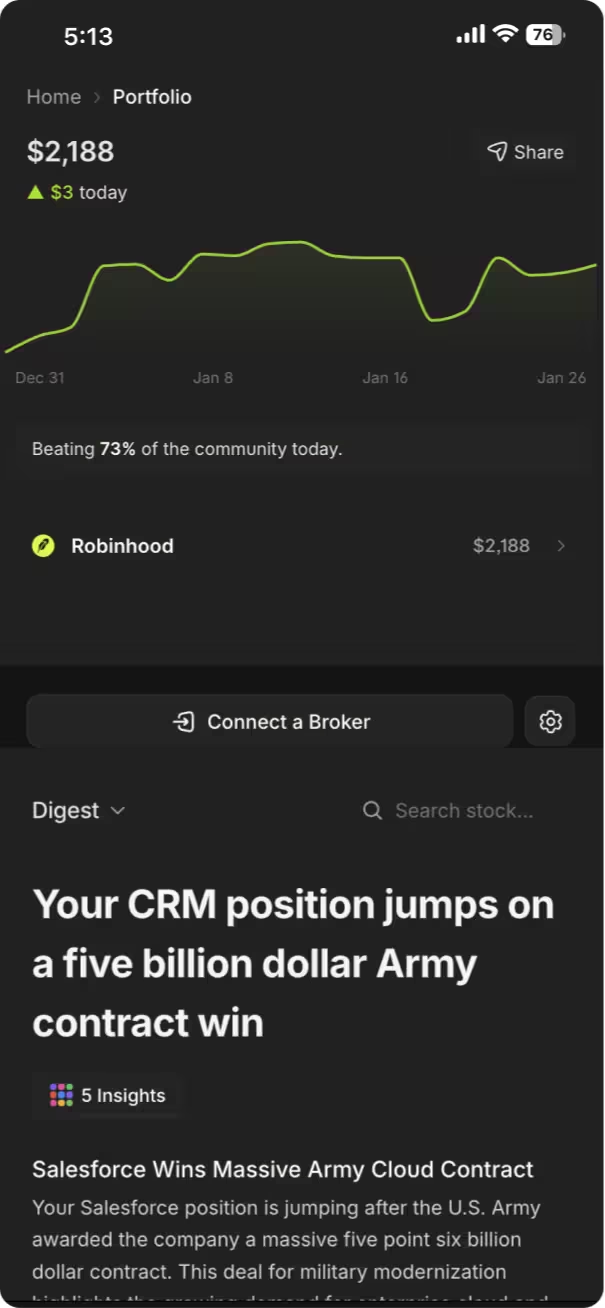
Tools like Rallies.ai's portfolio tracking can help you monitor your allocation and performance as you build out your positions, making it easier to see if you're hitting your target sector weights and diversification goals.
When and How to Rebalance Your Portfolio
Rebalancing is the process of adjusting your holdings back to target allocations after market movements cause drift. If technology stocks surge and grow from 20% to 35% of your portfolio, rebalancing means selling some tech shares and buying underweighted sectors to restore balance.
Research from Vanguard indicates that annual or semi-annual rebalancing provides nearly identical risk-adjusted returns to monthly rebalancing while generating fewer transactions and lower tax costs. Most individual investors should rebalance once or twice per year unless a position grows to exceed 15% of the portfolio.
Rebalancing Strategy: A systematic approach to maintaining your target asset allocation by periodically buying and selling holdings. Regular rebalancing enforces the discipline of selling high and buying low.
Time-Based Rebalancing
The simplest method sets specific calendar dates to review and adjust your portfolio—commonly quarterly, semi-annually, or annually. On your rebalancing date, calculate each position's current percentage of your portfolio and compare to your targets. Sell portions of holdings that have grown more than 2-3 percentage points above target and buy those that have fallen below.
Threshold-Based Rebalancing
This approach only rebalances when positions drift beyond set thresholds—typically 5 percentage points from target allocations. If your target for a stock is 5% and it grows to 10% or falls to 0%, you rebalance. This method can reduce unnecessary trading during periods of low volatility.
Benefits of Regular Rebalancing
- Maintains your intended risk level as markets shift
- Forces you to sell winners and buy underperformers (buy low, sell high)
- Prevents overconcentration in surging sectors
- Provides a systematic, emotion-free trading framework
Rebalancing Considerations
- Generates taxable events in non-retirement accounts
- Incurs trading commissions on some platforms
- May mean selling your best performers
- Can underperform in strong trending markets
Tax-Efficient Rebalancing
In taxable accounts, prioritize rebalancing methods that minimize capital gains taxes. Direct new contributions to underweighted positions rather than selling overweighted ones. When you must sell, prioritize positions you've held over one year to qualify for lower long-term capital gains rates, or use tax-loss harvesting to offset gains with losses.
The difference in after-tax returns can be substantial. A study by Parametric Portfolio Associates found that tax-aware rebalancing added 0.5-1.0% to annual after-tax returns compared to rebalancing without tax consideration.
Common Portfolio Construction Mistakes
Even experienced investors make predictable errors when building portfolios. Recognizing these patterns helps you avoid costly mistakes that can undermine years of careful planning.
Over-Concentration in Familiar Stocks
Many investors overweight companies they know well—their employer, local businesses, or popular brand names. This familiarity bias creates hidden risk. If you work for a tech company, own tech stocks, and your home value correlates with the local tech economy, you have massive concentration risk. Limit employer stock to 5-10% of your portfolio maximum.
Chasing Recent Performance
Buying last year's top performers is one of the most common and costly mistakes. Research from Morningstar shows that stocks in the top performance quintile over a 3-year period underperform the market average over the subsequent 3 years more than 60% of the time. Past performance tells you what happened, not what will happen.
Insufficient Diversification
Some investors concentrate in 5-8 stocks, thinking they can pick winners. While possible, this approach requires exceptional skill and research capacity. Academic research consistently shows that portfolios with fewer than 15 stocks carry significantly higher volatility without higher expected returns for most investors.
Ignoring Correlation
Owning 20 stocks doesn't guarantee diversification if they're all in related industries. A portfolio of 20 bank stocks has far more risk than one with 20 stocks across different sectors. Check that your holdings respond differently to economic conditions and don't all decline together during market stress.
Emotional Trading
Selling in panic during downturns or buying in excitement during rallies typically destroys returns. Dalbar's Quantitative Analysis of Investor Behavior study found that the average equity investor underperformed the S&P 500 by approximately 4 percentage points annually over a 20-year period, with poor timing decisions as the primary cause.
Portfolio Red Flags to Avoid
- ☐ Any single position over 15% of portfolio
- ☐ Top 3 holdings exceeding 40% combined
- ☐ More than 30% in a single sector
- ☐ Fewer than 15 total holdings
- ☐ Multiple holdings in closely related industries
- ☐ Over 10% in employer stock
- ☐ Buying stocks without documented investment thesis
- ☐ Making trades based on market predictions or hunches
Neglecting to Monitor Holdings
Building your portfolio isn't a one-time event. Companies change, competitive positions shift, and industries evolve. Schedule quarterly reviews to verify your investment thesis for each holding still holds true. If the reasons you bought a stock no longer apply, it may be time to sell regardless of whether you have a gain or loss.
Frequently Asked Questions
1. How many stocks should I own in my portfolio?
Most individual investors should own 15-25 individual stocks to achieve adequate diversification without creating an unmanageable portfolio. Research shows that 15-20 stocks eliminate about 90% of company-specific risk, while portfolios with more than 30 stocks show diminishing marginal benefits and become difficult to monitor effectively. If you have less than $10,000 to invest, start with 10-15 stocks and expand as your portfolio grows.
2. What percentage of my portfolio should be in stocks?
Your stock allocation depends on your investment timeline and risk tolerance. A traditional guideline suggests subtracting your age from 110 or 120 to determine your stock percentage—a 30-year-old might hold 80-90% stocks, while a 60-year-old might hold 50-60%. However, this is just a starting point. If you have a long investment horizon and high risk tolerance, you might hold 90-100% stocks regardless of age. Money needed within 3-5 years generally shouldn't be in stocks at all.
3. Should I invest all my money at once or gradually build my portfolio?
Research favors lump-sum investing—putting all available capital to work immediately—because markets rise more often than they fall, and time in the market beats timing the market. However, dollar-cost averaging (investing gradually over 3-6 months) can reduce emotional stress and protect against the unfortunate timing of investing everything at a market peak. For new investors, splitting the difference by investing half immediately and the rest over 2-3 months often provides a reasonable balance.
4. How do I know if a stock is overvalued before adding it to my portfolio?
Compare valuation metrics to industry peers and historical averages. Look at P/E ratio, price-to-sales ratio, PEG ratio, and price-to-book value relative to competitors. A stock trading at a P/E of 35 isn't necessarily overvalued if its industry average is 40 and the company is growing earnings 25% annually. However, be cautious of stocks trading at 2x or more their industry average P/E without clear justification like superior growth rates or competitive advantages. Tools like the AI Research Assistant can quickly pull these comparison metrics.
5. What's the difference between diversification and over-diversification?
Diversification means owning enough different stocks that poor performance in one doesn't significantly damage your overall returns. Over-diversification means owning so many stocks that you essentially replicate the market index while paying more attention and effort than simply buying an index fund. The research-backed sweet spot is 15-25 stocks across 8-10 sectors. Below 15, you carry too much company-specific risk. Above 30, you dilute your ability to outperform without meaningfully reducing risk.
6. How often should I check my portfolio performance?
Check your portfolio quarterly for rebalancing needs and to verify your investment theses remain valid. More frequent monitoring often leads to emotional trading decisions that harm long-term returns. Set specific quarterly review dates and avoid checking daily or weekly performance—short-term market noise rarely requires action and often triggers poor decisions. The exception is setting up alerts for significant news about your holdings, which can signal when an unscheduled review is warranted.
7. Should I include dividend stocks in my portfolio?
Dividend stocks can provide income and typically exhibit lower volatility than non-dividend-paying growth stocks. A balanced portfolio often includes both—dividend payers for stability and income, and growth stocks for capital appreciation. Investors in accumulation phase (building wealth) might allocate 20-40% to dividend stocks, while those nearing or in retirement might increase this to 50-70%. Consider that qualified dividends receive favorable tax treatment in taxable accounts, while dividends in retirement accounts don't provide tax benefits beyond the account's standard treatment.
8. What should I do if one stock grows to become too large a percentage of my portfolio?
If a position grows beyond 15% of your portfolio through price appreciation, consider trimming it back to 10% and reallocating proceeds to underweighted positions. This maintains your risk management discipline and prevents overconcentration. In taxable accounts, consider the tax implications—if you have a large unrealized gain and hold for under a year, waiting for long-term capital gains treatment might make sense. Alternatively, direct all new investment dollars to other positions until the overweighted stock naturally falls back to target allocation.
Conclusion
Building a stock portfolio requires thoughtful planning, disciplined execution, and ongoing management. Start by defining your investment goals and risk tolerance, then construct a diversified portfolio of 15-25 stocks across multiple sectors with position sizes of 5-10% each. Select individual stocks using fundamental analysis, focusing on companies with strong competitive positions and reasonable valuations relative to growth prospects.
The key to successful portfolio construction is balancing diversification with manageability—own enough stocks to reduce company-specific risk without creating a portfolio too large to monitor effectively. Review your holdings quarterly, rebalance when positions drift significantly from target allocations, and maintain the discipline to stick with your strategy during market volatility.
Remember that how you build a stock portfolio matters more than perfect stock selection. Focus on process over outcomes, document your investment theses, and make changes based on fundamental business changes rather than short-term price movements. For additional guidance, explore our complete portfolio management guide covering advanced allocation strategies and risk management techniques.
Want to dig deeper? Read our complete guide to portfolio management or ask the AI Research Assistant your specific questions about building a portfolio.
References
- Brinson, Gary P., et al. "Determinants of Portfolio Performance." Financial Analysts Journal, CFA Institute. cfainstitute.org
- Statman, Meir. "How Many Stocks Make a Diversified Portfolio?" Journal of Financial and Quantitative Analysis, Cambridge University Press. cambridge.org
- U.S. Securities and Exchange Commission. "Beginners' Guide to Asset Allocation, Diversification, and Rebalancing." sec.gov
- Vanguard Group. "Best practices for portfolio rebalancing." Vanguard Research. vanguard.com
- Dalbar, Inc. "Quantitative Analysis of Investor Behavior." Annual Report. dalbar.com
- Dimensional Fund Advisors. "Small Cap Value Returns: 1928-2022." DFA Research. dimensional.com
- Morningstar, Inc. "Performance Persistence in Equity Funds." Morningstar Research. morningstar.com
- Parametric Portfolio Associates. "Tax-Aware Rebalancing Strategies." Research Paper. parametricportfolio.com
Disclaimer: This article is for educational and informational purposes only. It does not constitute investment advice, financial advice, trading advice, or any other type of advice. Rallies.ai does not recommend that any security, portfolio of securities, transaction, or investment strategy is suitable for any specific person.
Risk Warning: All investments involve risk, including the possible loss of principal. Past performance does not guarantee future results. Before making any investment decision, you should consult with a qualified financial advisor and conduct your own research.
Written by: Gav Blaxberg
CEO of WOLF Financial | Co-Founder of Rallies.ai
```