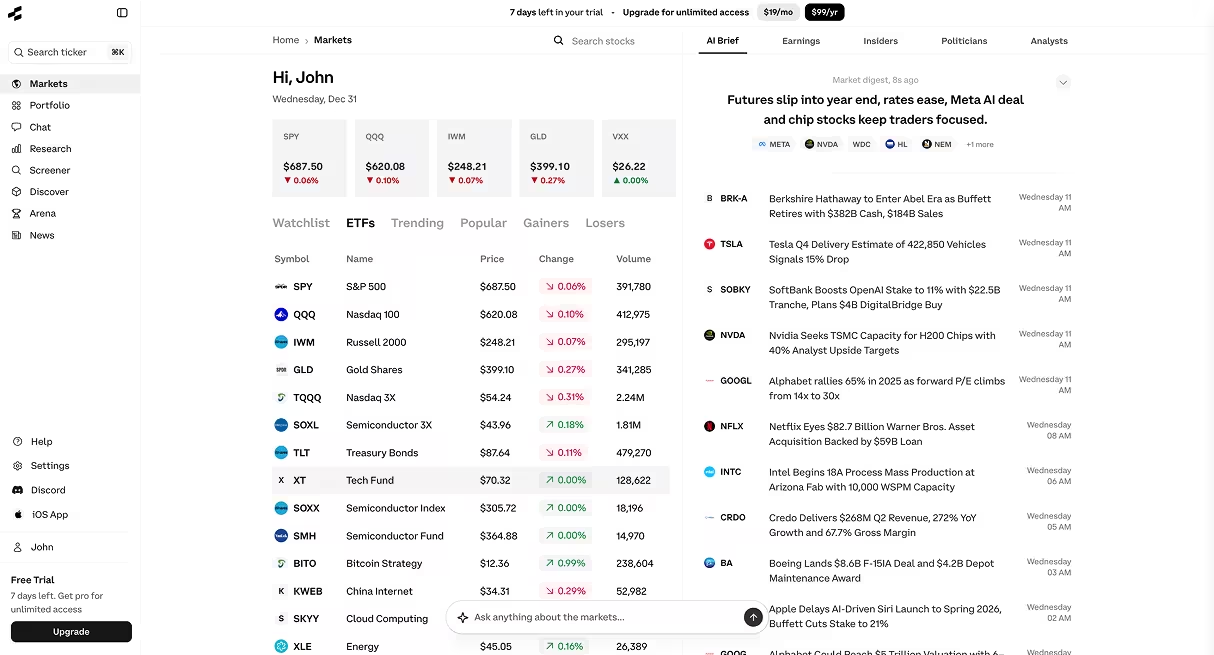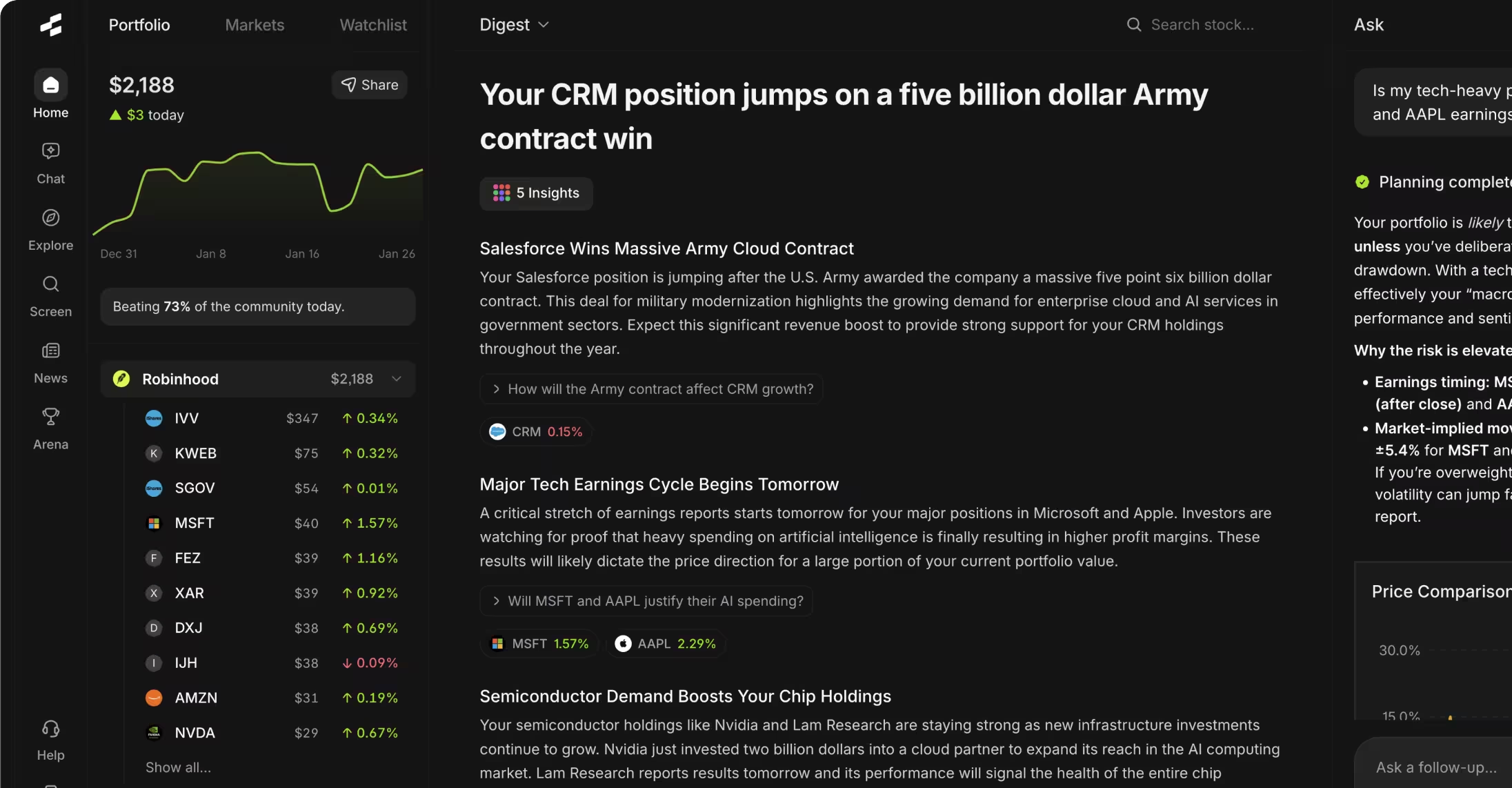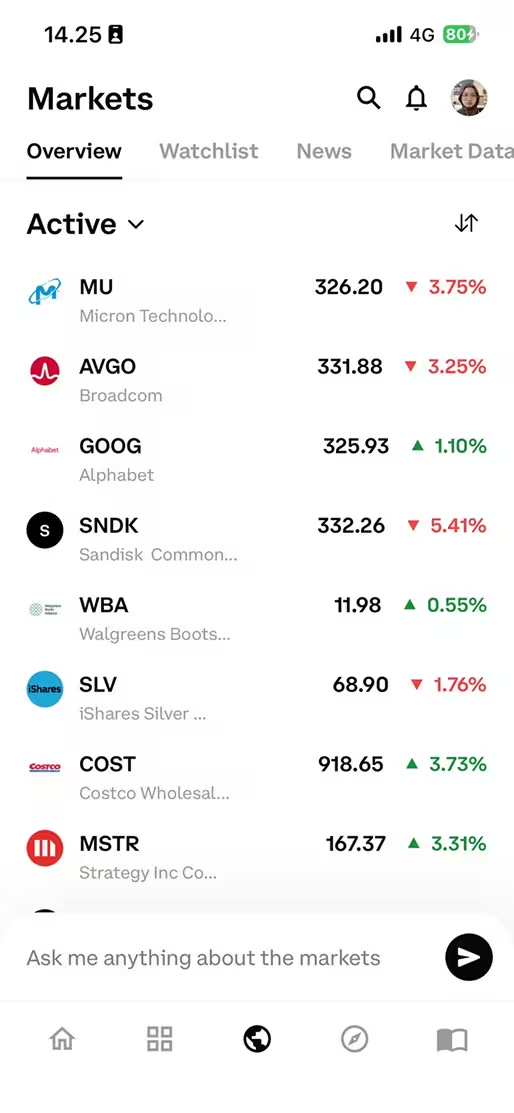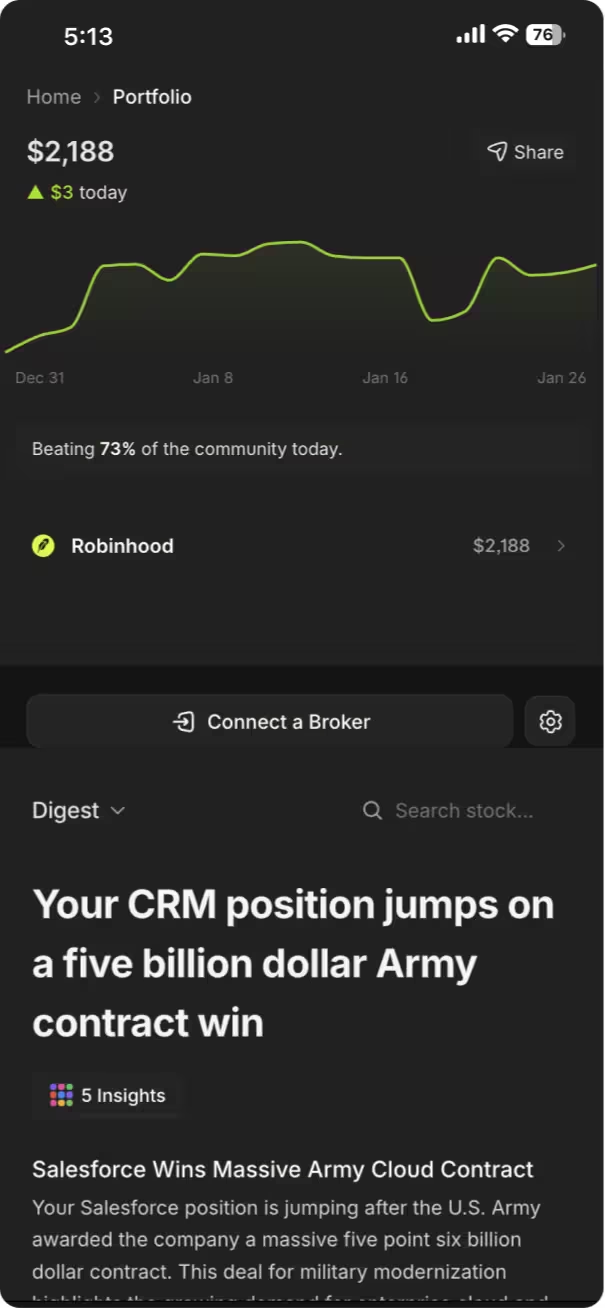



TipRanks alternatives include platforms like Seeking Alpha, StockRover, Morningstar, Zacks Investment Research, and Rallies.ai, each offering distinct approaches to stock research, analyst ratings, and portfolio tools. While TipRanks focuses on aggregating analyst performance and stock ratings, alternatives vary in their data depth, screening capabilities, AI-powered research, and pricing models. Investors should evaluate alternatives based on their research style, whether they prioritize analyst consensus, fundamental screening, technical analysis, or AI-assisted insights.
Key Takeaways
- TipRanks specializes in tracking analyst performance and aggregating Wall Street ratings, but alternatives offer different strengths like fundamental screening, AI research, or dividend analysis
- Seeking Alpha provides crowdsourced analysis and earnings call transcripts, making it valuable for investors who want diverse perspectives beyond institutional analyst ratings
- StockRover and Morningstar excel at fundamental screening with customizable metrics, ideal for investors building quantitative strategies
- AI-powered platforms like Rallies.ai allow natural language research questions, reducing the learning curve compared to traditional screeners
- Free alternatives exist but typically limit data depth, screening complexity, or historical range compared to paid subscriptions
- Most serious investors use 2-3 complementary tools rather than relying on a single platform for all research needs
Table of Contents
- What Is TipRanks and Why Look for Alternatives?
- Seeking Alpha: Crowdsourced Analysis and Earnings Transcripts
- StockRover: Advanced Fundamental Screening
- Morningstar: Independent Research and Fair Value Estimates
- Zacks Investment Research: Earnings Estimate Revisions
- Rallies.ai: AI-Powered Natural Language Research
- FinViz: Technical Screening and Visual Tools
- Feature and Pricing Comparison
- How to Choose the Right Alternative for Your Needs
- Frequently Asked Questions
- Conclusion
What Is TipRanks and Why Look for Alternatives?
TipRanks is a financial analysis platform that tracks Wall Street analyst performance, aggregates stock ratings, and provides data on insider trading, hedge fund activity, and blogger sentiment. The platform ranks analysts based on their historical accuracy, giving investors transparency into who's been right or wrong about specific stocks. While TipRanks serves a specific niche well, investors often seek alternatives because they need different types of analysis, prefer alternative data sources, want more robust screening tools, or find TipRanks' pricing structure doesn't match their budget.
Analyst Rating: A professional opinion from a financial analyst recommending whether to buy, hold, or sell a stock, typically accompanied by a price target. Ratings vary in accuracy, which is why platforms like TipRanks track analyst track records.
TipRanks excels at answering "What do Wall Street analysts think?" but may fall short if you're asking "What stocks meet my specific fundamental criteria?" or "How does this company's dividend history look?" Different research questions require different tools. Some investors use TipRanks alongside complementary platforms, while others replace it entirely with tools better suited to their investment approach.
The stock research tools landscape has expanded significantly, with platforms now specializing in fundamental analysis, technical screening, AI-powered research, dividend tracking, and crowdsourced insights. Understanding these alternatives helps you build a research stack that matches your strategy.
Seeking Alpha: Crowdsourced Analysis and Earnings Transcripts
Seeking Alpha combines professional and amateur investor analysis with comprehensive earnings data, making it one of the most popular TipRanks alternatives for investors who value multiple perspectives. The platform hosts thousands of contributors who publish detailed stock analyses, sector deep-dives, and income-focused strategies. Unlike TipRanks' focus on institutional analyst ratings, Seeking Alpha democratizes investment research by giving retail investors and independent analysts a publishing platform.
The platform's standout feature is its library of earnings call transcripts going back years. You can read exactly what management said during quarterly calls without listening to hour-long audio. This is valuable for spotting changes in tone, verifying claims made in press releases, and understanding management's forward guidance. Seeking Alpha also provides summary bullet points for each transcript, saving time when you're researching multiple companies.
Advantages
- Access to diverse viewpoints from hundreds of contributors with different investment styles
- Complete earnings call transcripts updated within hours of calls ending
- Active comment sections where investors debate thesis points
- Strong coverage of dividend stocks and income strategies
- Free tier provides substantial content, though premium unlocks full transcripts and exclusive articles
Limitations
- Quality varies significantly between contributors, requiring you to vet authors
- Some articles contain promotional bias, especially from contributors with positions
- Limited quantitative screening compared to dedicated screener platforms
- Premium subscription ($299/year) required for full functionality
- No built-in portfolio tracking or backtesting tools
Seeking Alpha works best for investors who read extensively before making decisions and want exposure to contrarian viewpoints. If you prefer data-driven quantitative analysis over qualitative articles, you might find other alternatives more suitable.
StockRover: Advanced Fundamental Screening
StockRover is a comprehensive stock research platform specializing in fundamental analysis, screening, and portfolio management. It provides access to over 650 financial metrics spanning 20+ years of historical data, making it ideal for investors who build quantitative strategies based on specific fundamental criteria. Unlike TipRanks' analyst-rating focus, StockRover emphasizes letting you define your own criteria for stock selection.
The platform's screening capabilities exceed most competitors. You can create multi-factor screens combining valuation metrics, growth rates, profitability measures, and balance sheet strength, then save these screens for regular monitoring. StockRover also includes built-in screens based on famous investors' strategies, like Warren Buffett's focus on return on equity and low debt, or Benjamin Graham's value criteria.
Fundamental Screening: The process of filtering stocks based on financial statement data like P/E ratios, revenue growth, profit margins, and debt levels. This differs from technical screening, which uses price charts and trading patterns.
StockRover's portfolio management features let you track multiple portfolios, analyze sector allocation, and compare your holdings' fundamentals against benchmarks. The platform generates detailed portfolio reports showing aggregate metrics like weighted average P/E ratio, dividend yield, and exposure to different market cap ranges. This is particularly useful for investors managing their own portfolios without an advisor.
StockRover TierPriceKey FeaturesFree$010 years data, basic screening, 2 portfoliosEssentials$7.99/month15 years data, advanced screening, 10 portfoliosPremium Plus$27.99/month20 years data, all metrics, unlimited portfolios, research reports
StockRover appeals to DIY investors comfortable with financial statements and quantitative analysis. If you're new to investing or prefer qualitative research, the platform's complexity might feel overwhelming initially.
Morningstar: Independent Research and Fair Value Estimates
Morningstar provides independent equity research, mutual fund analysis, and portfolio tools, backed by a team of in-house analysts who assign proprietary ratings and fair value estimates. Unlike crowdsourced platforms, Morningstar employs full-time analysts who follow specific sectors and companies, providing consistency in methodology. The platform is particularly well-regarded for its mutual fund ratings (the famous "star" system) and economic moat analysis.
Morningstar's fair value estimates represent analyst opinions on what a stock should trade for based on discounted cash flow models. The platform shows whether stocks are trading above or below fair value, with a visual indicator of uncertainty. For example, a stock trading at $80 with a fair value estimate of $100 and a three-star rating suggests moderate upside, while a five-star rating indicates the stock is significantly undervalued according to Morningstar's methodology.
The economic moat concept, central to Morningstar's analysis, assesses competitive advantages. Companies receive wide, narrow, or no moat ratings based on factors like network effects, cost advantages, intangible assets, switching costs, and efficient scale. This qualitative assessment complements quantitative metrics and helps identify companies with sustainable competitive positions. You can screen for moat ratings within Morningstar's tools, filtering for wide-moat companies trading below fair value.
Morningstar Premium costs $249 per year and includes full analyst reports, fair value estimates, portfolio tools, and extensive mutual fund data. The free version provides basic quotes and news but limits access to detailed research reports and screening tools. For investors interested in fundamental analysis with professional research backing their decisions, Morningstar offers a middle ground between free tools and expensive institutional platforms.
Zacks Investment Research: Earnings Estimate Revisions
Zacks Investment Research centers its methodology on earnings estimate revisions, based on research showing that stocks with upward earnings revisions tend to outperform. The platform aggregates earnings estimates from Wall Street analysts and tracks when estimates move up or down, assigning stocks a proprietary Zacks Rank from 1 (Strong Buy) to 5 (Strong Sell). This focus on earnings momentum differentiates Zacks from valuation-focused platforms or analyst rating aggregators like TipRanks.
The Zacks Rank updates daily based on four factors: agreement (how many analysts are revising estimates in the same direction), magnitude (size of revisions), upside (difference between current price and mean target), and surprise (recent earnings beats or misses). Zacks research indicates that Rank 1 stocks have historically returned 26% annually since 1988, though past performance doesn't guarantee future results. The systematic approach appeals to investors who prefer quantitative signals over subjective analysis.
Earnings Estimate Revision: When an analyst changes their prediction for a company's future earnings per share. Upward revisions often signal improving business conditions, while downward revisions may indicate deteriorating fundamentals.
Zacks Premium subscriptions ($249/year) provide access to the full rankings, screening tools, portfolio trackers, and research reports. The platform also offers specialized premium services for options traders and short-term traders at higher price points. Free users can see limited Zacks Rank data and basic company profiles but cannot access the screening tools or detailed methodology explanations.
This platform works well for investors who believe in earnings momentum as a selection factor and want a systematic, rules-based approach. If you focus primarily on value investing or technical analysis, Zacks' earnings-centric methodology may not align with your strategy.
Rallies.ai: AI-Powered Natural Language Research
Rallies.ai takes a different approach to stock research by letting investors ask questions in plain English rather than navigating complex screeners or reading lengthy reports. The platform's AI Research Assistant pulls data from financial statements, analyst estimates, and market data to answer questions like "Which tech stocks have profit margins above 20%?" or "What's Microsoft's revenue growth over the past five years?" This reduces the technical barrier to conducting thorough research.
The platform combines several tools in one interface. The Vibe Screener lets you describe what you're looking for in natural language, which the AI translates into quantitative filters. For example, typing "profitable small-cap healthcare companies with low debt" generates a filtered list without manually setting market cap ranges, profitability thresholds, and debt ratios. This is faster than traditional screeners for exploratory research.
Rallies.ai also provides Deep Research Mode, which generates comprehensive analysis covering 100+ data points for individual stocks. The analysis includes financial health metrics, valuation comparisons to peers, growth trends, profitability analysis, and risk factors. Each report synthesizes data that would otherwise require visiting multiple sources, making it efficient for investors researching unfamiliar companies.
Advantages
- Natural language interface requires no training or financial expertise to start using
- Combines screening, fundamental data, news, and AI analysis in one platform
- Free tier provides substantial functionality without credit card required
- Mobile app available for research on the go
- No bias toward specific investment styles, adaptable to value, growth, or income strategies
Limitations
- AI responses depend on underlying data quality and may occasionally need clarification
- Less established track record than platforms like Morningstar or Seeking Alpha
- Limited social features or community discussion compared to Seeking Alpha
- Advanced users familiar with traditional screeners may not need the natural language layer
Rallies.ai works particularly well for newer investors who find traditional platforms intimidating and for experienced investors who want faster exploratory research. The platform continues adding features, including portfolio tracking and thematic investing tools for trend-based strategies. You can try Rallies.ai free to see if the natural language approach fits your research style.
FinViz: Technical Screening and Visual Tools
FinViz (Financial Visualizations) specializes in visual market data and technical screening, making it popular among traders and investors who use charts and technical patterns. The platform's free screener includes dozens of filters for both fundamental and technical criteria, with results displayed in a grid of mini-charts that let you quickly scan for visual patterns. Unlike analyst-focused platforms, FinViz emphasizes price action and market sentiment.
The platform's map view displays the entire stock market as a heat map, with tile sizes representing market capitalization and colors showing daily performance. This visual overview helps you quickly spot sector rotations, identify which industries are leading or lagging, and see how individual large-cap stocks are moving. The map updates in real-time during market hours, providing an intuitive way to monitor broad market conditions.
FinViz's screener combines fundamental filters like P/E ratio and debt levels with technical filters like RSI, moving average crossovers, chart patterns, and candlestick formations. You can screen for stocks breaking out above resistance, trading near 52-week lows, or showing specific candlestick patterns. This combination appeals to investors who blend fundamental stock selection with technical timing for entries and exits.
The free version includes delayed data (15-minute lag) and displays ads, while FinViz Elite ($39.50/month or $299.50/year) adds real-time data, advanced charting, correlation analysis, and backtest capabilities. For the price, FinViz Elite provides exceptional value for technically-oriented investors who need real-time visual tools without expensive professional platforms.
Feature and Pricing Comparison
Different platforms excel at different research tasks. This comparison shows how major TipRanks alternatives stack up across key dimensions investors consider when choosing research tools. Pricing reflects annual subscription costs where applicable, as of 2024.
PlatformBest ForStarting PriceScreening StrengthResearch DepthTipRanksAnalyst trackingFree (limited)BasicAnalyst-focusedSeeking AlphaQualitative analysis$299/yearLimitedExtensive articlesStockRoverFundamental screeningFree (limited)ExcellentData-drivenMorningstarIndependent research$249/yearGoodProfessional reportsZacksEarnings momentum$249/yearGoodEarnings-focusedRallies.aiAI researchFreeNatural languageAI-generatedFinVizTechnical analysis$299.50/yearExcellentChart-focused
No single platform dominates all categories. Investors focused on value investing might combine Morningstar's fair value estimates with StockRover's screening, while growth investors might pair Zacks' earnings revisions with FinViz's technical indicators. The AI Research Assistant can supplement any of these by answering specific questions across your research process.
Consider your budget alongside functionality. If you're spending $300-600 annually on subscriptions, evaluate whether one premium tool plus free alternatives might serve you better than multiple mid-tier subscriptions. Many successful investors use one paid comprehensive platform supplemented by free specialized tools rather than subscribing to everything.
How to Choose the Right Alternative for Your Needs
Selecting the right TipRanks alternative depends on matching platform strengths to your investment approach, experience level, and research workflow. Start by identifying what you're trying to accomplish: Are you screening for stocks meeting specific criteria? Reading in-depth analysis? Tracking analyst performance? Monitoring technical patterns? Different tools excel at different tasks.
Platform Selection Checklist
- ☐ Define your primary research question: What do you most need to know about stocks?
- ☐ Assess your quantitative comfort level: Do you prefer numbers and metrics or written analysis?
- ☐ Determine your budget: How much are you willing to spend monthly or annually?
- ☐ Consider your time investment: How many hours per week do you spend researching?
- ☐ Evaluate integration needs: Does the platform work with your broker or portfolio tracker?
- ☐ Test free trials: Most platforms offer trial periods to evaluate fit before committing
- ☐ Check mobile access: If you research on the go, ensure mobile functionality meets your needs
Value investors focused on buying undervalued companies typically benefit most from fundamental screening tools like StockRover or Morningstar. These platforms let you filter for low P/E ratios, high book values, or specific Graham-number criteria. The extensive historical data helps identify companies trading below historical valuation averages, though this approach requires patience as value strategies often underperform during growth-dominated markets.
Growth investors seeking companies with accelerating fundamentals find Zacks' earnings revision data particularly relevant. When analysts raise earnings estimates, it often signals improving business momentum. Combining earnings revisions with revenue growth screening and momentum indicators helps identify growth stocks before they make major moves, though be aware that growth stocks carry higher volatility and valuation risk.
Income-focused investors building dividend portfolios should prioritize platforms with strong dividend coverage. Seeking Alpha excels here with dedicated dividend analysis articles and screeners for yield, payout ratio, and dividend growth. Look for platforms that track dividend history, payout sustainability, and sector diversification of dividend stocks. Remember that high yields sometimes signal dividend cuts ahead, so deeper analysis of payout ratios and free cash flow is critical.
New investors often struggle with complex interfaces and financial jargon. Natural language platforms like Rallies.ai reduce this friction by letting you ask questions conversationally. As you gain experience, you can layer in more sophisticated tools. Starting simple and adding complexity as needed prevents the overwhelming feeling that causes many new investors to abandon research entirely.
Research Stack: The combination of tools an investor uses for different aspects of research, such as one platform for screening, another for news, and a third for portfolio tracking. Most active investors use 2-4 complementary tools rather than one comprehensive platform.
Consider whether you need all features a premium platform offers. If you only screen weekly and don't need real-time data, a free platform with delayed data might suffice. Conversely, if you're actively trading based on news and technical breakouts, real-time data becomes essential. Match your subscription tier to your actual usage patterns rather than paying for features you rarely use.
Frequently Asked Questions
1. Is TipRanks better than Seeking Alpha for stock research?
TipRanks and Seeking Alpha serve different purposes. TipRanks excels at tracking analyst performance and aggregating Wall Street ratings, making it useful for seeing institutional sentiment. Seeking Alpha provides crowdsourced investment articles, earnings transcripts, and diverse viewpoints from retail and professional investors. TipRanks is better for quantifying analyst track records, while Seeking Alpha is better for deep qualitative analysis and multiple perspectives. Many investors use both for complementary insights.
2. What is the best free alternative to TipRanks?
Rallies.ai and FinViz offer the most comprehensive free tiers among TipRanks alternatives. Rallies.ai provides AI-powered research, natural language screening, and fundamental data without requiring payment. FinViz offers extensive technical and fundamental screening with delayed data. Both free tiers include enough functionality for serious research, though they limit some advanced features available in paid versions. Your choice depends on whether you prefer AI-assisted research or technical visual tools.
3. How accurate are analyst ratings on platforms like TipRanks?
Analyst rating accuracy varies significantly by analyst and timeframe. TipRanks' own data shows top-rated analysts achieve roughly 60-70% accuracy on their buy ratings over 12-month periods, while average analysts hover around 50% accuracy—barely better than chance. Analyst ratings tend to be most accurate for large-cap stocks with extensive coverage and least accurate during market inflection points. Use analyst ratings as one input among many rather than the sole basis for decisions, and pay attention to analyst track records rather than treating all ratings equally.
4. Can I use multiple stock research platforms together?
Using multiple platforms together is common among active investors who want different perspectives and tools. A typical research stack might include a fundamental screener like StockRover to find candidates, Seeking Alpha for qualitative analysis, and a platform like Rallies.ai or FinViz for quick data lookups. The key is avoiding redundant subscriptions—choose platforms with complementary strengths rather than overlapping features. Most investors find 2-3 tools optimal, balancing comprehensive coverage against information overload.
5. Which platform is best for dividend stock research?
Seeking Alpha leads for dividend-focused research with extensive articles on dividend sustainability, yield analysis, and income strategies. The platform's contributor base includes many dividend specialists who provide detailed payout ratio analysis and dividend growth projections. StockRover also offers strong dividend screening with filters for yield, payout ratio, dividend growth rate, and payment consistency. For comprehensive dividend research, consider using both: StockRover for quantitative screening and Seeking Alpha for qualitative analysis of specific dividend stocks.
6. Do professional investors use these platforms or different tools?
Professional investors at institutions typically use expensive platforms like Bloomberg Terminal ($24,000/year), FactSet, or Refinitiv Eikon, which provide real-time global data, advanced analytics, and proprietary research. However, many professional analysts supplement these with platforms like Seeking Alpha for alternative viewpoints, and some investment firms now experiment with AI research tools. Retail investors can achieve 90% of the functionality professionals use through combinations of the platforms discussed here, though with delayed data and less extensive global coverage.
7. How much should I budget for stock research tools annually?
Most retail investors spend $0-500 annually on research tools. Beginners often start with free platforms like Rallies.ai, FinViz free, or broker-provided research to minimize costs while learning. Intermediate investors typically subscribe to 1-2 paid platforms ($250-500/year total) that match their strategy. Advanced active investors might spend $500-1,000 annually on multiple specialized tools. Consider your investment returns when budgeting—if research tools help you avoid one bad investment or identify one strong performer, they pay for themselves. Start free and upgrade only when you identify specific limitations hindering your research.
8. What's the difference between stock screeners and research platforms?
Stock screeners filter the market based on specific criteria you set, returning lists of stocks matching your parameters. Research platforms provide broader functionality including company analysis, news, ratings, and tools beyond just screening. StockRover and FinViz are primarily screeners with additional research features, while Seeking Alpha and Morningstar are research platforms with screening capabilities. Rallies.ai bridges both categories with natural language that turns research questions into screens. Most investors need both screening to find candidates and research depth to evaluate them, which is why comprehensive platforms or multiple tools are common.
Conclusion
TipRanks alternatives span a wide range of approaches to stock research, from crowdsourced analysis on Seeking Alpha to quantitative screening on StockRover to AI-powered natural language research on Rallies.ai. No single platform dominates all use cases, which is why successful investors often use 2-3 complementary tools that match their investment style, experience level, and budget. Value investors gravitate toward fundamental screeners and fair value estimates, growth investors toward earnings momentum data, and technically-oriented investors toward charting and pattern recognition tools.
The best approach is to start with free tools that match your strategy, then upgrade to paid tiers only when you identify specific limitations. Test platforms during trial periods to ensure the interface, data quality, and feature set align with how you actually research before committing to annual subscriptions. As your experience grows, your tool needs will evolve—beginners often need educational content and simplified interfaces, while experienced investors want depth, customization, and speed. Regular evaluation of your research stack ensures you're not paying for features you don't use or missing tools that could improve your results.
Ready to research stocks with AI? Try Rallies.ai free and ask investment questions in plain English—no complex screeners required.
References
- TipRanks. "How TipRanks Works." tipranks.com
- Seeking Alpha. "About Seeking Alpha." seekingalpha.com
- StockRover. "Features and Pricing." stockrover.com
- Morningstar. "Understanding the Morningstar Rating for Stocks." morningstar.com
- Zacks Investment Research. "The Zacks Rank Explained." zacks.com
- FinViz. "Stock Screener Features." finviz.com
Disclaimer: This article is for educational and informational purposes only. It does not constitute investment advice, financial advice, trading advice, or any other type of advice. Rallies.ai does not recommend that any security, portfolio of securities, transaction, or investment strategy is suitable for any specific person.
Risk Warning: All investments involve risk, including the possible loss of principal. Past performance does not guarantee future results. Before making any investment decision, you should consult with a qualified financial advisor and conduct your own research.
Written by: Gav Blaxberg
CEO of WOLF Financial | Co-Founder of Rallies.ai