


Seeking Alpha alternatives include platforms like Rallies.ai, Morningstar, TipRanks, Koyfin, Stock Analysis, and Simply Wall St, each offering different approaches to stock research. While Seeking Alpha focuses on crowdsourced analysis and premium articles, alternatives emphasize AI-powered research, fundamental data visualization, analyst tracking, or institutional-grade tools at consumer prices. The right choice depends on whether you prioritize community insights, speed of research, data depth, or specialized features like AI assistants or professional charting.
Key Takeaways
- Seeking Alpha's crowdsourced model differs fundamentally from AI-powered platforms like Rallies.ai that provide instant data-driven answers
- Free alternatives like Stock Analysis and Yahoo Finance offer core financial data without paywalls, while premium platforms provide deeper research tools
- Morningstar and TipRanks focus on professional-grade analysis and analyst tracking, complementing rather than replacing community-driven platforms
- Most investors benefit from combining multiple research tools—using one for screening, another for deep analysis, and a third for monitoring
- Platform choice matters less than consistent methodology; the best tool is the one you'll actually use regularly
Table of Contents
- Why Look Beyond Seeking Alpha?
- AI-Powered Research Platforms
- Data-Focused Alternatives
- Analyst Tracking Platforms
- Institutional-Grade Tools for Retail Investors
- Free vs Paid: What You Actually Get
- How to Choose the Right Alternative
- Frequently Asked Questions
- Conclusion
Why Look Beyond Seeking Alpha?
Seeking Alpha built its reputation on crowdsourced investment analysis, where contributors publish research articles and opinions on stocks. While this community-driven model provides diverse perspectives, it comes with limitations that send investors searching for alternatives.
The platform's paywall restricts most content to premium subscribers at $299/year for Essential or $599/year for Premium. Free users get limited article access and basic data, pushing many toward platforms with different pricing models. More significantly, the quality of analysis varies widely—anyone can become a Seeking Alpha contributor, and articles reflect individual opinions rather than systematic research.
Investors also seek alternatives when they need faster research workflows. Reading through multiple 2,000-word articles to answer a simple question about a company's debt levels or margin trends feels inefficient compared to platforms that surface data directly. According to a 2024 survey by the CFA Institute, 67% of individual investors use multiple research platforms rather than relying on a single source.
The shift toward AI-powered investment research and natural language interfaces has accelerated this trend. Investors who grew comfortable asking ChatGPT questions now expect similar interactions with financial data, which traditional article-based platforms don't provide.
Crowdsourced Analysis: Investment research created by a community of contributors rather than a centralized research team. Quality varies based on individual contributor expertise and potential conflicts of interest.
AI-Powered Research Platforms
AI-powered stock research tools let you ask questions in plain English and receive data-driven answers within seconds. These platforms differ fundamentally from article-based research by pulling information directly from financial statements, earnings transcripts, and SEC filings rather than presenting curated opinions.
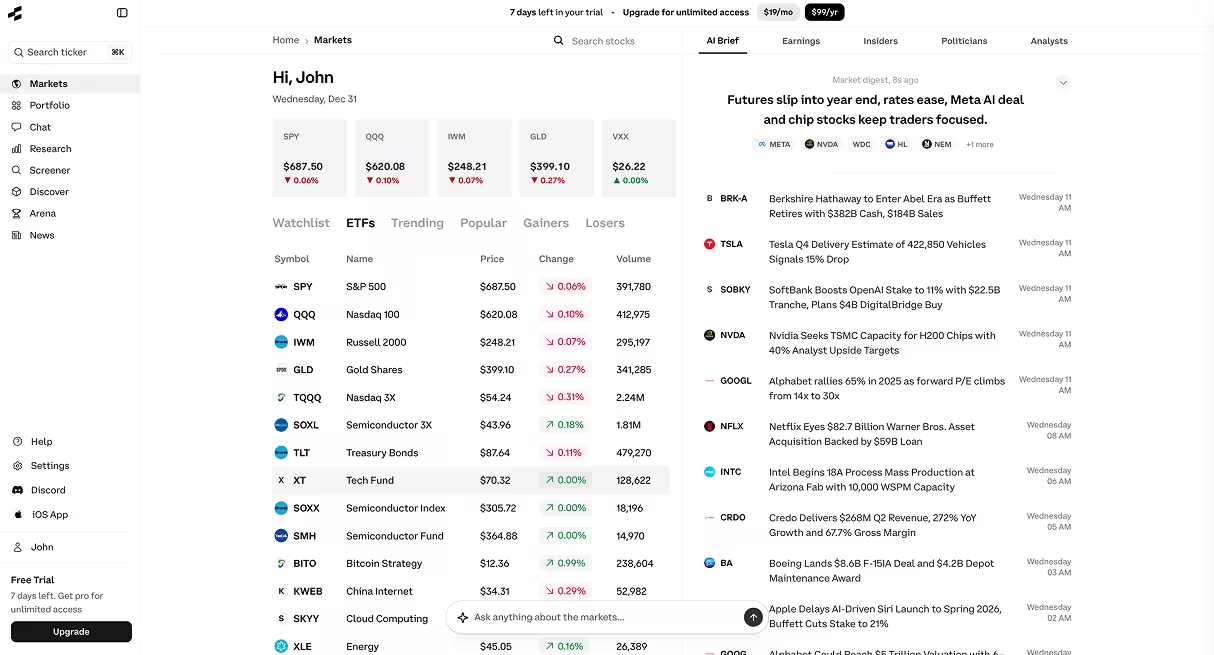
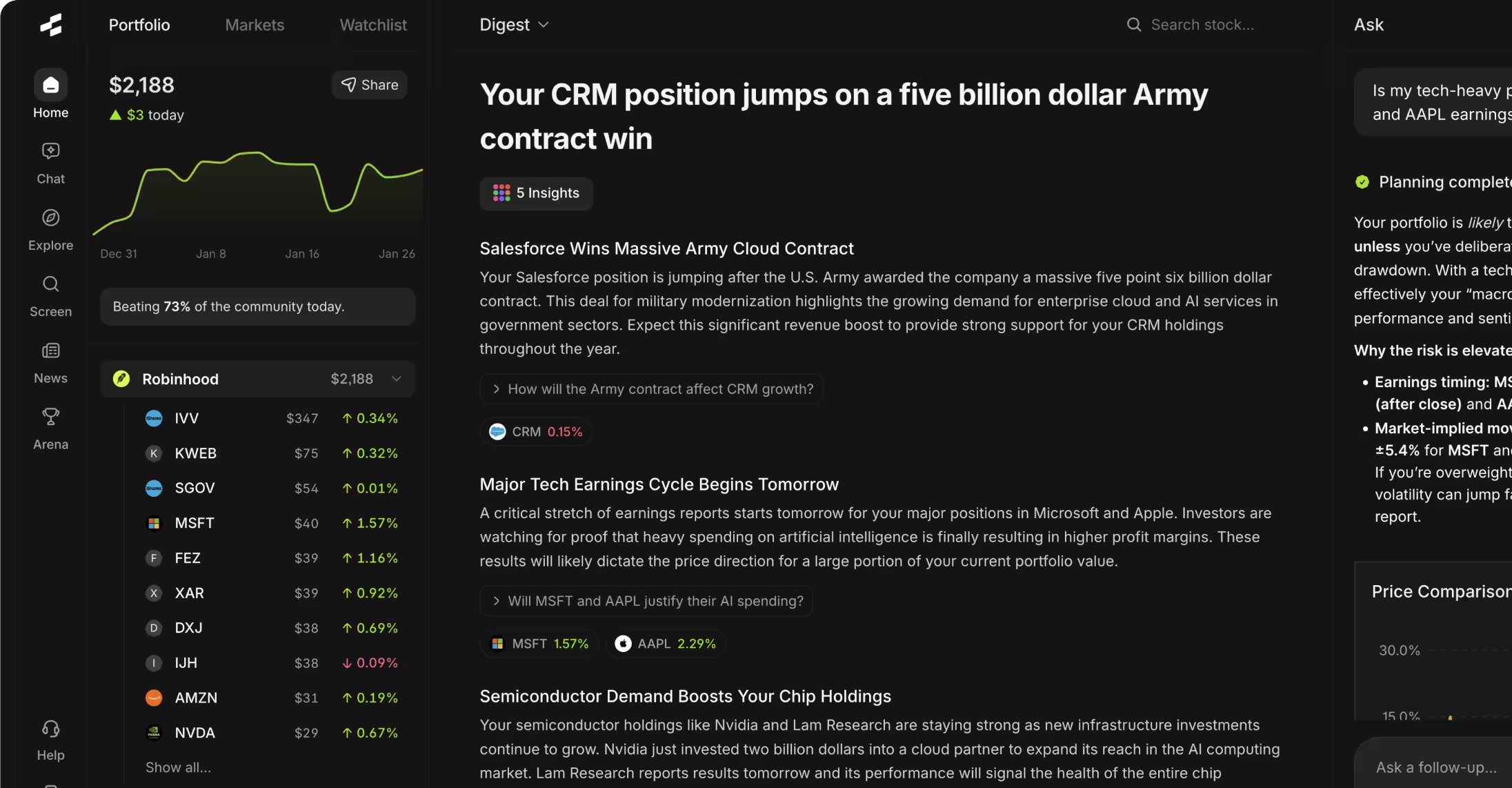
Rallies.ai's AI Research Assistant represents this approach—you can ask "What's Tesla's operating margin trend over the past 5 years?" and get a direct answer with source citations, not a collection of articles to read through. The platform also includes a natural language stock screener where you describe what you're looking for instead of setting dozens of manual filters.
Other AI-focused platforms include AlphaSense, which specializes in searching through earnings call transcripts and industry documents, though it targets institutional clients with pricing starting around $1,200/month. Danelfin uses AI to score stocks based on 10,000+ features and provides daily rankings, with subscription tiers from $39 to $299 monthly.
The advantage of AI research platforms lies in speed and consistency. Instead of reading three different opinions on whether a stock is overvalued, you get the actual P/E ratio, how it compares to historical averages, and sector peers—then form your own conclusion. The limitation is that AI excels at retrieving and organizing data but doesn't replace the judgment needed to interpret what that data means for your specific investment thesis.
PlatformPrimary FocusStarting PriceBest ForRallies.aiNatural language research & screeningFree tier availableQuick data retrieval, screening by descriptionAlphaSenseDocument search & analysis~$1,200/monthProfessionals needing deep transcript analysisDanelfinAI stock scoring$39-299/monthQuantitative rankings and backtesting
Data-Focused Alternatives
Data-focused platforms prioritize clean financial statements, interactive charts, and screening tools over written analysis. These Seeking Alpha alternatives work well for investors who prefer building their own conclusions from raw numbers rather than reading others' interpretations.
Stock Analysis (stockanalysis.com) provides comprehensive financial data completely free, including 10+ years of historical statements, key ratios, and daily updates. The platform's clean interface displays data in easy-to-scan tables without the clutter of ads or promotional content. For investors who just need to check revenue growth or see a company's balance sheet, it eliminates the need for paid subscriptions.
Koyfin targets serious retail investors and finance professionals with institutional-quality charting and data visualization. The platform excels at comparing multiple stocks simultaneously, creating custom dashboards, and analyzing sector trends. Pricing starts at $39/month for basic access, with professional tiers reaching $600+/year for full features including real-time data and advanced analytics.
Simply Wall St translates complex financials into visual "snowflakes" that rate companies across five dimensions: value, future growth, past performance, financial health, and dividends. This visual approach helps newer investors spot red flags quickly. The free version covers most features, while premium ($16/month) adds portfolio tracking and alerts.
Financial Statement Analysis: The process of reviewing and analyzing a company's income statement, balance sheet, and cash flow statement to understand its financial health and performance trends. Forms the foundation of fundamental investing.
The trade-off with data-focused platforms is that you're responsible for knowing which metrics matter and how to interpret them. They won't tell you whether a 15% profit margin is good—you need to compare it to industry averages and historical trends yourself. For confident investors who know what they're looking for, this represents freedom rather than a limitation.
Analyst Tracking Platforms
Analyst tracking platforms aggregate research from professional Wall Street analysts, providing ratings, price targets, and success metrics for individual analysts. These platforms offer a middle ground between crowdsourced opinions and raw data by showing what institutional research teams are saying.
TipRanks stands out by tracking the historical accuracy of over 8,000 analysts and 8,500+ financial bloggers. The platform assigns "star ratings" based on past performance—a five-star analyst has a proven track record of accurate price targets and ratings. Free users get limited data, while premium subscriptions ($20-75/month depending on features) unlock full analyst histories, portfolio tools, and smart scores that aggregate multiple factors.
Zacks Investment Research has published analyst earnings estimate revisions since 1978, building its strategy around the idea that upward estimate revisions predict stock outperformance. The platform's ranking system (Zacks Rank #1 through #5) reflects this approach. Premium subscriptions run $249-$2,995/year depending on which stock-picking services you want access to beyond basic data.
The value in analyst tracking depends on your view of professional research. A 2023 study published in the Journal of Financial Economics found that consensus analyst price targets exceed actual stock performance by an average of 12% over 12-month periods, suggesting systematic optimism. However, the same research showed that changes in analyst consensus do correlate with near-term price movements, making these platforms useful for gauging sentiment shifts even if absolute price targets prove optimistic.
Advantages
- Access to professional research without institutional accounts
- Analyst track records help identify consistently accurate voices
- Consensus data shows how institutional sentiment is shifting
- Price target histories reveal whether analysts adjust quickly or lag
Limitations
- Analysts face conflicts of interest (investment banking relationships)
- Price targets systematically skew optimistic
- Following analyst recommendations produces mixed results for retail investors
- Past accuracy doesn't guarantee future performance
Institutional-Grade Tools for Retail Investors
Several platforms bring institutional-quality tools to retail investors at prices far below professional terminal costs. While a Bloomberg Terminal runs $24,000+ per year and FactSet costs $12,000+, newer platforms offer subsets of similar functionality for under $1,000 annually.
Morningstar Direct lite versions (marketed as Morningstar Investor) provide access to the company's respected equity research, fair value estimates, and economic moat ratings for $249/year. The platform's analyst team covers over 1,500 stocks with detailed reports that include 10-year financial projections and scenario analysis. Unlike crowdsourced platforms, all research comes from Morningstar's salaried analysts who follow standardized methodology.
YCharts focuses on professional-quality charting, screening, and fundamental data visualization. Investment advisors use it to create client presentations, but retail investors can access similar features starting at $199/month (billed annually). The platform excels at creating custom peer comparisons and visualizing complex data relationships that aren't obvious from spreadsheets alone.
Finbox combines financial modeling tools with valuation analysis, letting you build discounted cash flow models and compare multiple valuation methods side-by-side. The platform provides consensus estimates from Wall Street analysts alongside tools to create your own projections. Premium features cost $40-69/month depending on the number of models and exports you need.
These investment software platforms work best for investors who already understand financial modeling and valuation concepts. They provide the tools but assume you know which levers to pull and how to interpret results. For learning while researching, platforms with more guidance or educational content might serve better as a starting point.
Free vs Paid: What You Actually Get
Free stock research tools cover basic needs—financial statements, price charts, key ratios, and news—but paid platforms add speed, depth, and specialized features. Understanding where free tools end and paid features begin helps you decide whether upgrades justify the cost.
Free platforms like Yahoo Finance, Google Finance, and Stock Analysis provide 10-K and 10-Q data, basic charts, analyst estimates, and company profiles without charge. You can research most stocks adequately using only free tools if you're willing to check multiple sites and manually compile information. The limitation is time—pulling data from three different free sources to answer one question gets tedious when researching multiple stocks.
Paid platforms typically add: real-time data (free sources delay 15-20 minutes), advanced screening with 100+ filters, historical data beyond 5-10 years, downloadable spreadsheets, custom alerts, portfolio analytics, and premium research content. Whether these features justify $200-600 annually depends on your research frequency and complexity.
Feature CategoryFree PlatformsPaid PlatformsFinancial Statements5-10 years, basic format20+ years, customizable displaysReal-time Data15-20 minute delayReal-time or 1-minute delayScreening10-20 basic filters100+ filters, custom formulasAlertsBasic price alertsMulti-condition alerts, news triggersExportsLimited or noneFull CSV/Excel exportsPortfolio TrackingSimple returnsAttribution, tax lots, benchmarking
A practical approach combines both: use free tools for most research and pay for one platform that solves your specific bottleneck. If screening takes too long, invest in better screening tools. If you constantly need historical data, pay for deeper archives. If you research infrequently, stick with free options and accept the extra steps.
The complete guide to investment tools and platform comparisons breaks down feature sets across 20+ platforms to help identify where paid features provide real value versus cosmetic upgrades.
How to Choose the Right Alternative
Choosing the right Seeking Alpha alternative starts with identifying what you actually need rather than chasing the most features. The best stock research tools match your investing style, experience level, and research workflow, not a comprehensive feature checklist.
Start by answering three questions: How often do you research stocks? What's your current analysis process? What takes the most time in that process? Someone screening weekly for new opportunities needs different tools than someone conducting deep annual reviews of 10 holdings.
Match platforms to your style:
- Value investors analyzing fundamentals benefit from Morningstar's fair value estimates or Stock Analysis's clean financial displays
- Growth investors tracking earnings revisions fit well with Zacks or TipRanks analyst tracking
- Quantitative screeners need powerful filters, making Koyfin or Finviz Premium worth considering
- Quick researchers asking specific questions benefit from AI platforms like Rallies.ai that return direct answers
- Visual learners process information better through Simply Wall St's graphic approach
- Dividend investors need specialized screening for payout ratios, yield history, and coverage—platforms like Dividend.com or Stock Analysis's dividend pages focus on these metrics
Investment Style: The systematic approach an investor uses to select securities and construct portfolios. Common styles include value, growth, income, and quantitative, each prioritizing different financial metrics and analysis methods.
Test before committing. Most paid platforms offer free trials between 7-30 days. Use this period to run through your actual research process on stocks you're currently evaluating, not idealized scenarios. If the platform doesn't save meaningful time or surface insights you'd otherwise miss, it's not worth paying for regardless of features.
Consider combining tools strategically. Many successful investors use one platform for screening (finding candidates), another for deep analysis (evaluating financials), and a third for monitoring (tracking holdings). A typical stack might include: free screening on Finviz, detailed analysis on Rallies.ai or Morningstar, and portfolio tracking on the platform with the best mobile app for quick checks.
Platform Selection Checklist
- ☐ Identify your primary research bottleneck (screening, analysis, monitoring)
- ☐ Test 2-3 platforms using your actual watchlist during free trials
- ☐ Verify mobile experience if you research on phone/tablet
- ☐ Check whether the platform covers your market focus (US only, international, specific sectors)
- ☐ Confirm data freshness (some platforms lag 24-48 hours on filings)
- ☐ Calculate cost per stock researched to see if frequency justifies subscription
- ☐ Review cancellation terms before subscribing (some require annual commitments)
Frequently Asked Questions
1. Is there a completely free alternative to Seeking Alpha?
Yes, Stock Analysis provides comprehensive financial data, statements, and key metrics completely free without paywalls. Yahoo Finance and Google Finance also offer extensive free data including charts, news, and basic analysis. While these lack Seeking Alpha's article library, they cover the fundamental data most investors need. For AI-powered research, Rallies.ai offers a free tier with access to the AI Research Assistant and basic screening tools.
2. Which platform has the most accurate stock analysis?
No platform consistently predicts stock performance with high accuracy. Morningstar's fair value estimates and analyst research follow rigorous methodology, but accuracy studies show even professional analysts miss price targets by an average of 12%. The most effective approach combines multiple data sources and perspectives rather than trusting any single platform's analysis. Focus on platforms that show their methodology and provide raw data for your own conclusions.
3. Do I need multiple research platforms or just one?
Most active investors use 2-3 platforms for different purposes rather than one comprehensive tool. A common setup includes a free platform for daily monitoring, a paid platform for detailed research, and specialized tools for screening or specific analysis needs. Start with one good platform matching your primary need, then add others only if you identify clear gaps in your workflow.
4. How do AI research tools compare to human-written analysis?
AI research tools excel at retrieving specific data points and organizing information quickly but don't provide the interpretive judgment that experienced human analysts offer. AI can tell you a company's debt-to-equity ratio increased 40% in two years; a skilled analyst explains whether that increase stems from strategic expansion or financial distress. The best approach uses AI for data retrieval and human judgment (your own or from trusted analysts) for interpretation.
5. Are institutional-grade platforms worth it for retail investors?
Institutional-grade platforms justify their cost for active retail investors managing $100,000+ portfolios who research stocks weekly. The time savings and depth of analysis become worthwhile when investment decisions involve significant capital. For smaller portfolios or buy-and-hold investors who research occasionally, free and mid-tier platforms provide adequate tools. Calculate the cost as a percentage of portfolio size—$500/year makes sense for a $200,000 portfolio but seems excessive for a $20,000 one.
6. What's the best platform for beginners?
Simply Wall St and Stock Analysis work well for beginners due to clear visual presentations and straightforward layouts. Simply Wall St's snowflake charts help new investors understand quality metrics visually, while Stock Analysis presents clean financial data without overwhelming complexity. Both offer free versions that cover essential research needs. As you develop methodology, you can add more specialized tools.
7. Can I use these platforms for international stocks?
Coverage varies significantly by platform. Morningstar covers 50+ countries with varying depth. Koyfin and TipRanks include major international markets. Many platforms focus primarily on US exchanges with limited international data. Check specific country coverage during free trials if you invest globally—some platforms charge premium prices for international data while others include it in base subscriptions.
8. How often should I switch research platforms?
Stick with platforms long enough to master their features and integrate them into your workflow—at least 3-6 months before considering switches. Many investors mistakenly chase new platforms when the issue is inconsistent methodology rather than tool limitations. Switch only when you clearly identify features you need that your current platform doesn't offer, not because a new option seems interesting.
Conclusion
Seeking Alpha alternatives range from AI-powered research assistants to institutional-grade analysis platforms, each serving different investor needs and workflows. The right choice depends less on comprehensive feature lists and more on matching tools to your specific research style and frequency. Free platforms like Stock Analysis cover fundamental needs adequately, while paid options add speed and specialized features that matter most to active investors managing substantial portfolios.
Start by testing 2-3 platforms that align with your primary research bottleneck—whether that's finding stocks, analyzing financials, or tracking holdings. Most investors benefit from combining complementary tools rather than searching for one perfect solution. Focus on platforms you'll actually use consistently rather than those with the most impressive feature counts.
The best research platform is the one that disappears into your workflow, surfacing the information you need without becoming a research project itself. Try alternatives during free trials using your actual watchlist, then commit to mastering whichever tools genuinely save time or surface insights you'd otherwise miss.
Ready to research stocks with AI? Start with Rallies.ai free and get instant answers to your stock research questions using natural language.
References
- CFA Institute. "2024 Investor Trust Survey." cfainstitute.org
- Journal of Financial Economics. "Analyst Optimism and Price Target Accuracy." sciencedirect.com
- Morningstar. "About Morningstar Equity Research." morningstar.com
- U.S. Securities and Exchange Commission. "Investor.gov - Research Investments." investor.gov
- Seeking Alpha. "Subscription Plans and Pricing." seekingalpha.com
Disclaimer: This article is for educational and informational purposes only. It does not constitute investment advice, financial advice, trading advice, or any other type of advice. Rallies.ai does not recommend that any security, portfolio of securities, transaction, or investment strategy is suitable for any specific person.
Risk Warning: All investments involve risk, including the possible loss of principal. Past performance does not guarantee future results. Before making any investment decision, you should consult with a qualified financial advisor and conduct your own research.
Written by: Gav Blaxberg
CEO of WOLF Financial | Co-Founder of Rallies.ai