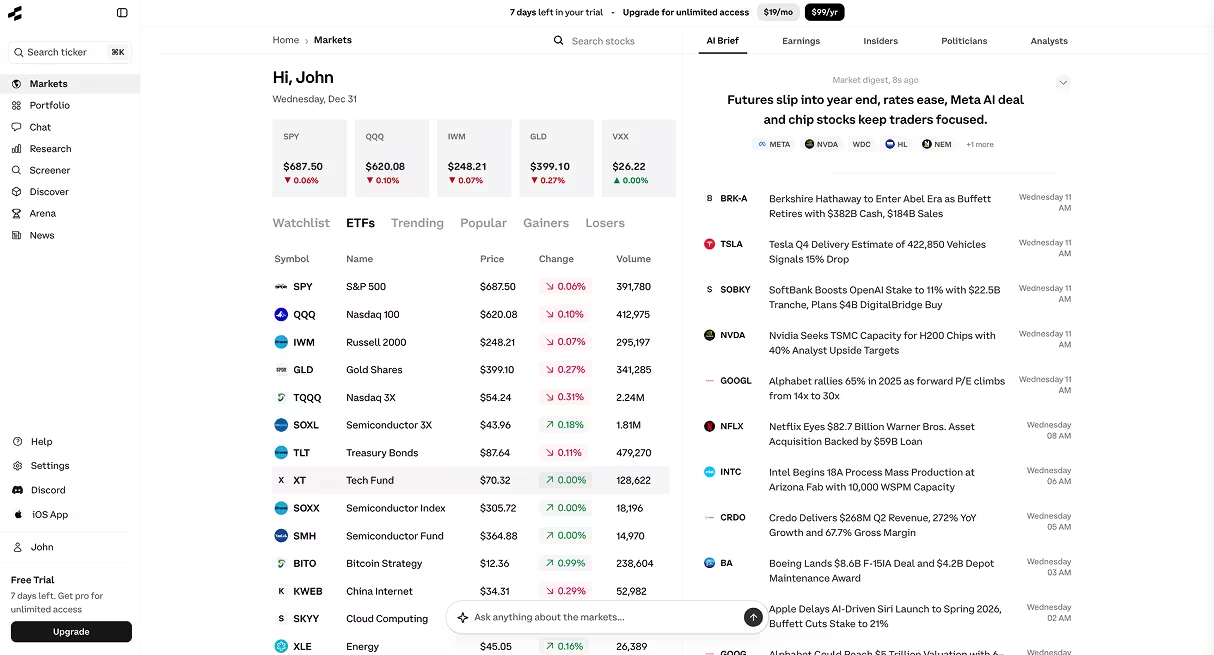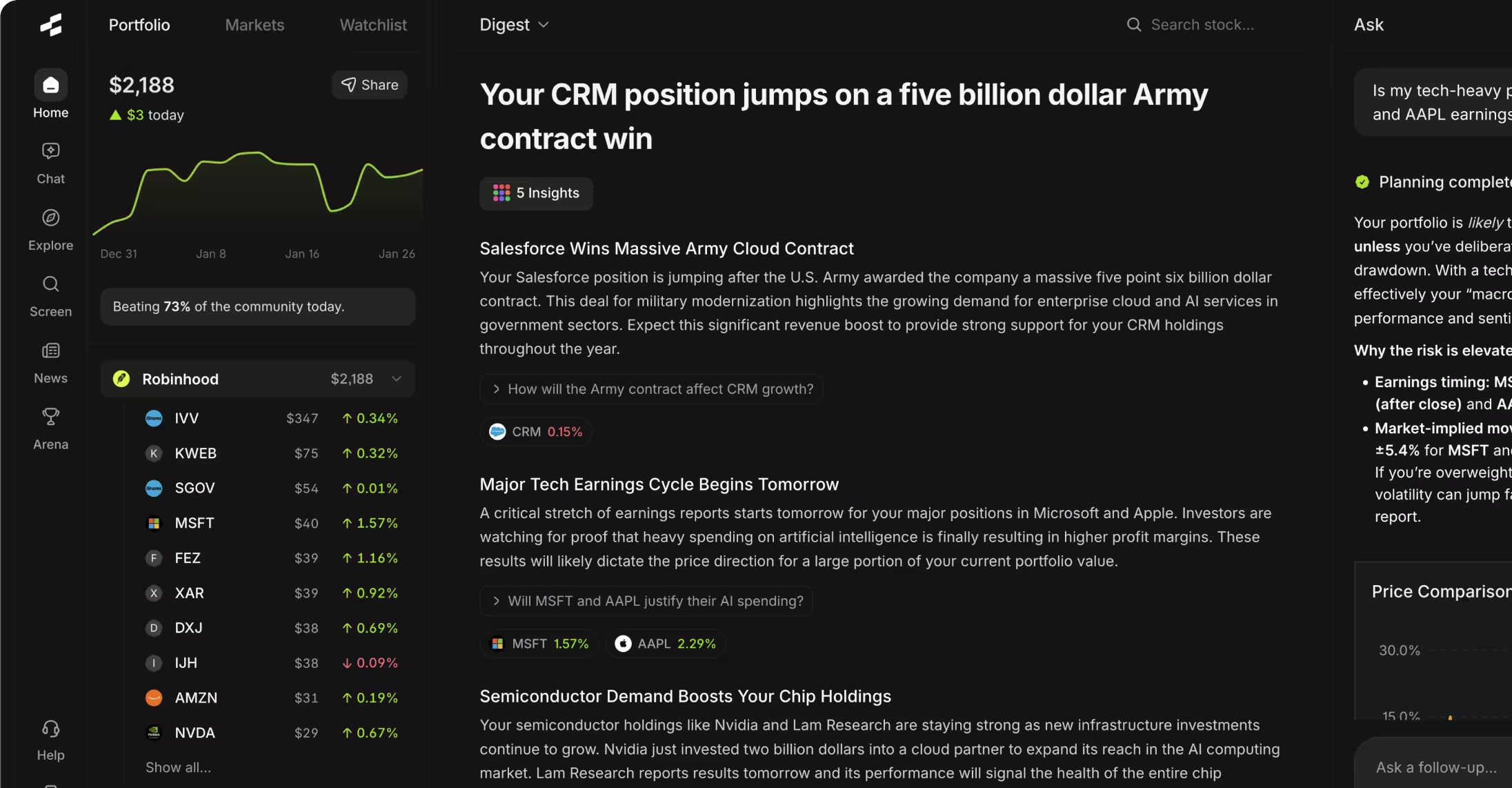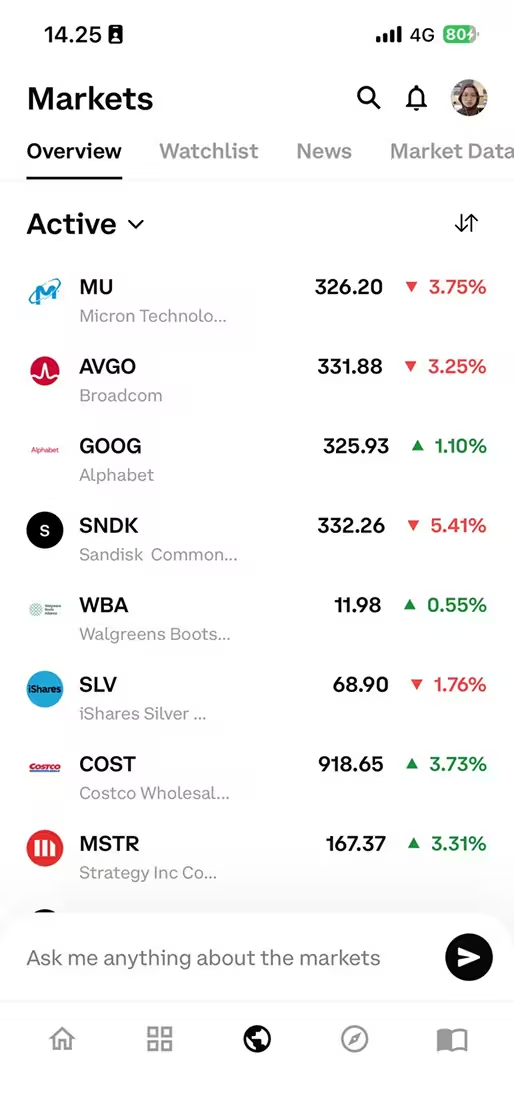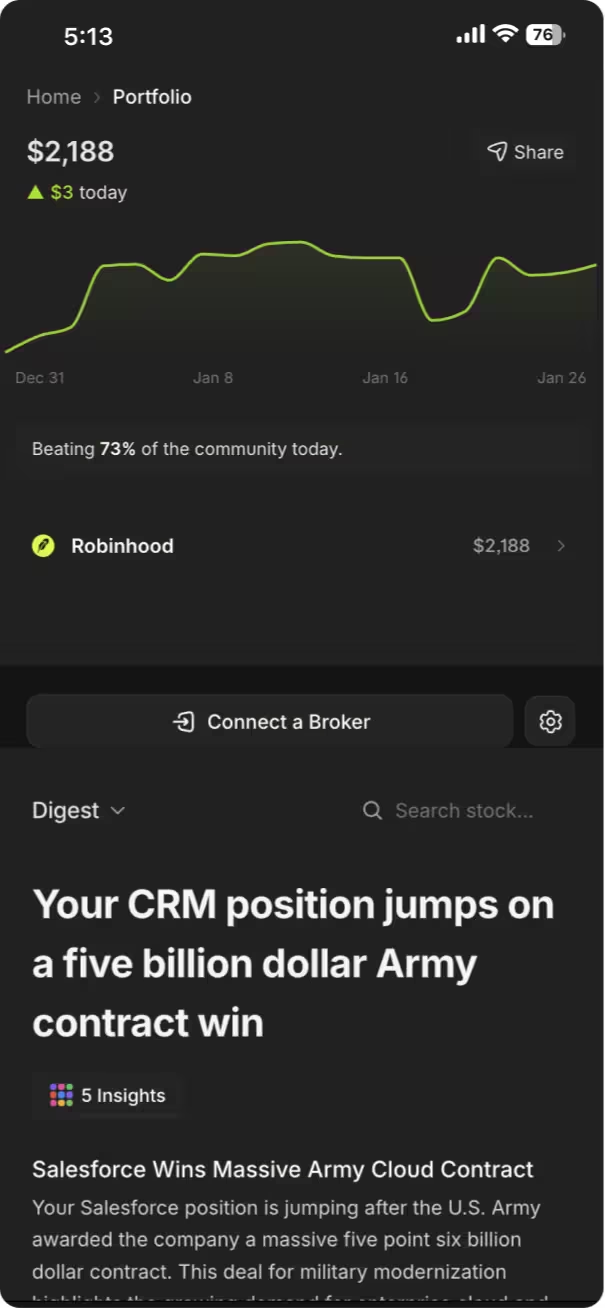



Free stock research tools provide individual investors access to financial data, analysis, and screening capabilities without subscription costs. Leading options include Yahoo Finance for real-time quotes and basic financials, FINRA's Market Data Center for comprehensive bond and stock data, TradingView's free tier for charting, and the SEC's EDGAR database for official company filings. While paid platforms often offer deeper analytics and institutional-grade features, strategic use of free tools can meet most retail investors' research needs when combined effectively.
Key Takeaways
- Yahoo Finance, Google Finance, and Seeking Alpha's free tier provide sufficient fundamental data for most stock research without requiring paid subscriptions
- The SEC's EDGAR database offers direct access to all public company filings including 10-Ks, 10-Qs, and proxy statements at no cost
- Free charting tools like TradingView (limited version) and Finviz deliver technical analysis capabilities comparable to basic paid platforms
- FINRA's Market Data Center provides free access to bond prices, market statistics, and trading data often locked behind paywalls elsewhere
- Combining 3-4 free tools strategically can replicate 70-80% of paid platform functionality for retail investors
Table of Contents
- What Are Free Stock Research Tools?
- Best Free Fundamental Analysis Tools
- Free Charting and Technical Analysis Platforms
- Free Government and Regulatory Data Sources
- Free Stock Screening and Discovery Tools
- What Are the Limitations of Free Research Tools?
- How to Build an Effective Free Tool Stack
- Frequently Asked Questions
- Conclusion
What Are Free Stock Research Tools?
Free stock research tools are platforms and resources that provide financial data, analysis capabilities, and market information without requiring paid subscriptions. These tools range from basic quote services to comprehensive screening platforms, with most offering ad-supported models or freemium tiers that unlock advanced features through paid upgrades.
The landscape of investment software has democratized significantly over the past decade. What once required expensive Bloomberg terminals or institutional research subscriptions is now accessible through free financial data providers. According to a 2023 FINRA Investor Education Foundation study, 68% of self-directed investors rely primarily on free research tools for their investment decisions.
Free tools typically generate revenue through advertising, premium tier upsells, or by offering basic services while reserving institutional-grade features for paid subscribers. This model has created a robust ecosystem where retail investors can access substantial research capabilities at no cost, though with some trade-offs in data depth, real-time access, and advanced analytics.
Freemium Model: A pricing strategy where basic services are provided free while advanced features require paid subscriptions. Most research platforms use this approach to attract users before converting them to paying customers.
Best Free Fundamental Analysis Tools
Fundamental analysis tools help investors evaluate company financials, valuation metrics, and business performance. Several free platforms provide comprehensive access to this data without subscription requirements.
Yahoo Finance
Yahoo Finance remains the most widely used free stock research platform, offering real-time quotes (with 15-minute delays for some exchanges), income statements, balance sheets, and cash flow statements going back multiple years. The platform aggregates analyst ratings, displays key statistics including P/E ratios and market capitalization, and provides earnings call transcripts for major companies.
The interface allows comparison of up to five stocks simultaneously across financial metrics. Historical price data extends decades for most securities, and the screening tool filters stocks by dozens of fundamental criteria including dividend yield, profit margins, and debt-to-equity ratios.
Google Finance
Google Finance offers a cleaner, more streamlined interface than Yahoo Finance with similar fundamental data coverage. The platform excels at portfolio tracking across multiple accounts and provides quick access to SEC filings through integrated links. Real-time data comes standard for major U.S. exchanges, and the comparison view displays multiple stocks' key metrics in a single table.
Seeking Alpha (Free Tier)
Seeking Alpha's free access includes article summaries, basic stock pages with valuation grades, and limited earnings call transcripts. The platform's strength lies in its community-driven analysis, where thousands of contributors publish investment theses and company analyses. Free users can read article summaries and access basic quantitative ratings across profitability, growth, and valuation dimensions.
Platform Financial Statement History Real-Time Quotes Screening Filters Yahoo Finance 4+ years 15-min delay (most) 50+ criteria Google Finance 4+ years Real-time (major exchanges) 30+ criteria Seeking Alpha Free Limited view 15-min delay Basic filters only
Free Charting and Technical Analysis Platforms
Technical analysis requires quality charting software with indicator support and drawing tools. Multiple free analysis platforms deliver these capabilities with varying feature sets.
TradingView (Free Tier)
TradingView's free version provides access to professional-grade charting with over 100 technical indicators including moving averages, RSI, MACD, and Bollinger Bands. Users can save one chart layout and apply three indicators simultaneously (versus unlimited on paid tiers). The platform supports multiple timeframes from one-minute to monthly charts and includes drawing tools for trendlines, Fibonacci retracements, and chart patterns.
The social features allow users to view and comment on other traders' chart analyses, creating a community learning environment. Free users can create public chart ideas but cannot publish private analyses.
Finviz
Finviz specializes in visual stock screening and heat map displays. The free version shows daily stock performance across sectors through color-coded heat maps, making market-wide patterns immediately apparent. Charts include basic technical indicators and overlays, though with less customization than TradingView.
The platform's strength is its screener, which filters stocks by 70+ criteria including technical patterns, fundamental metrics, and descriptive characteristics. Results display in sortable tables with mini-charts for quick visual analysis.
StockCharts (Free Features)
StockCharts offers free access to basic charting functionality with common indicators and multiple chart styles including candlestick, line, and point-and-figure charts. The platform provides pre-built scans for technical setups like bullish crossovers, oversold conditions, and breakout patterns.
Educational content accompanies the tools, with ChartSchool offering free tutorials on technical analysis concepts and indicator interpretation. Free users can create public ChartLists to organize and track stocks but cannot save custom chart settings.
Technical Indicators: Mathematical calculations based on historical price and volume data used to identify trends and potential trading opportunities. Common examples include moving averages (trend), RSI (momentum), and MACD (trend and momentum).
Free Government and Regulatory Data Sources
Government agencies provide authoritative financial data directly from regulatory filings, often more accurate and timely than aggregated sources. These resources require no registration or payment.
SEC EDGAR Database
The U.S. Securities and Exchange Commission's EDGAR system contains all public company filings required by securities law. Every 10-K annual report, 10-Q quarterly report, 8-K current report, and proxy statement appears here within minutes of filing. This represents the primary source that paid research platforms aggregate and repackage.
Investors can search by company name, ticker, or CIK (Central Index Key) number. The full-text search function finds specific terms across all filings. While the interface lacks the polish of commercial platforms, EDGAR provides unfiltered access to official company disclosures including financial statements, risk factors, management discussion and analysis, and executive compensation details.
The SEC's Financial Statement Data Sets provide structured data extracted from 10-Ks and 10-Qs in machine-readable formats, allowing investors with spreadsheet skills to build custom financial models from raw regulatory data.
FINRA Market Data Center
The Financial Industry Regulatory Authority operates a free market data center providing bond prices, over-the-counter equity data, and market statistics typically locked behind institutional paywalls. The Trade Reporting and Compliance Engine (TRACE) displays actual transaction prices for corporate and agency bonds, filling a transparency gap in fixed income markets.
FINRA also publishes short interest data for all exchange-listed stocks twice monthly, showing the number of shares sold short and days-to-cover ratios. This information helps investors gauge market sentiment and potential short squeeze scenarios.
Federal Reserve Economic Data (FRED)
The Federal Reserve Bank of St. Louis maintains FRED, a database with over 800,000 economic time series from 100+ sources. While focused on macroeconomic data rather than individual stocks, FRED provides context for investment decisions through indicators like GDP growth, inflation rates, unemployment figures, and interest rate trends.
Data exports to Excel, and the graphing tools overlay multiple series for correlation analysis. Understanding these economic indicators helps investors assess market conditions and sector rotation opportunities.
Free Stock Screening and Discovery Tools
Stock screeners filter the universe of publicly traded securities based on specified criteria, helping investors discover opportunities matching their investment strategy. Free screening platforms vary significantly in filter sophistication and result presentation.
Finviz Screener
Finviz offers one of the most comprehensive free screeners with over 70 filter criteria organized by descriptive, fundamental, and technical categories. Investors can screen by market cap ranges, P/E ratio thresholds, dividend yields, average volume, technical patterns, and dozens of other parameters. The "All" tab displays every filter simultaneously for advanced screening.
Results appear in a sortable table format with key metrics visible at a glance. The screener updates throughout the trading day with 15-minute delayed data. Free users can save one screener preset, while paid subscribers save unlimited configurations.
Yahoo Finance Screener
Yahoo Finance's stock screener includes approximately 50 criteria spanning size, style, valuation, performance, and analyst recommendations. The interface uses dropdown menus and slider controls for filter selection, making it accessible for screening beginners.
Pre-built screens cover common strategies like "Most Active," "Day Gainers," "Undervalued Growth Stocks," and "Aggressive Small Caps." These templates provide starting points that users can modify by adding or removing filters.
Rallies.ai Vibe Screener
The Vibe Screener takes a different approach by accepting natural language descriptions rather than manual filter configuration. Investors can describe what they're looking for in plain English like "dividend stocks with low debt" or "growing tech companies under $50 per share," and the AI interprets these criteria to generate filtered results.
This approach removes the need to understand technical screening parameters. The platform translates colloquial investment preferences into appropriate financial metric filters, making stock discovery more accessible for investors unfamiliar with traditional screening interfaces.
What Are the Limitations of Free Research Tools?
Free stock research tools provide substantial value but come with specific constraints compared to paid alternatives. Understanding these limitations helps investors set appropriate expectations and determine when upgrading might be worthwhile.
Data Delays and Update Frequency
Most free platforms impose 15-20 minute delays on stock quotes, while paid services offer real-time data. For long-term investors making decisions over days or weeks, these delays rarely matter. For active traders executing multiple transactions daily, real-time data becomes more valuable. Free tools also update financial statements quarterly at best, while premium services may provide monthly revenue estimates and more frequent metric updates.
Historical Data Depth
Free research platforms typically limit financial history to 3-5 years, sufficient for basic analysis but constraining for investors who examine full business cycles. Paid platforms often extend history 10-20 years, enabling analysis across multiple economic environments and revealing longer-term trends in profitability, debt levels, and capital allocation patterns.
Advanced Analytics and Screening
Complex screening criteria, backtesting capabilities, and custom metric calculations usually require paid subscriptions. Free screeners offer 30-70 filters, while institutional platforms provide hundreds of factors including custom formulas. Portfolio backtesting, which tests investment strategies against historical data, is rarely available in free tools.
Customer Support and Reliability
Free platforms typically offer no direct customer support, relying instead on community forums and help documentation. Service uptime receives lower priority than paying customers during technical issues. For investors whose research represents part of a professional workflow, this lack of support can prove costly.
When Free Tools Are Sufficient
- Long-term investing with infrequent trading
- Research into large-cap, widely covered companies
- Basic fundamental and technical analysis needs
- Learning and education phase of investing journey
- Supplementing other research with specific data points
When Paid Tools May Be Worth It
- Active trading requiring real-time quotes
- Deep research into small-cap or international stocks
- Portfolio backtesting and quantitative strategy testing
- Professional or semi-professional investment management
- Need for customer support and guaranteed uptime
How to Build an Effective Free Tool Stack
Strategic combination of complementary free tools can meet most retail investors' research needs. The key is selecting platforms that excel in different areas rather than using multiple tools with overlapping functionality.
Core Research Stack Example
A practical free tool stack for fundamental investors might include Yahoo Finance for financial statements and key metrics, EDGAR for detailed regulatory filings, Finviz for screening and visual market overviews, and TradingView's free tier for price charts with technical indicators. This combination covers fundamental data, primary sources, discovery, and technical analysis without subscription costs.
For investors interested in AI-powered research, adding Rallies.ai's AI Research Assistant provides natural language access to stock data and analysis. Instead of navigating multiple platforms to answer specific questions, investors can ask directly in plain English and receive synthesized answers from financial data sources.
Workflow Integration
Effective tool use requires a consistent research workflow. A typical process might involve screening for candidates on Finviz, reviewing financial statements on Yahoo Finance, reading actual 10-K filings on EDGAR for risk factors and business description, checking technical charts on TradingView, and organizing findings in a spreadsheet or note-taking app.
Bookmark key pages for stocks you follow regularly. Most platforms allow watchlist creation, enabling quick access to monitored securities. Set up Google Alerts or use free news aggregators to receive updates on followed companies without paying for premium alert services.
Data Validation Across Sources
When using free tools, verify important numbers across multiple sources. Aggregated data platforms occasionally contain errors or outdated information. Cross-reference key metrics like earnings per share, revenue figures, and share counts against EDGAR filings, which represent the authoritative source. For critical investment decisions, always trace data back to primary regulatory documents rather than relying solely on third-party aggregation.
Building Your Free Research Stack
- ☐ Select one comprehensive platform for daily quotes and basic financials (Yahoo Finance or Google Finance)
- ☐ Bookmark SEC EDGAR for direct access to regulatory filings
- ☐ Choose a screening tool matching your strategy (Finviz for technical/visual, Yahoo for fundamental)
- ☐ Set up a charting platform for technical analysis if relevant to your approach
- ☐ Create watchlists or portfolios in chosen platforms for stocks you monitor
- ☐ Document your research process to maintain consistency across investment decisions
- ☐ Test your stack by researching 3-5 stocks end-to-end to identify workflow gaps
Frequently Asked Questions
1. Are free stock research tools accurate enough for serious investing?
Free tools provide accurate data for most retail investment decisions, particularly when using authoritative sources like SEC EDGAR for regulatory filings and company-reported financials. The main differences versus paid platforms involve data timeliness (15-minute delays), historical depth (3-5 years versus 10-20 years), and advanced analytics rather than core accuracy. For long-term investors in large and mid-cap stocks, free tools typically offer sufficient accuracy. Always verify critical numbers against primary sources like 10-K and 10-Q filings before making significant investment decisions.
2. What's the best free alternative to Bloomberg Terminal?
No single free platform replicates Bloomberg Terminal's comprehensive functionality, but combining Yahoo Finance for financial data, TradingView for charting, EDGAR for filings, and FRED for economic data covers many core use cases at no cost. Bloomberg's advantages lie in speed (real-time everything), depth (decades of history), breadth (coverage of exotic securities and international markets), and integration (everything in one interface). For retail investors focused on U.S. stocks and ETFs, the free tool combination handles 70-80% of common research needs.
3. Do I need paid research tools to find good investments?
Successful investing depends more on analytical skill, patience, and discipline than tool sophistication. Warren Buffett built Berkshire Hathaway using primarily annual reports and newspaper financial pages, though this predated modern data platforms. Free tools provide the data required for sound fundamental analysis; the investor's ability to interpret that data matters more than premium features. Paid tools become more relevant for active traders requiring real-time data, quants backtesting complex strategies, or professionals managing others' money where time efficiency and support justify the cost.
4. How do free stock screeners compare to paid versions?
Free screeners like Finviz and Yahoo Finance offer 30-70 filter criteria covering most fundamental and technical parameters investors commonly use. Paid screeners provide 200+ criteria, custom formula creation, backtesting capabilities, and the ability to save unlimited screens. For screening based on standard metrics like P/E ratios, market cap, dividend yield, profit margins, and technical indicators, free tools prove adequate. Investors needing custom metrics, point-in-time historical screening, or sophisticated multi-factor quantitative models benefit from paid platforms.
5. Can I use free tools for options trading research?
Free tools offer limited options-specific functionality compared to platforms designed for options traders. Yahoo Finance displays basic options chains with bid/ask prices and implied volatility, but lacks advanced analytics like Greeks visualization, probability calculators, and strategy builders found in specialized platforms. Barchart's free tier provides some options screening capabilities. For casual options trading or learning, free tools provide sufficient data, but active options traders typically require paid platforms with real-time options data, advanced analytics, and strategy modeling tools.
6. Are there good free alternatives for international stock research?
International stock research through free tools proves more challenging than U.S. equity research. Yahoo Finance covers many international exchanges but with varying data quality and longer delays. TradingView charts most international securities. For primary documents, investors must access each country's regulatory system directly; the U.S. SEC equivalent in other jurisdictions may have less user-friendly interfaces. Many markets lack the robust free tool ecosystem available for U.S. securities. Investors heavily focused on international stocks often find paid platforms with comprehensive global coverage more practical.
7. How can I get real-time stock quotes without paying?
Real-time quotes for U.S. stocks are available free through some broker platforms (even with $0 account balances), Google Finance for major exchanges, and some financial news websites. Most standalone research platforms impose delays on free tiers to differentiate from paid subscriptions. Brokerage accounts with TD Ameritrade, E*TRADE, Fidelity, Schwab, and others provide real-time quotes to account holders regardless of balance. For investors already maintaining brokerage accounts, this represents the most reliable free real-time data source without requiring separate research platform subscriptions.
8. What free tools work best for dividend stock research?
Yahoo Finance excels for dividend research among free tools, displaying current yield, payout ratio, five-year dividend history, ex-dividend dates, and payment dates on each stock's summary page. The screener filters by dividend yield ranges, payout ratios, and consecutive years of dividend payments. Seeking Alpha's free tier includes dividend grades and sustainability scores. FINRA's Market Data Center provides information on dividend-paying bonds and preferred stocks. For comprehensive dividend analysis including growth rates, aristocrat status, and sector comparisons, these free tools cover essential research needs without requiring specialty dividend platform subscriptions.
Conclusion
Free stock research tools have evolved to provide retail investors with data and analytical capabilities once reserved for institutions. Strategic combination of platforms like Yahoo Finance for financials, SEC EDGAR for regulatory filings, Finviz for screening, and TradingView for charting creates a comprehensive research environment at zero cost. While paid platforms offer advantages in real-time data, historical depth, and advanced analytics, free tools meet the research needs of most long-term investors focused on fundamentally sound investment decisions.
The key to effective use lies in selecting complementary tools that excel in different areas, learning each platform's strengths and limitations, and developing a consistent research workflow. Always verify critical data against primary sources, particularly SEC filings, rather than relying solely on aggregated information. For investors building their research skills, free tools provide an ideal training environment without financial commitment, allowing experimentation with different analytical approaches before determining whether paid platforms justify their cost for your specific investing style.
Ready to research stocks faster? Try Rallies.ai's AI Research Assistant to ask investment questions in plain English and get instant answers from financial data sources.
References
- U.S. Securities and Exchange Commission. "EDGAR - Search and Access." https://www.sec.gov/edgar/searchedgar/companysearch.html
- Financial Industry Regulatory Authority. "Market Data Center." https://www.finra.org/finra-data
- FINRA Investor Education Foundation. "National Financial Capability Study," 2023. https://www.finrafoundation.org/knowledge-we-gain-share
- Federal Reserve Bank of St. Louis. "Federal Reserve Economic Data (FRED)." https://fred.stlouisfed.org/
- U.S. Securities and Exchange Commission. "Financial Statement Data Sets." https://www.sec.gov/dera/data/financial-statement-data-sets.html
Disclaimer: This article is for educational and informational purposes only. It does not constitute investment advice, financial advice, trading advice, or any other type of advice. Rallies.ai does not recommend that any security, portfolio of securities, transaction, or investment strategy is suitable for any specific person.
Risk Warning: All investments involve risk, including the possible loss of principal. Past performance does not guarantee future results. Before making any investment decision, you should consult with a qualified financial advisor and conduct your own research.
Written by: Gav Blaxberg
CEO of WOLF Financial | Co-Founder of Rallies.ai