


AI investing for beginners refers to using artificial intelligence tools and platforms to research stocks, analyze financial data, and learn investment concepts without requiring advanced technical or financial expertise. These tools translate complex market data into plain-English insights, automate research tasks that traditionally took hours, and help new investors understand company fundamentals, market trends, and portfolio construction through conversational interfaces and visual dashboards.
Key Takeaways
- AI investing tools lower the entry barrier by translating financial jargon into plain English and automating data analysis that previously required professional training
- Beginners can use natural language queries like "Which tech stocks have growing revenue?" instead of manually filtering through thousands of financial statements
- AI assistants provide educational context alongside data, explaining what metrics mean and why they matter for investment decisions
- These tools work best when combined with fundamental investment knowledge—AI accelerates research but doesn't replace understanding basic concepts like risk, diversification, and valuation
- Most AI investing platforms offer free tiers or trial periods, allowing beginners to experiment with features before committing financially
Table of Contents
- What Is AI Investing for Beginners?
- Why Are Beginners Turning to AI for Investing?
- How AI Investing Tools Work
- Core Features That Help Beginners
- Getting Started with AI Investment Research
- Common Mistakes Beginners Make with AI Tools
- Building Your Investment Knowledge Alongside AI
- What to Look for in Beginner-Friendly AI Tools
- Frequently Asked Questions
- Conclusion
What Is AI Investing for Beginners?
AI investing for beginners combines artificial intelligence technology with educational resources to help new investors research stocks, understand financial concepts, and make informed decisions. These platforms use natural language processing to answer questions in plain English, machine learning to identify patterns in financial data, and automation to handle repetitive research tasks. Rather than replacing human judgment, AI tools serve as research assistants that make professional-grade analysis accessible to people without finance degrees or years of market experience.
The difference between traditional investing research and AI-powered approaches shows up most clearly in how information gets accessed. Traditional research requires knowing which financial statements to read, how to calculate ratios manually, and where to find reliable data sources. AI tools consolidate these steps into conversational interfaces where you can ask "What's Microsoft's debt-to-equity ratio?" and receive not just the number but context about what it means and how it compares to industry averages.
Natural Language Processing (NLP): Technology that allows computers to understand and respond to human language as we naturally speak or write it. In investing tools, NLP translates questions like "Which dividend stocks are undervalued?" into database queries that retrieve relevant companies.
This approach matters because the biggest barrier for beginners isn't access to data but knowing what data matters and how to interpret it. Public financial information has been freely available through SEC filings for decades, but reading a 10-K report requires understanding accounting principles, industry context, and what signals to prioritize. AI bridges this gap by pre-processing the information and presenting it in digestible formats.
Why Are Beginners Turning to AI for Investing?
New investors face information overload when starting their research journey. A single S&P 500 company publishes hundreds of pages of financial documents quarterly, uses dozens of industry-specific metrics, and operates within complex regulatory frameworks. Processing this information traditionally meant either hiring a financial advisor, spending months learning financial analysis, or relying on simplified summaries that omit important nuances.
AI tools address three specific problems that beginners encounter:
Time compression: Tasks that took professional analysts hours now take seconds. Comparing the profit margins of 20 retail companies across five years of data involves downloading financial statements, extracting the relevant figures, and building comparison spreadsheets. AI tools query databases directly and generate comparison tables instantly. According to a 2024 survey by the CFA Institute, financial professionals reported that AI tools reduced routine research tasks by an average of 6 hours per week.
Knowledge translation: Financial terminology creates an artificial barrier to entry. Terms like "EBITDA," "free cash flow," and "price-to-book ratio" have specific meanings that aren't intuitive. AI assistants explain these concepts in context when they appear in analysis. Instead of needing to know what EBITDA stands for before starting research, beginners can ask "What does EBITDA tell me about this company?" and receive both the definition and its relevance to the specific stock being analyzed.
Pattern recognition at scale: Experienced investors develop intuition about what constitutes good or bad financial health by reviewing thousands of companies over years. Machine learning algorithms can analyze similar datasets and identify patterns that correlate with outcomes. While this doesn't guarantee future results, it helps beginners understand what characteristics successful companies in a sector typically share.
The shift also reflects changing expectations about technology. Younger investors who grew up with conversational AI assistants like Siri and ChatGPT expect similar interfaces for all information tasks. A 2023 study by Pew Research found that 62% of investors under 35 prefer platforms with conversational interfaces over traditional dashboard layouts with drop-down menus and filter options.
How AI Investing Tools Work
AI investing platforms combine several technologies to transform raw financial data into actionable insights. The process typically involves four layers: data aggregation, natural language understanding, analysis generation, and educational context.
Data aggregation: These platforms connect to financial databases that compile information from SEC filings, earnings calls, press releases, and market data feeds. When you ask about a company's revenue growth, the system queries structured databases containing quarterly and annual financial statements. Quality platforms update this data in real-time as companies report earnings, rather than relying on delayed third-party summaries.
SEC Filings: Official documents that publicly traded companies must submit to the Securities and Exchange Commission, including quarterly reports (10-Q), annual reports (10-K), and current event disclosures (8-K). These contain audited financial statements and are the primary source of truth for company performance data.
Natural language understanding: When you type or speak a question, NLP algorithms parse your intent. The query "Which tech companies are profitable?" gets translated into database filters for sector classification and positive net income. More sophisticated systems understand contextual follow-ups. If your first question asks about Apple's performance and your second asks "What about its competitors?", the AI maintains context to know you're still discussing technology companies.
Analysis generation: After retrieving data, the system applies financial formulas and comparative benchmarks. If you ask whether a stock is "expensive," the AI calculates valuation metrics like P/E ratio, price-to-sales, and price-to-book, then compares them to sector medians and the company's historical ranges. The AI Research Assistant at Rallies.ai, for instance, can evaluate over 100 data points in a comprehensive analysis and summarize which factors suggest overvaluation or undervaluation.
Educational context: The differentiator for beginner-focused tools is explanation layering. Rather than just stating "P/E ratio: 28," these platforms add context: "This P/E of 28 is above the sector average of 22, suggesting investors expect higher growth. However, it's below this company's 5-year average of 31, which may indicate the market has moderated growth expectations."
Some platforms now incorporate multiple AI models that specialize in different aspects of analysis. Market sentiment analysis uses NLP to gauge tone in news articles and social media. Technical analysis models identify chart patterns. Fundamental analysis models focus on financial statement ratios. Advanced platforms let you compare how different AI approaches evaluate the same stock, similar to getting second opinions from multiple analysts.
Core Features That Help Beginners
AI investing tools designed for beginners emphasize accessibility over complexity. The most useful features remove friction from the research process while building investment literacy.
Conversational research: Instead of navigating menus to find specific financial metrics, you ask questions in plain English. "What's Tesla's gross margin trend over the past three years?" returns a chart showing quarterly progression with annotations for significant changes. This interface style, sometimes called conversational finance AI, eliminates the need to know where specific data lives within a platform's architecture.
Natural language screening: Traditional stock screeners require understanding which filters to apply and what threshold values make sense. You might need to know that a "current ratio above 1.5" indicates good liquidity or that "ROE above 15%" suggests efficient capital use. Natural language screeners let you describe what you want: "Find healthcare companies with strong balance sheets and consistent revenue growth." The Vibe Screener approach translates these descriptions into appropriate technical filters automatically.
Contextual definitions: When analysis includes financial terms, beginner-friendly tools provide hover-over definitions or expandable explanations. This just-in-time learning approach is more effective than requiring users to study financial terminology before starting research. You learn concepts as they become relevant to your specific questions.
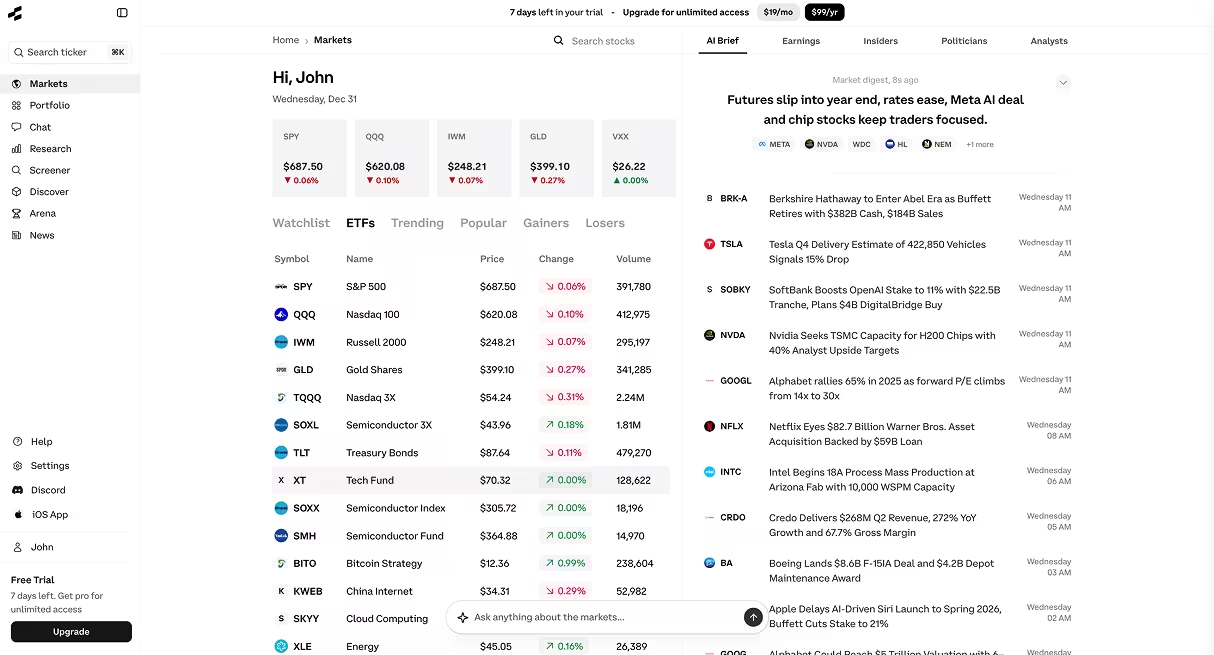
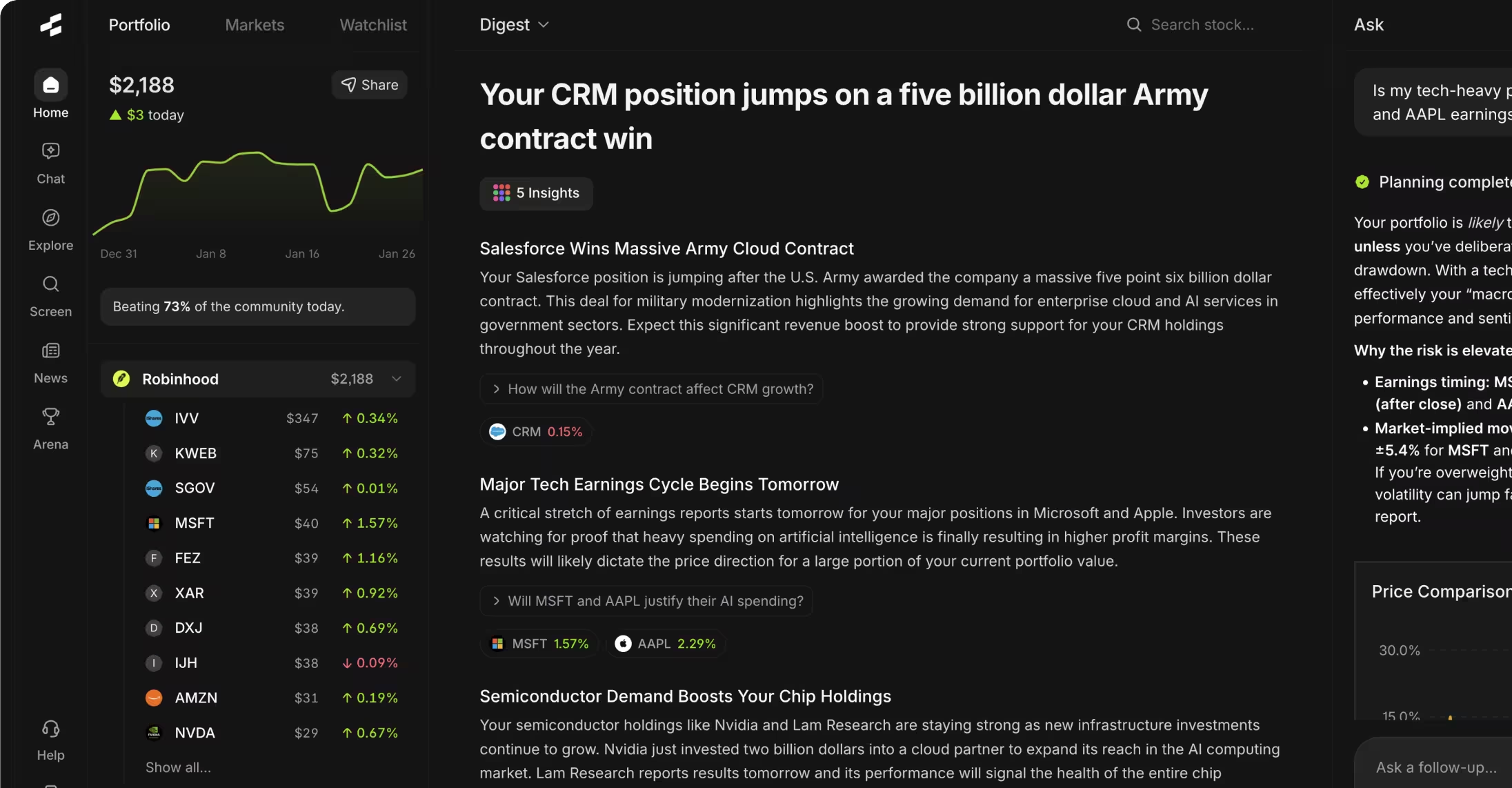
Visual data presentation: Numbers in isolation mean little to beginners. Charts showing revenue growth over time, pie charts breaking down revenue by business segment, and comparison bars showing how metrics stack up against competitors transform abstract figures into patterns you can interpret. Color coding helps too—green for improving metrics, red for declining ones, with thresholds based on industry norms rather than arbitrary cutoffs.
Portfolio simulation: Before risking real money, beginners benefit from testing strategies with hypothetical portfolios. Tools that track simulated investments show how different allocation approaches perform under actual market conditions. This experiential learning reveals concepts like volatility and correlation more effectively than reading definitions.
Traditional Research MethodAI-Assisted ApproachTime DifferenceManually reading quarterly 10-Q filingsAsking AI to summarize key changes from previous quarter45 minutes vs. 30 secondsBuilding Excel spreadsheet to compare competitorsRequesting comparison table for specific metrics30 minutes vs. 10 secondsCalculating valuation ratios with financial calculatorViewing automatically calculated and contextualized ratios15 minutes vs. instantSearching news sites for recent company developmentsReviewing AI-curated news summary with sentiment analysis20 minutes vs. 1 minute
Alerts and monitoring: Once you identify stocks worth watching, AI tools can monitor them for significant changes. Rather than checking prices daily, you set thresholds: "Notify me if Amazon drops 10% or if there's news about new product launches." The automation handles the tedious monitoring work while you focus on learning and analysis.
Getting Started with AI Investment Research
Starting with AI investing tools requires less preparation than traditional investing education, but some foundational steps make the experience more productive. The goal is building sustainable research habits rather than chasing quick returns.
Step 1: Start with companies you understand. Your first research targets should be businesses whose products or services you use. If you drink Starbucks coffee, use an iPhone, or shop on Amazon, you already understand something about their business model, customer experience, and competitive position. This existing knowledge helps you evaluate whether the AI's analysis aligns with reality. Ask questions like "How much of Apple's revenue comes from iPhone sales?" or "Is Starbucks' profit margin improving?"
Step 2: Learn metrics through exploration, not memorization. Rather than studying financial ratios in isolation, explore them in context. Pick a company and ask the AI to explain its valuation. When the response mentions P/E ratio, ask "What's a good P/E ratio for this industry?" Then ask "Why does P/E vary by industry?" This curiosity-driven learning sticks better than reading definitions from a glossary.
Step 3: Compare similar companies. Understanding what makes a "good" metric requires context. Ask the AI to compare three companies in the same sector across key financial metrics. "Compare the profit margins, revenue growth, and debt levels of Coca-Cola, Pepsi, and Dr Pepper Snapple Group." The comparison reveals what's typical for the industry and what's exceptional.
Step 4: Ask "why" questions. When you see interesting data, probe deeper. If a company's stock price dropped 15% last quarter, ask "What caused the drop?" If revenue grew but profit margins declined, ask "Why did profit margins fall despite revenue growth?" These follow-up questions build cause-and-effect understanding that's more valuable than memorizing formulas.
Profit Margin: The percentage of revenue that becomes profit after subtracting all expenses. A 15% profit margin means the company keeps $0.15 of every dollar in sales. Higher margins generally indicate pricing power, operational efficiency, or both.
Step 5: Test hypotheses. As you develop intuitions about what makes a good investment, test them. "Find companies with P/E ratios below 15, revenue growth above 10%, and positive free cash flow." Review the results. Do these companies look genuinely attractive, or did your filters produce mostly struggling businesses in declining industries? This feedback loop calibrates your judgment.
Step 6: Track a watchlist. Select 5-10 companies to monitor over several months. Review their quarterly earnings reports through the AI tool. Over time, you'll notice patterns in how markets react to earnings beats, guidance changes, and macroeconomic news. This longitudinal perspective teaches market dynamics that one-time research sessions can't convey.
Many platforms offer free tiers or trial periods. The Rallies.ai platform provides access to conversational research tools without requiring credit card information upfront, lowering the barrier to experimentation. Starting free lets you determine whether the interface and features match your learning style before committing financially.
Common Mistakes Beginners Make with AI Tools
AI investing tools amplify both good research habits and bad ones. New investors make predictable mistakes that undermine the educational value these platforms offer.
Treating AI output as recommendations: When an AI analysis highlights that a stock appears undervalued based on P/E ratio and growth metrics, beginners sometimes interpret this as a buy recommendation. AI tools present data analysis, not advice. Multiple factors beyond valuation affect whether a stock suits your specific situation—risk tolerance, investment timeline, portfolio diversification, and personal financial circumstances. The data might be accurate while still being incomplete for decision-making purposes.
Skipping the context: AI tools often provide brief answers followed by expandable details. Beginners frequently stop reading after the headline answer. If you ask "Is this stock a good value?" and receive "The P/E ratio of 18 is below the sector average of 23," reading only that sentence misses important context about why the market might be pricing the stock lower—deteriorating fundamentals, regulatory risks, or management concerns that justify the discount.
Over-relying on single metrics: Because AI tools make it easy to filter by specific criteria, beginners sometimes fixate on one metric they've heard is important. Screening only for "dividend yield above 5%" without considering payout sustainability, debt levels, or earnings trends produces lists of high-risk stocks where dividends may get cut. Comprehensive analysis requires evaluating multiple dimensions together.
Productive Uses of AI Tools
- Comparing how a company's metrics have changed over time
- Understanding what financial terms mean in practical context
- Identifying which metrics are relevant for specific industries
- Learning how different factors interact to affect stock performance
- Exploring sectors or companies you don't yet understand
Problematic Approaches
- Using AI analysis as the sole basis for investment decisions
- Ignoring warnings or limitations mentioned in analysis
- Chasing patterns without understanding underlying causes
- Expecting AI to predict short-term price movements
- Substituting AI research for understanding your own risk tolerance
Ignoring the learning curve: AI tools feel intuitive, which tricks beginners into thinking they've mastered concepts after superficial exposure. Asking one question about revenue growth doesn't mean you understand revenue recognition policies, seasonal patterns, or one-time items that distort comparisons. Genuine competence requires repeated exposure to concepts across multiple companies and market conditions.
Neglecting primary sources: AI analysis summarizes information from financial statements, but beginners should occasionally review the actual documents. Reading a few 10-K reports teaches you what gets emphasized, what gets buried in footnotes, and how management tone varies between successful and struggling companies. This firsthand exposure builds pattern recognition that pre-digested summaries can't replicate.
Expecting market timing help: AI tools analyze what has happened and what currently exists. They don't predict future stock prices or optimal entry points. Beginners who ask "When should I buy this stock?" receive analysis of current valuation and trends, but the AI cannot tell you whether the price will be higher or lower next week. Markets incorporate unpredictable information—earnings surprises, regulatory changes, macroeconomic shifts—that no analysis can forecast reliably.
Building Your Investment Knowledge Alongside AI
AI tools accelerate research but don't replace foundational investment knowledge. The most successful beginners use AI as a learning accelerator while deliberately building their own conceptual framework.
Start with business understanding, not stock prices. Before researching any financial metric, understand what the company actually does. How does it make money? Who are its customers? What's its competitive advantage? AI can summarize this information, but you should verify it matches your own observations. If you use Microsoft products daily, you can evaluate whether the AI's description of Microsoft's competitive moat aligns with your experience.
Learn financial statements in sequence. The three core financial statements—income statement, balance sheet, and cash flow statement—tell different parts of a company's story. Income statements show profitability, balance sheets show financial position, and cash flow statements show money movement. Ask the AI to explain each statement for the same company, then ask how they connect. "If revenue grew 20% but cash flow is negative, what explains the difference?" These connections reveal how accounting choices and business models interact.
Study full market cycles. Most beginners start investing during either bull markets or bear markets and assume those conditions are permanent. Use AI tools to analyze how companies performed across different periods. "How did this company perform during the 2020 COVID crash?" or "What happened to tech stocks during the 2022 interest rate increases?" Understanding how different business models and sectors respond to changing conditions builds resilience.
Explore adjacent concepts. When you learn one concept, investigate related ones. If you're researching dividend stocks, explore dividend payout ratios, dividend growth rates, dividend aristocrats, and dividend sustainability. Ask the AI how these concepts relate and why investors emphasize different metrics for different goals. This web of connected knowledge makes each individual concept more meaningful.
The AI investing guide covers the broader landscape of how artificial intelligence is transforming investment research, including capabilities beyond beginner-focused tools. As your skills develop, exploring advanced features like deep research modes, algorithmic screening strategies, and AI model comparisons becomes more valuable.
Maintain a learning journal. Document interesting findings, questions you couldn't answer, and concepts you want to revisit. When you review quarterly earnings for companies on your watchlist, note what surprised you. Over time, this journal reveals your progress and areas where understanding remains fuzzy.
Engage with educational content intentionally. Many AI platforms include educational articles, video tutorials, and guided learning paths. These resources work best when you engage with them actively. After reading an article about P/E ratios, immediately practice by analyzing three companies' P/E ratios and asking the AI to explain differences you observe. Active application beats passive reading.
What to Look for in Beginner-Friendly AI Tools
Not all AI investing platforms serve beginners equally well. Some prioritize features for experienced traders, using interfaces and terminology that assume existing knowledge. Others focus on education and accessibility.
Conversational interface quality: The best beginner tools handle follow-up questions and maintain context across a conversation. If you ask about Apple's revenue, then ask "What about margins?", the tool should understand you're still discussing Apple. Platforms requiring you to repeat context with every query feel clunky and slow down exploration. Test this by asking a series of related questions about one company.
Explanation depth: Quality tools don't just present data—they explain what it means. When showing you that a company's debt-to-equity ratio is 0.8, beginner-friendly platforms add context: "This is below the industry median of 1.2, suggesting conservative use of debt financing. Lower leverage reduces risk but may also limit growth if the company could profitably deploy more capital." Look for tools that answer the implicit "so what?" question.
Visual clarity: Numbers in tables are hard to interpret. Charts, color coding, and visual comparisons make patterns obvious. A line chart showing five years of quarterly revenue instantly communicates growth trajectory better than a table of 20 numbers. Check whether the platform emphasizes visual data presentation or mostly shows text and tables.
Educational scaffolding: Some platforms include guided learning paths: "New to investing? Start here." These structured approaches teach concepts in logical sequence—what stocks are before how to value them, what diversification means before how to build portfolios. Self-directed learning works for some beginners, but structured paths benefit others.
Beginner Platform Evaluation Checklist
- ☐ Free tier or trial available to test without financial commitment
- ☐ Natural language interface that understands conversational questions
- ☐ Educational content integrated with tools (definitions, explanations, context)
- ☐ Visual data presentation with charts and comparisons
- ☐ Mobile app available for research on the go
- ☐ Customer support or community forums for questions
- ☐ Transparent about data sources and limitations
- ☐ Clear disclaimers about not providing investment advice
- ☐ Regular updates with recent financial data
- ☐ Portfolio tracking to monitor your investments in one place
Data transparency: Trustworthy platforms tell you where information comes from. "According to the most recent 10-K filed March 2024" is better than just stating a number without attribution. For beginners who don't yet know how to verify claims independently, transparency signals reliability.
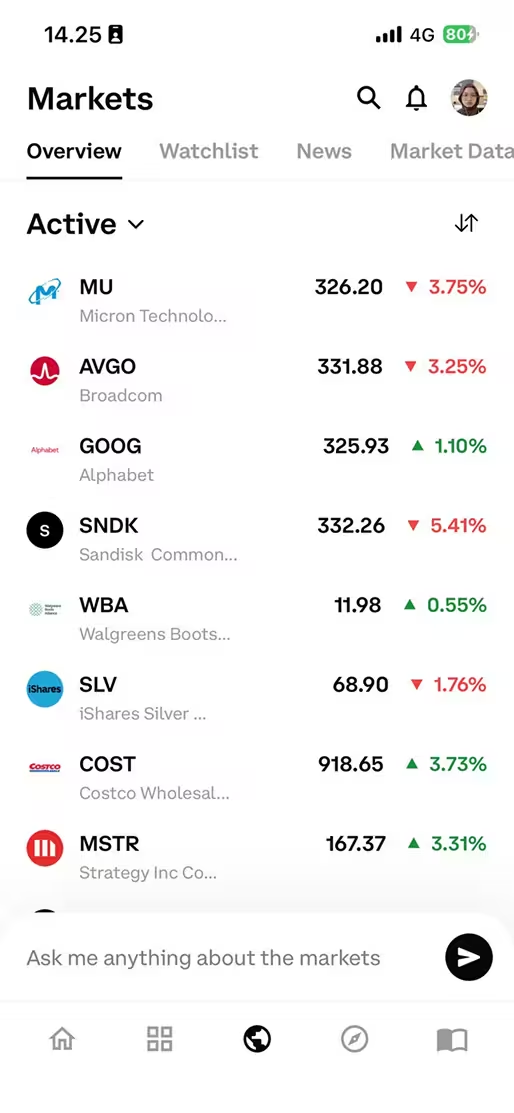
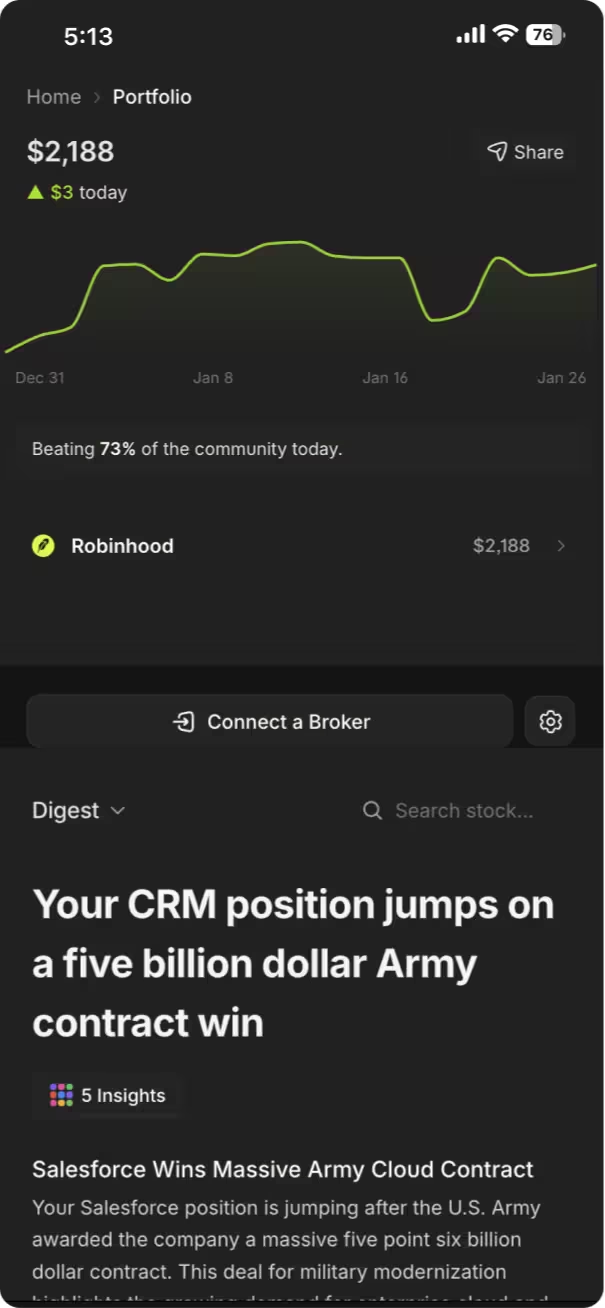
Mobile accessibility: Investment research doesn't only happen at desks. Mobile apps let you investigate questions whenever they arise—while reading news articles, watching YouTube videos about investing, or discussing stocks with friends. The Rallies.ai mobile app provides the same conversational research capabilities as the web platform, making learning continuous rather than confined to dedicated study sessions.
Portfolio integration: Tools that let you track actual or simulated portfolios alongside research capabilities create a feedback loop. You can research a stock, add it to a watchlist, monitor its performance, and later review whether your analysis was accurate. This connection between research and outcomes accelerates learning.
Community and support: Investing raises endless questions, and some won't have clean answers in AI databases. Platforms with active user communities or accessible support teams give you places to ask "Why did this stock's price spike after reporting declining revenue?" Sometimes these questions require market context or industry knowledge beyond what structured data provides.
Frequently Asked Questions
1. Do I need to know how to code to use AI investing tools?
No. Modern AI investing tools designed for beginners use conversational interfaces where you type or speak questions in plain English. You don't need programming knowledge, financial formulas, or technical expertise. The AI handles the technical complexity behind simple interfaces that work like asking a knowledgeable friend questions about stocks.
2. How much money do I need to start using AI investing tools?
Most AI investing platforms offer free tiers or trial periods that let you research stocks and learn without any financial commitment. You don't need investment capital to use research tools—they're valuable for education even before you invest real money. When you do start investing, many brokerages now allow fractional share purchases starting at $1 to $5.
3. Can AI tools tell me which stocks to buy?
No. AI tools analyze data and present information, but they don't make personalized recommendations about which stocks suit your specific financial situation, risk tolerance, or goals. They'll show you that a stock appears undervalued by certain metrics, but deciding whether to buy requires considering factors the AI doesn't know about you—your investment timeline, existing portfolio, financial obligations, and personal preferences.
4. Are AI investing tools accurate?
AI tools are as accurate as the data they access. Platforms that pull from official SEC filings and verified financial databases provide accurate historical and current data. However, accuracy of data differs from accuracy of predictions—no tool can accurately forecast future stock prices or guarantee investment outcomes. AI excels at analyzing what has happened and what currently exists, not predicting what will happen.
5. How is AI investing different from robo-advisors?
Robo-advisors automatically manage your portfolio based on your risk profile, typically investing in diversified ETFs with periodic rebalancing. AI investing tools provide research capabilities that help you make your own investment decisions—they don't manage money for you. Robo-advisors are hands-off investment management services; AI research tools are hands-on educational and analysis platforms that keep you in control of decisions.
6. Will using AI tools help me beat the market?
AI tools give you better information faster, but most professional investors with extensive resources don't consistently beat the market either. Research from S&P Dow Jones Indices shows that over 90% of actively managed funds underperform their benchmarks over 15-year periods. AI tools help you make more informed decisions and learn faster, but they don't overcome fundamental market efficiency or eliminate the role of unpredictable future events in stock performance.
7. What's the difference between free and paid AI investing tools?
Free tiers typically limit the number of queries you can make per day, restrict access to advanced features like deep research mode, or show delayed data rather than real-time updates. Paid tiers usually offer unlimited queries, comprehensive analysis across more data points, priority support, portfolio tracking for more positions, and additional features like price alerts and custom screening. For beginners learning basics, free tiers often provide sufficient functionality.
8. How long does it take to learn to use AI investing tools effectively?
Basic functionality takes minutes to learn—asking simple questions and understanding responses happens immediately. Developing investment judgment to ask the right questions, interpret answers in context, and integrate multiple data points takes months of consistent practice. Most beginners feel comfortable navigating tools within the first week but continue discovering new capabilities and developing analytical skills for their first year or more of regular use.
Conclusion
AI investing tools fundamentally change how beginners approach learning about stocks and markets. What once required reading textbooks, taking courses, or paying advisors can now happen through conversational exploration with AI assistants that explain concepts as you encounter them. The time compression is real—tasks that took professional analysts hours now take seconds. The educational value is substantial—beginners build investment literacy faster through active questioning and immediate feedback than through passive study.
These tools work best when you understand what they are and aren't. They're research accelerators and educational companions, not crystal balls or decision-making replacements. The AI can tell you that a company's profit margins are declining, explain why that matters, and show how competitors compare—but it can't tell you whether that company fits your portfolio or risk tolerance. Those judgments remain yours, requiring self-knowledge that no algorithm possesses.
Start with curiosity about companies you already understand from customer experience. Ask basic questions, explore the answers, and follow your natural curiosity deeper. Build research habits before committing capital. Use the speed and accessibility of AI tools to compress your learning timeline, but give yourself enough market cycles and repeated exposure to develop genuine pattern recognition. The technology removes barriers to entry, but becoming a competent investor still requires time, practice, and thoughtful engagement with what you learn.
Ready to explore AI-powered research yourself? Try asking the AI Research Assistant your first stock question, or read the complete guide to AI stock research to understand the full landscape of how AI is transforming investment analysis.
References
- CFA Institute. "AI in Investment Management: 2024 Industry Survey." cfainstitute.org
- Pew Research Center. "Americans and Their Investment Platforms: 2023 Survey." pewresearch.org
- U.S. Securities and Exchange Commission. "Company Filings Database (EDGAR)." sec.gov
- S&P Dow Jones Indices. "SPIVA U.S. Scorecard: Year-End 2023." spglobal.com
- Dimensional Fund Advisors. "Long-Term Returns by Asset Class: 1928-2023." dimensional.com
- Financial Industry Regulatory Authority. "Investor Education: Getting Started." finra.org
Disclaimer: This article is for educational and informational purposes only. It does not constitute investment advice, financial advice, trading advice, or any other type of advice. Rallies.ai does not recommend that any security, portfolio of securities, transaction, or investment strategy is suitable for any specific person.
Risk Warning: All investments involve risk, including the possible loss of principal. Past performance does not guarantee future results. Before making any investment decision, you should consult with a qualified financial advisor and conduct your own research.
Written by: Gav Blaxberg
CEO of WOLF Financial | Co-Founder of Rallies.ai