


Understanding who owns Robinhood stock tells you a lot about how the market views the company. Ownership structure reveals who has conviction in a business and who's heading for the exits. When insiders hold significant stakes, it often signals alignment between management and shareholders. When large institutions accumulate or trim positions, it can hint at how "smart money" is reading the company's future. For HOOD shareholders, tracking these shifts is one of the more practical ways to gauge sentiment beyond just price action.
Key takeaways
- HOOD institutional ownership is concentrated among a relatively small number of large asset managers, which is common for mid-cap financial technology companies.
- Insider buying and selling activity at Robinhood can signal management confidence or routine diversification, and knowing the difference matters.
- Ownership concentration, meaning how much of the float a handful of holders control, affects stock volatility and liquidity.
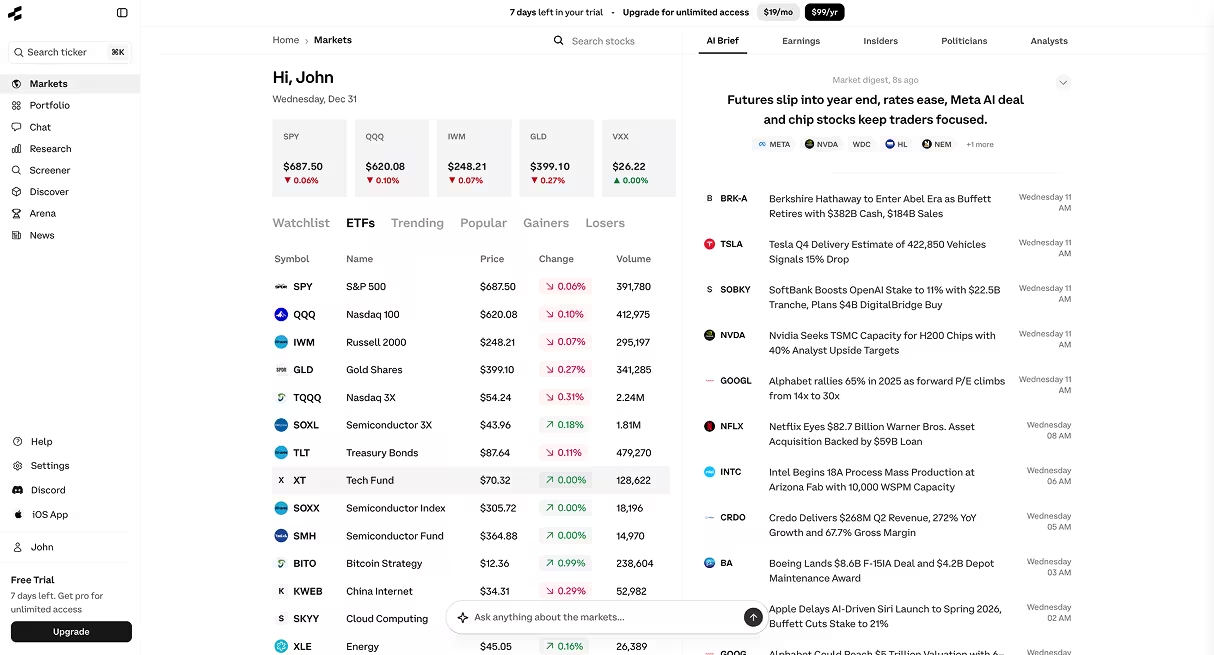
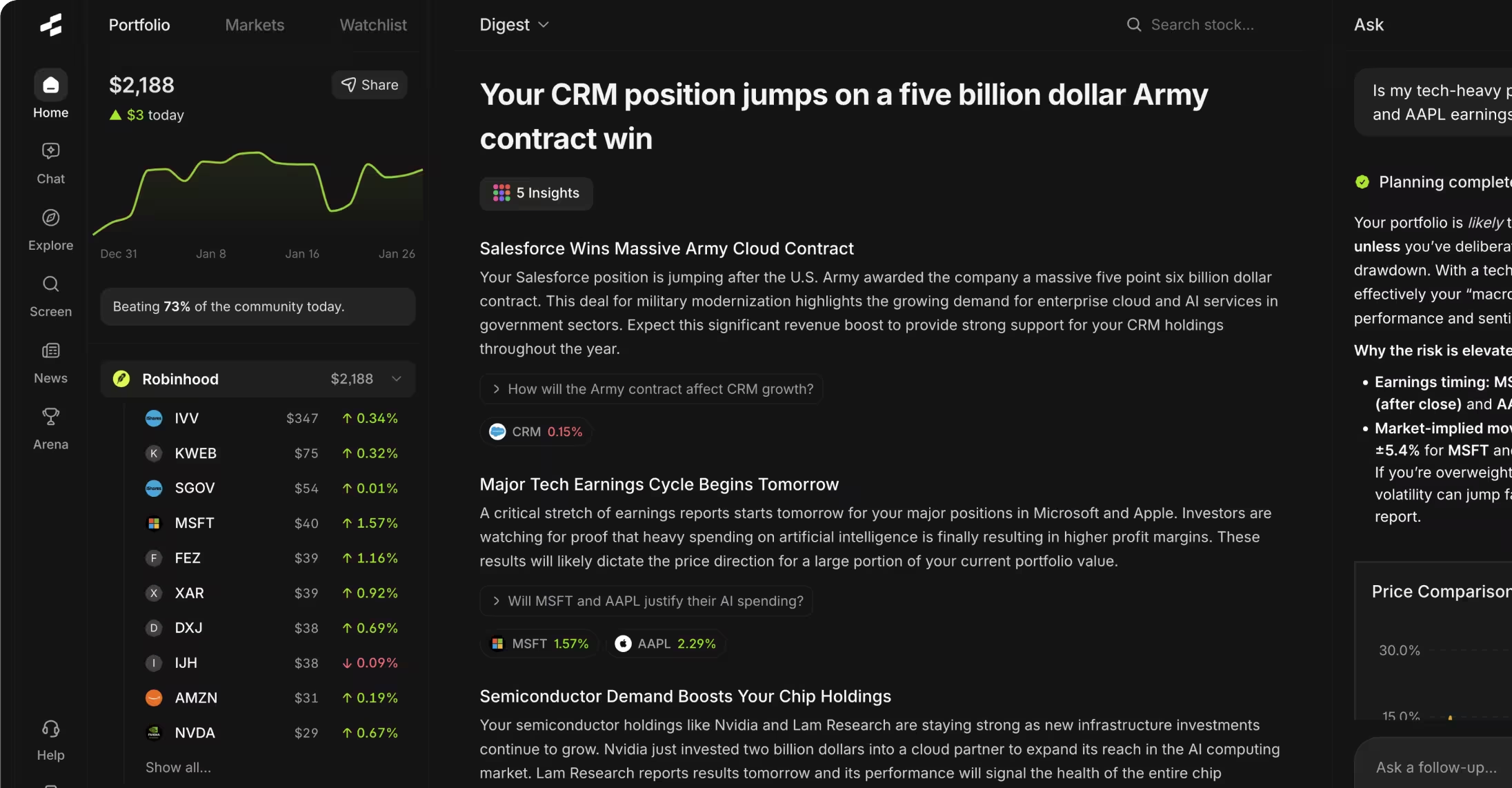
- You can track HOOD shareholders and institutional filings through SEC 13F reports, proxy statements, and tools like the Rallies.ai HOOD stock page.
- Ownership data is backward-looking by design, so it's one input in your research process, not a buy or sell signal on its own.
Who owns Robinhood stock?
When people ask who owns Robinhood stock, they're really asking three things: how much do institutions hold, how much do insiders hold, and what's left for retail investors? Each group brings different motivations, time horizons, and levels of influence over the company.
Robinhood's ownership breaks down into three broad buckets. Institutional investors like mutual funds, ETFs, pension funds, and hedge funds typically hold a large percentage of HOOD's outstanding shares. Insiders, including executives, board members, and early investors, hold another meaningful chunk. The remainder sits with retail investors, individual shareholders who bought on the open market.
Institutional ownership: The percentage of a company's outstanding shares held by large financial organizations such as mutual funds, pension funds, and hedge funds. High institutional ownership can indicate professional confidence in the stock but also means large sell-offs can move the price quickly.
For a company like Robinhood, which went public through an IPO and had significant early venture capital backing, the insider and institutional mix can look different from a legacy financial firm. Early investors and founders often retain large blocks of shares, sometimes with different share classes that carry extra voting power. That's worth checking in the proxy statement if you want to understand who actually controls decision-making versus who just holds economic exposure.
What does HOOD institutional ownership look like?
HOOD institutional ownership tends to be dominated by the usual suspects: large index fund providers and actively managed funds. Think of the big passive managers that buy shares because HOOD is in an index they track, plus a smaller group of active managers who've made a deliberate bet on the company.
You can find the specific names and share counts in quarterly 13F filings with the SEC. These filings are required for any institution managing over $100 million, and they report holdings with about a 45-day delay after each quarter ends. That delay matters. By the time you read a 13F, the position may have already changed.
Here's what to look for when reviewing institutional holders:
- Concentration: If the top five holders own a huge percentage of the float, the stock can be more volatile. One large seller can push the price down fast.
- Changes quarter over quarter: Are the biggest holders adding to their positions or trimming? A pattern of accumulation over several quarters is more meaningful than a single quarter's change.
- Type of institution: Passive index funds hold because they have to. Active funds hold because they want to. The distinction matters when interpreting the data.
- Hedge fund involvement: Hedge funds tend to have shorter time horizons and can create more volatility around earnings or catalysts.
One thing people overlook is that high institutional ownership isn't automatically bullish. It just means professionals have allocated capital there. Sometimes institutions hold a stock because it's in a benchmark index, not because they love the business. Context matters more than the raw percentage.
Is there notable Robinhood insider buying or selling?
Robinhood insider buying and selling gets a lot of attention, and for good reason. When a CEO or CFO buys shares on the open market with their own money, it's hard to interpret that as anything other than confidence. When insiders sell, the picture gets murkier.
Insider transactions: Purchases or sales of company stock by executives, directors, or other individuals with access to non-public information. These transactions must be reported to the SEC, typically through Form 4 filings, within two business days.
The tricky part with insider selling is that it doesn't always mean bad news. Executives receive a large portion of their compensation in stock. They sell to pay taxes, diversify their personal wealth, buy houses, or fund other investments. Routine, pre-planned sales under a 10b5-1 plan are especially common and generally shouldn't raise alarm bells.
What should get your attention:
- Cluster buying: Multiple insiders buying around the same time, especially outside of compensation-related grants, is a stronger signal than a single purchase.
- Unusual size: An insider buying a much larger position than their normal pattern suggests higher-than-usual conviction.
- Selling outside a 10b5-1 plan: If an insider makes a discretionary sale rather than an automated one, it may be worth investigating further.
- Timing relative to earnings or announcements: Transactions that happen shortly before major news can be telling, though they're also closely scrutinized by regulators.
You can track all of this through SEC Form 4 filings, which are publicly available. The Rallies AI Research Assistant can also help you pull together insider transaction history and interpret patterns quickly rather than digging through filing after filing manually.
Why ownership concentration matters for HOOD shareholders
Ownership concentration is one of those things that sounds academic until it affects your portfolio. If a small number of holders control a large portion of HOOD's float, a single decision by one of them to sell can create outsized price swings.
For HOOD shareholders, here's the practical implication: a stock with concentrated ownership can gap down on heavy volume if a major holder exits, even if nothing has changed about the business. Conversely, if large holders are steadily accumulating, it can create a floor under the price because there are fewer shares available for everyone else.
This is particularly relevant for Robinhood because of its dual-class share structure. Founders and early insiders may hold shares with outsized voting rights, meaning they control corporate governance decisions even if their economic ownership is a smaller percentage of total shares. If you're researching who owns Robinhood stock, understanding the difference between economic ownership and voting control is essential. The proxy statement, filed annually with the SEC, breaks this down clearly.
How to check ownership concentration
Pull up the company's most recent proxy statement (DEF 14A filing) and look for the beneficial ownership table. This shows every insider and institution that holds more than 5% of shares. Compare it against the 13F data for a fuller picture. You can also use a stock screener to filter for ownership-related metrics and see how HOOD compares with peers in the fintech space.
How to research who owns Robinhood stock yourself
Tracking ownership doesn't require a Bloomberg terminal. Here's a straightforward process anyone can follow:
- Start with the proxy statement. Search for Robinhood's DEF 14A filing on the SEC's EDGAR database. This gives you the insider ownership table and details on share classes and voting rights.
- Review 13F filings. These show institutional holdings and are updated quarterly. Look at the trend over multiple quarters, not just the most recent one.
- Check Form 4 filings. These capture insider buys and sells in near real-time. Pay attention to whether transactions are part of a pre-planned 10b5-1 trading plan.
- Compare against the float. Knowing the total shares outstanding minus restricted and insider-held shares gives you the free float, which is what's actually available for public trading.
- Use an AI research tool. Rather than piecing everything together manually, you can ask a tool like the Rallies AI Research Assistant to summarize institutional holders, insider activity, and concentration for any ticker.
The goal isn't to copy what institutions are doing. It's to understand the forces acting on the stock so you can make more informed decisions about your own research.
What insider ownership signals about management alignment
There's a simple logic behind paying attention to insider ownership: people who run the company and also own significant stock have skin in the game. Their personal wealth rises and falls with the share price, just like yours.
High insider ownership at Robinhood would suggest that executives believe in the long-term value of the business enough to keep their wealth tied to it. Low insider ownership, or a pattern of steady selling, might indicate that management sees the stock more as compensation to be monetized than as a long-term investment.
Neither conclusion is automatic. Some of the best-run companies have insiders who sell regularly because they've been there for years and have enormous positions. Some poorly run companies have insiders who hold because they can't sell without spooking the market. The data needs context. Look at how long insiders have held, whether they've bought in the open market (not just received grants), and how their ownership compares with peers in the stock analysis space.
Try it yourself
Want to run this kind of analysis on your own? Copy any of these prompts and paste them into the Rallies AI Research Assistant:
- Who are the biggest institutional investors holding HOOD, and has there been any notable insider buying or selling recently? I want to understand if the smart money is accumulating or reducing their positions.
- Who are the biggest shareholders in Robinhood? Are insiders buying or selling?
- What is Robinhood's insider ownership percentage compared to other fintech companies, and has it changed over the past several quarters?
Frequently asked questions
What does HOOD institutional ownership tell you about the stock?
HOOD institutional ownership shows how much of the company is held by professional money managers. A high level of institutional ownership can indicate that professional investors see value in the business, but it also means the stock is more exposed to large block trades that can move the price quickly. Always check whether institutions are actively choosing to hold or are simply tracking an index.
How can you track Robinhood insider buying?
Robinhood insider buying and selling is reported through SEC Form 4 filings, which are publicly available on the EDGAR database. These filings are due within two business days of the transaction and include the insider's name, the number of shares traded, the price, and whether the trade was part of a pre-planned 10b5-1 trading plan. AI-powered research tools can also aggregate this data for you.
Who are the major HOOD shareholders?
The largest HOOD shareholders typically include a mix of institutional asset managers, early venture capital investors, and company insiders. The specific names and percentages change quarter to quarter. The best source for this information is the company's annual proxy statement for insiders and 13F filings for institutional holders.
Does insider selling mean a stock is going to drop?
Not necessarily. Insiders sell for many reasons unrelated to their outlook on the stock, including tax obligations, diversification, and personal financial planning. Pre-planned sales under 10b5-1 plans are especially routine. Insider selling is more concerning when it's clustered among multiple executives, unusually large, or happens outside of a pre-arranged plan.
What is a dual-class share structure and does Robinhood have one?
A dual-class share structure means the company has issued shares with different voting rights. Typically, founders and early insiders hold a class of shares with more votes per share, giving them outsized control over corporate decisions relative to their economic ownership. Robinhood has this type of structure, which you can verify in its proxy filing. For investors researching who owns Robinhood stock, this means economic ownership percentages don't tell the full governance story.
How often is institutional ownership data updated?
Institutional ownership data from 13F filings is updated quarterly, with a 45-day reporting lag after the end of each quarter. This means the data you see could be several weeks old by the time it becomes public. Treat it as a directional indicator of trends rather than a real-time snapshot of current positions.
Bottom line
Figuring out who owns Robinhood stock is more than a curiosity exercise. It gives you a read on how institutions, insiders, and retail investors are positioned, and whether those positions are shifting in ways that matter. HOOD institutional ownership, insider transactions, and concentration data each add a layer to your research that price charts alone don't capture.
Ownership data is one input among many. Pair it with fundamental analysis, competitive positioning, and your own risk tolerance to form a complete picture. For more frameworks on how to evaluate stocks like this, explore our stock analysis guides.
Disclaimer: This article is for educational and informational purposes only. It does not constitute investment advice, financial advice, trading advice, or any other type of advice. Rallies.ai does not recommend that any security, portfolio of securities, transaction, or investment strategy is suitable for any specific person. All investments involve risk, including the possible loss of principal. Past performance does not guarantee future results. Before making any investment decision, consult with a qualified financial advisor and conduct your own research.
Written by Gav Blaxberg, CEO of WOLF Financial and Co-Founder of Rallies.ai.