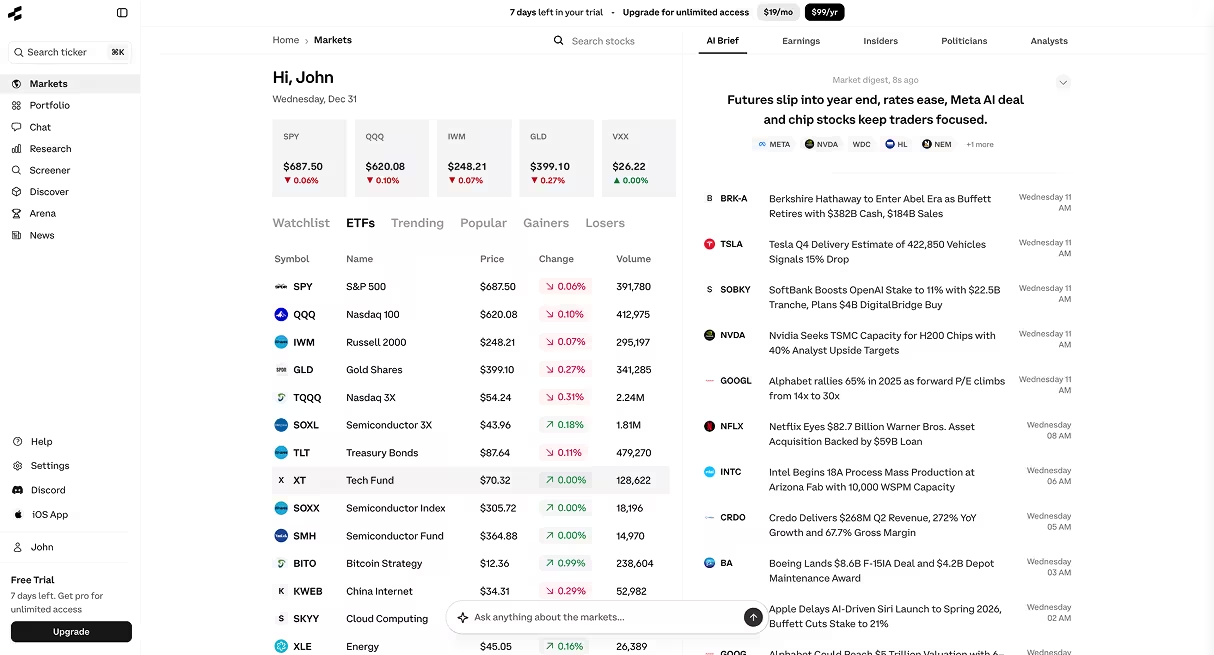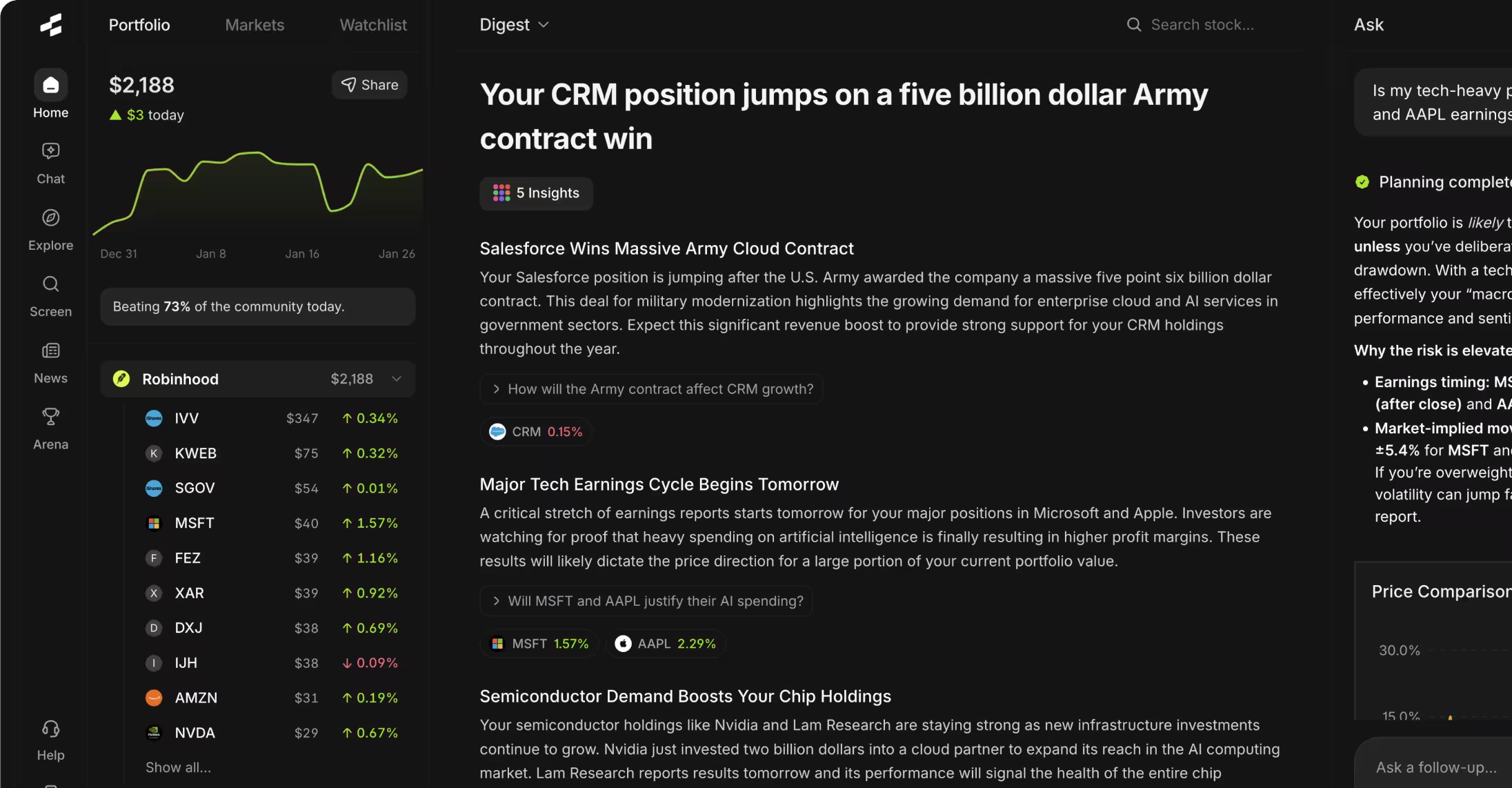



Gamma is the Greek that tells you how fast your options delta changes as the underlying stock moves, and understanding what gamma is in options can be the difference between a well-managed position and one that spirals out of control. If you trade index ETFs like SPY, QQQ, or IWM, gamma is especially relevant because these products attract huge options volume, and the resulting gamma exposure across dealers and market makers can actually move the underlying price itself. This guide breaks down how gamma works, how it interacts with the other Greeks, and how to think about it when selecting strikes and managing risk.
Key takeaways
- Gamma measures the rate of change of delta per one-point move in the underlying. High gamma means your delta shifts quickly, which accelerates both gains and losses.
- At-the-money options have the highest gamma, and gamma increases as expiration approaches, making short-dated SPY or QQQ options especially sensitive to price swings.
- Long gamma positions (owning options) benefit from big moves in either direction, while short gamma positions (selling options) profit in calm markets but face outsized risk when prices whip around.
- Gamma interacts with theta in a direct tradeoff: the options with the most gamma also tend to have the fastest time decay.
- Monitoring implied volatility percentile helps you decide whether gamma is cheap or expensive relative to its historical range before you put on a trade.
What is gamma in options, and why does it matter?
Delta tells you how much an option's price changes for a one-dollar move in the underlying stock. Gamma tells you how much that delta itself changes for the same one-dollar move. Think of delta as speed and gamma as acceleration. If you're driving a car, delta is how fast you're going; gamma is how hard your foot is pressing the gas pedal.
Gamma: The rate of change of an option's delta per one-point move in the underlying asset. Gamma is highest for at-the-money options and increases as expiration gets closer. It matters because it determines how quickly your directional exposure can shift.
Here's the thing about gamma that trips people up: it's not static. Your position's risk profile changes with every tick in the underlying. If you buy a call on SPY with a delta of 0.50 and a gamma of 0.08, a one-point rally in SPY pushes your delta to roughly 0.58. Another point higher, and you're around 0.66. Your position is getting more bullish as the stock moves in your favor. That sounds great on the way up, but gamma works both ways. A two-point drop takes your delta from 0.50 down to about 0.34, reducing your exposure as the trade moves against you. For long option holders, gamma is a friend. For short option sellers, gamma is the risk that keeps you up at night.
How does gamma change across strikes and expirations?
Not all options carry the same gamma. Two factors dominate: moneyness and time to expiration.
Moneyness
At-the-money (ATM) options have the highest gamma. Deep in-the-money and deep out-of-the-money options have low gamma because their deltas are already near 1.0 or 0.0, respectively, and don't change much. If SPY is trading near a round number, the strike closest to that level will have the most gamma. This is part of why you see heavy options activity cluster around ATM strikes on index ETFs.
Time to expiration
Gamma gets bigger as expiration approaches. A weekly SPY option expiring in two days has dramatically more gamma than a monthly option expiring in 30 days. This is why zero-days-to-expiration (0DTE) options on SPY and QQQ are so volatile. Their gamma is enormous, which means delta swings wildly with even small moves in the underlying. A 0DTE call can go from 0.30 delta to 0.70 delta on a two-point move, essentially doubling your directional bet in minutes.
For longer-dated options, gamma is lower and smoother. Your delta changes gradually, giving you more time to adjust. This is a fundamental consideration when selecting your expiration: do you want the raw sensitivity of high gamma, or the stability of lower gamma?
Gamma and the other Greeks: delta, theta, and vega
Gamma doesn't exist in isolation. It interacts with every other Greek, and understanding those relationships is what separates informed traders from people who just buy calls and hope.
Gamma and delta
This is the most direct relationship. Gamma is literally the derivative of delta. If you hold a delta-neutral portfolio (hedged so your net delta is zero), gamma tells you how quickly that hedge will drift. High gamma means you'll need to re-hedge frequently. Market makers who sell options and delta-hedge constantly are deeply aware of their gamma exposure because it dictates how often and how aggressively they need to trade the underlying to stay neutral.
Gamma and theta: the core tradeoff
There's an almost mechanical relationship between gamma and theta. Options with high gamma tend to have high theta (time decay). This makes intuitive sense: the option that gives you the most explosive directional sensitivity also costs the most per day to hold. If you buy a near-expiration ATM call on QQQ for the gamma, you're paying for it in time decay every single day, and especially over weekends. Long gamma positions bleed theta. Short gamma positions collect theta but accept the risk of a big move.
Theta: The amount an option's price decays per day, all else equal. Theta is the price you pay for owning gamma. If the underlying doesn't move enough to offset theta, your long option position loses money even if direction is right.
Gamma and vega
Vega measures sensitivity to implied volatility (IV). When IV rises, option premiums increase, and the gamma profile can shift because option pricing changes. Practically, if IV is elevated, you're paying more for the same gamma exposure. Checking IV percentile before entering a gamma-heavy trade is worth the 30 seconds it takes. If IV percentile is above 70-80 (meaning current IV is higher than it's been 70-80% of the time over the past year), you're buying expensive gamma. If IV percentile is below 20-30, gamma is relatively cheap. This doesn't mean you should always buy low IV or sell high IV, but it gives you context for whether the market is pricing in big moves or small ones.
Why do traders pay attention to gamma when managing risk?
Risk management in options is really about managing your Greeks, and gamma is the Greek that tells you how quickly everything else can change. Here are the practical reasons traders monitor it.
- Position sizing: A high-gamma position can double its delta exposure on a moderate move. If you size the trade based on your initial delta without accounting for gamma, you might end up with twice the risk you intended.
- Hedging frequency: If you're running a delta-neutral book, gamma determines how often you need to rebalance. High gamma means constant adjustments. Low gamma means you can check in less frequently.
- Expiration risk: As options approach expiration, gamma spikes for near-the-money strikes. A position that felt manageable on Monday can become uncontrollable by Friday. Traders often close or roll positions before the final day specifically to avoid this gamma explosion.
- Dealer positioning and index ETF behavior: On SPY and QQQ, options market makers collectively hold massive gamma positions. When dealers are "long gamma" (they own options), they hedge by selling rallies and buying dips, which dampens volatility. When dealers are "short gamma" (they've sold options), they hedge by buying rallies and selling dips, which amplifies moves. This is one reason index ETFs sometimes seem pinned to certain levels and other times break away violently.
How to factor gamma into strike selection
Strike selection is where gamma becomes actionable. Here's a framework some traders use.
If you want maximum gamma
Buy ATM options with short expirations. You'll get the most delta acceleration per point of movement. The cost is high theta and the risk that the stock doesn't move enough before expiration. This approach tends to work best when you expect a sharp move within a short window, like around a known catalyst.
If you want moderate gamma with less theta bleed
Choose ATM or slightly out-of-the-money options with 20-45 days to expiration. Gamma is still meaningful but not extreme, and theta is more manageable. This is a common approach for swing trades on IWM, QQQ, or SPY where you have a directional thesis but want some time for it to play out.
If you want to collect theta and accept gamma risk
Sell options, typically through spreads to cap your risk. Short premium strategies like iron condors or credit spreads are short gamma by definition. You collect theta every day, but a big move against you means gamma accelerates your losses. Understanding your net gamma tells you how much trouble a two or three standard deviation move would cause.
Risk/reward metrics to check
Before entering any gamma-sensitive trade, consider these numbers:
- Max profit vs. max loss: For defined-risk spreads, this is straightforward. For naked long options, max loss is the premium paid.
- Breakeven relative to current price: How far does the underlying need to move to cover your premium? If the move required exceeds what's typical for the ETF over your timeframe, the odds are stacked against you.
- Gamma-to-theta ratio: How much delta acceleration are you getting per dollar of daily time decay? Higher ratios mean you need less movement to profit. Lower ratios mean you're paying a lot for sensitivity you might not use.
- IV percentile context: Compare current implied volatility to its historical range. If you're long gamma with IV in the 90th percentile, you need an even bigger move to profit because you overpaid for the option.
Gamma on SPY: a practical example
Suppose SPY is trading near a round number, say 550. You buy an ATM call at the 550 strike with 5 days to expiration. The option might have a delta of 0.50 and a gamma of 0.10. Here's how your exposure shifts:
- SPY moves to 552: Your delta is now approximately 0.70. A two-point move made your position 40% more bullish than when you entered.
- SPY moves to 548: Your delta drops to about 0.30. You've lost directional exposure, which limits further losses but also means you participate less in any bounce.
- SPY stays at 550 for three days: Your gamma actually increases (because you're closer to expiration with an ATM option), but theta eats away at your premium. You're more sensitive to movement but have less time and less premium left.
Now imagine the same trade with 45 days to expiration. Gamma might be 0.03 instead of 0.10. A two-point move changes your delta from 0.50 to 0.56, not 0.70. Less exciting, but also less theta per day and more time for your thesis to develop. Which setup is "better" depends entirely on your outlook, timeframe, and how much time decay you're willing to absorb.
Historical IV and when gamma gets expensive
One mistake newer options traders make is ignoring the cost of gamma. Options premiums reflect implied volatility, and IV moves around based on supply, demand, and market expectations. When IV is high relative to its historical range, you're paying more for every unit of gamma. When IV is low, gamma is cheap.
A practical way to check this is to look at the IV percentile for the ETF you're trading. If SPY's IV percentile is 15, options are pricing in relatively small moves, and buying gamma is inexpensive. If IV percentile is 85, the market expects big swings and option premiums reflect that. Buying gamma at high IV means you need an even larger move than usual just to break even, because you overpaid for the option.
This doesn't mean high IV is always a bad time to buy options or low IV is always a good time. But it adds context. If you're putting on a long gamma trade, knowing where IV sits historically helps you calibrate your expectations and position size.
Time decay considerations for gamma-heavy positions
Theta decay isn't linear. It accelerates as expiration approaches, and this acceleration mirrors gamma's behavior. The last week before expiration is where both gamma and theta are at their most extreme for ATM options. This creates a ticking clock for long option holders.
If you're long a weekly SPY call for the gamma, you need the underlying to move quickly and meaningfully. Every day that passes without a sufficient move costs you premium. By Wednesday or Thursday of expiration week, theta can strip 5-10% of an ATM option's remaining value in a single day. The gamma is there to reward you if SPY makes a big move, but the theta penalizes you for every hour it doesn't.
Some traders manage this by setting clear exit rules: if the expected move hasn't happened by a certain point, they close the position rather than letting theta grind them down. Others roll to a later expiration when gamma starts to spike uncomfortably. There's no single right answer, but having a plan before you enter is better than making emotional decisions as expiration approaches.
Try it yourself
Want to run this kind of analysis on your own? Copy any of these prompts and paste them into the Rallies AI Research Assistant:
- Walk me through what gamma means in options trading using SPY as an example — how does it affect my position as the stock price moves, and why do traders pay attention to it when managing risk?
- What is gamma in options
- Compare the gamma and theta profiles of a 5-day ATM SPY call versus a 45-day ATM SPY call, and explain which setup favors a long gamma trade versus a short gamma trade.
Frequently asked questions
What is gamma in options in plain terms?
Gamma measures how much an option's delta changes when the underlying stock moves by one point. If your option has a gamma of 0.05, a one-dollar increase in the stock pushes your delta up by 0.05. It tells you how quickly your directional exposure shifts as price moves, which directly affects your profit and loss trajectory.
Is high gamma good or bad for SPY options?
It depends on whether you're buying or selling. If you own SPY options (long gamma), high gamma accelerates your gains when SPY moves in your favor and limits losses when it moves against you. If you've sold SPY options (short gamma), high gamma works against you because your losses accelerate on big moves. Neither is inherently good or bad; it's about whether the trade setup matches your market outlook.
How does gamma differ between SPY, QQQ, and IWM options?
The gamma mechanics are identical across all three ETFs. The differences come from each ETF's typical volatility and options liquidity. QQQ tends to have slightly higher implied volatility than SPY because of its tech concentration, which affects how much you pay for gamma. IWM (small caps) often has even higher IV, meaning gamma exposure costs more but the underlying also tends to move more. The right choice depends on where you see the best risk/reward for your specific trade idea.
Why does gamma increase as options approach expiration?
Near expiration, ATM options are on a knife's edge. A small move in the underlying can push them from at-the-money to meaningfully in-the-money or out-of-the-money. This binary outcome creates extreme sensitivity in delta, which shows up as high gamma. Deep in-the-money or far out-of-the-money options don't experience this effect as much because their outcomes are more settled.
How do I know if gamma is cheap or expensive right now?
Check the implied volatility percentile for the ETF you're trading. IV percentile tells you where current implied volatility ranks relative to the past year. A low IV percentile (below 20-30) generally means options are cheap relative to history, so gamma is inexpensive. A high IV percentile (above 70-80) means you're paying a premium. You can check IV data through the SPY stock page on Rallies.ai or most options analytics platforms.
What is the relationship between gamma and theta?
They're directly linked. Options with high gamma almost always have high theta. This is the core tradeoff in options trading: you can't get explosive delta sensitivity without paying for it in daily time decay. Long gamma positions lose money every day the stock doesn't move enough. Short gamma positions collect that daily decay but face large potential losses on sharp moves.
Bottom line
Understanding what is gamma in options comes down to grasping one idea: gamma tells you how fast your risk is changing. It's the acceleration behind your delta, and it determines whether a trade stays manageable or spirals beyond your original plan. On liquid index ETFs like SPY, QQQ, and IWM, gamma effects are amplified by massive options volume and dealer hedging flows, making it even more relevant for anyone trading these products.
If you want to go deeper on options concepts and how they apply to specific tickers, explore the options section on the Rallies.ai blog for more frameworks and practical examples.
Disclaimer: This article is for educational and informational purposes only. It does not constitute investment advice, financial advice, trading advice, or any other type of advice. Rallies.ai does not recommend that any security, portfolio of securities, transaction, or investment strategy is suitable for any specific person. All investments involve risk, including the possible loss of principal. Past performance does not guarantee future results. Before making any investment decision, consult with a qualified financial advisor and conduct your own research.
Written by Gav Blaxberg, CEO of WOLF Financial and Co-Founder of Rallies.ai.