


NextEra Energy's stock price history tells a story about how the market has valued one of the largest utility and clean energy companies over time. But the raw price chart only gives you part of the picture. The real insight comes from understanding what drove the biggest moves, when the stock pulled back hardest, and what patterns have repeated across different time horizons. Here's a framework for breaking down NEE performance across 1, 5, and 10 years.
Key takeaways
- NextEra Energy returns have historically been shaped by interest rate cycles, renewable energy policy shifts, and the company's regulated utility earnings
- The stock's biggest drawdowns have tended to coincide with rising rate environments, which pressure high-dividend utility valuations
- Analyzing 1, 5, and 10-year windows reveals different stories: short-term noise versus long-term compounding from a growing dividend and expanding renewables business
- A NEE price chart alone won't explain the moves; you need to map catalysts like policy changes, rate decisions, and capital spending plans onto the timeline
Why does NextEra Energy stock price history matter for investors?
Looking at historical performance is one of the first things investors do when evaluating a stock, and for good reason. It tells you how the market has priced in a company's earnings growth, competitive position, and risk over time. For NextEra Energy specifically, the price history reflects the market's evolving view on regulated utilities, renewable energy growth, and interest rate sensitivity.
But here's the thing about price history: it's easy to misread. A stock that doubled over 10 years looks great until you realize it dropped 30% in the middle and you might have sold at the bottom. Context matters more than the endpoint. That's why breaking NEE performance into distinct time frames and mapping catalysts onto those periods gives you a much clearer picture than a single return number ever could.
Total return: The full gain or loss on an investment, including both price appreciation and dividends reinvested. For dividend-paying stocks like NEE, total return can look significantly different from price return alone.
Breaking down NextEra Energy returns across 1, 5, and 10 years
When you evaluate NextEra Energy stock price history, it helps to think in three distinct windows. Each one captures different market conditions and company-specific developments.
The 10-year view
Over a decade, NextEra Energy's story has been one of transformation from a traditional Florida utility into the world's largest generator of wind and solar energy. That strategic bet on renewables, combined with steady regulated utility earnings from Florida Power & Light, drove long-term compounding. Investors who held through the full period benefited from consistent dividend growth and capital appreciation as the clean energy thesis gained mainstream acceptance.
The 5-year view
The five-year window is messier. It captures a period of explosive growth in clean energy enthusiasm, followed by a sharp repricing when interest rates moved higher. NEE performance over this stretch has been heavily influenced by the push and pull between renewable energy tailwinds and the valuation compression that rising rates impose on utility stocks. The stock saw strong gains during periods of low rates and policy support, then gave back a meaningful chunk when the rate environment shifted.
The 1-year view
Short-term NextEra Energy returns tend to reflect whatever macro factor is dominating the market at any given time. Rate expectations, quarterly earnings surprises, and regulatory developments in Florida all create noise. One year is generally too short to draw structural conclusions about a company like NEE, but it can reveal sentiment shifts worth understanding.
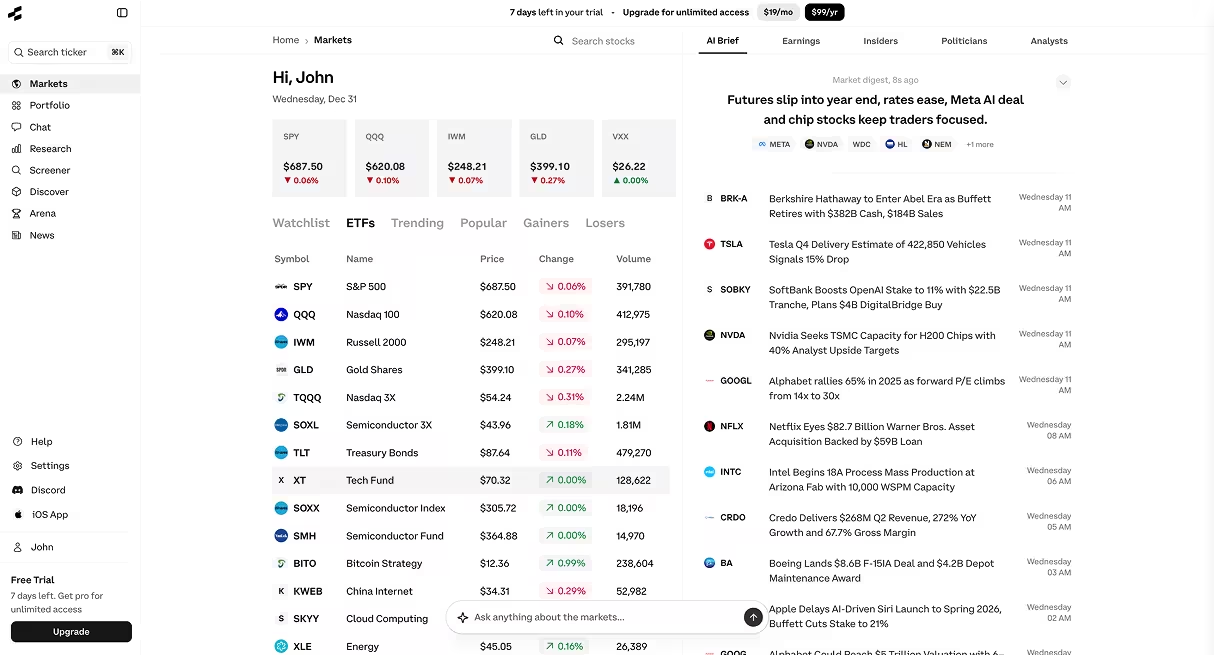
You can pull up the NEE stock page on Rallies.ai to see how these time frames look in practice and explore the data yourself.
What catalysts have driven the biggest moves in NEE performance?
Not all price moves are created equal. Some reflect genuine shifts in the company's value, and others are just market-wide noise washing over every stock. For NextEra Energy, several recurring catalysts have driven outsized moves.
Renewable energy policy
NextEra Energy's growth engine, NextEra Energy Resources, is the world's largest generator of wind and solar power. Any policy change that affects renewable energy subsidies, tax credits, or permitting has a direct impact on the company's growth trajectory. When major clean energy legislation has passed or looked likely, the stock has tended to rally. When policy support appeared at risk, the stock pulled back.
Interest rate cycles
This is the single biggest external factor for NEE performance. Utility stocks in general trade as bond proxies to some extent. Investors buy them for stable dividends and predictable cash flows. When interest rates rise, those cash flows get discounted at a higher rate, and competing fixed-income investments become more attractive. NextEra has historically experienced its sharpest drawdowns during periods of aggressive rate increases.
Bond proxy: A stock that investors treat similarly to a bond because of its stable dividend and low earnings volatility. Utilities like NEE often trade as bond proxies, which means their valuations are sensitive to interest rate changes.
Regulated utility earnings
Florida Power & Light, NextEra's regulated subsidiary, provides a floor of predictable earnings. Rate case decisions in Florida, storm recovery costs, and customer growth all affect this segment. While less dramatic than the renewables story, this is the foundation that supports the dividend and gives the stock its defensive characteristics.
Capital allocation and growth spending
NextEra has been one of the most aggressive capital spenders in the utility sector, pouring billions into renewable energy projects. When management raises growth spending guidance, it typically signals confidence in returns. When the market worries about the cost of that growth (especially in higher-rate environments), the stock can sell off.
When has NextEra Energy experienced its biggest drawdowns?
Drawdowns are where the real lessons hide. It's easy to celebrate a stock's long-term gains, but understanding when and why it fell teaches you about the risks you're actually taking.
NextEra Energy's most significant pullbacks have generally shared a common thread: rising interest rates combined with concerns about valuation. The stock has historically traded at a premium to the utility sector because of its growth profile. That premium shrinks fast when rates climb and investors rotate out of rate-sensitive names.
Broad market selloffs have also hit NEE, though it has tended to hold up better than the overall market during economic downturns thanks to its regulated earnings base. The worst drawdowns have come when utility-specific headwinds (rates, regulation) coincided with broader market weakness.
One framework for thinking about this: map NextEra's drawdowns against the Federal Reserve's rate-hiking cycles. You'll likely notice a pattern. That doesn't mean the stock always falls when rates rise, but the correlation is strong enough to pay attention to.
How to analyze a NEE price chart for yourself
If you want to go beyond surface-level returns, here's a process for digging into NextEra Energy stock price history on your own.
- Start with total return, not just price. NEE pays a dividend that has grown consistently. Price-only charts understate actual investor returns.
- Overlay interest rate data. Plot the 10-year Treasury yield alongside NEE's price. The inverse relationship during certain periods will jump out.
- Identify policy inflection points. Major energy legislation, tax credit extensions, and regulatory changes are often visible as sharp moves on the chart.
- Compare against the utility sector. Is NEE outperforming or underperforming its peers? That tells you whether a move is company-specific or sector-wide.
- Look at drawdown recovery times. How long did it take NEE to recover from its worst pullbacks? Recovery speed tells you something about the durability of the business.
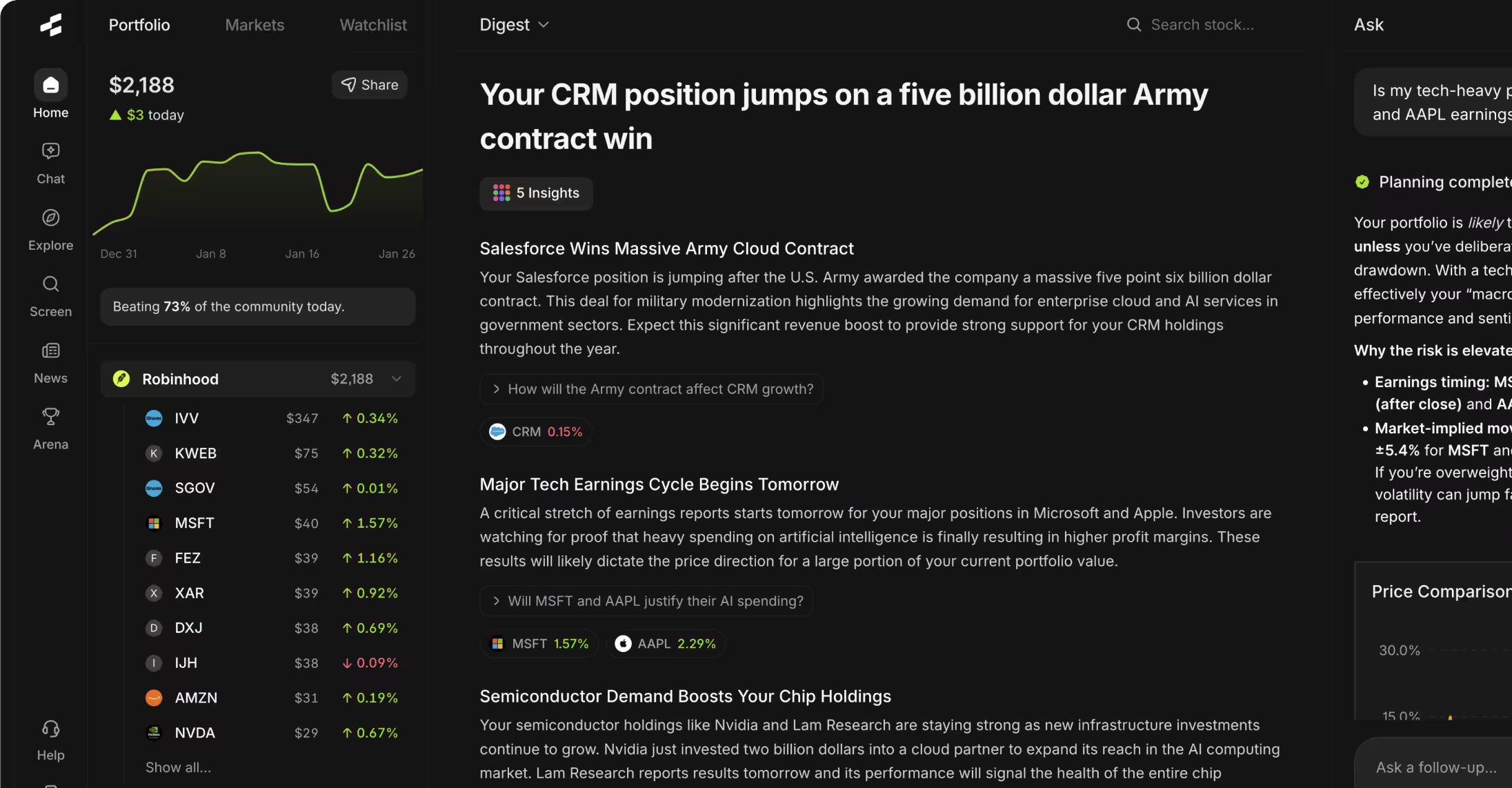
The Rallies AI Research Assistant can help you run through this kind of analysis quickly. Instead of pulling data from multiple sources, you can ask targeted questions and get structured answers.
What does NextEra Energy's business model tell you about future performance?
Past performance is useful, but it's more useful when you understand the business underneath the stock. NextEra operates two main segments, and each one drives returns differently.
Florida Power & Light (FPL) is the regulated utility. It earns a guaranteed return on its capital investments, approved by Florida regulators. This segment grows slowly but predictably, driven by Florida's population growth and infrastructure spending. It's the ballast in the portfolio.
NextEra Energy Resources (NEER) is the competitive energy business. It develops, constructs, and operates wind, solar, and battery storage projects. This is where the growth comes from, and it's also where most of the volatility originates. The economics of new projects depend on tax credits, power purchase agreement pricing, and the cost of capital.
When you're studying NextEra Energy returns, keep in mind that the mix of these two businesses is what makes NEE different from a pure regulated utility. You're getting defensive earnings plus growth optionality. That combination commands a premium valuation in favorable environments and creates sharper drawdowns when the growth side faces headwinds.
For more on how to analyze individual stocks, check out our stock analysis resources.
Try it yourself
Want to run this kind of analysis on your own? Copy any of these prompts and paste them into the Rallies AI Research Assistant:
- Walk me through NextEra Energy's stock performance over the past 1, 5, and 10 years — what were the major catalysts that drove returns, and when did it experience its biggest drawdowns?
- How has NextEra Energy's stock performed over 1, 5, and 10 years? What drove the biggest moves?
- Compare NextEra Energy's drawdowns to the broader utility sector during rising interest rate periods. What stands out?
Frequently asked questions
What has NEE performance looked like over the past decade?
Over a 10-year period, NextEra Energy has generally delivered strong total returns driven by dividend growth and capital appreciation from its renewable energy expansion. However, returns have not been linear. The stock experienced significant drawdowns during periods of rising interest rates, which temporarily offset gains from business growth.
What drives NextEra Energy returns the most?
The two biggest drivers are interest rate movements and renewable energy policy. Rate changes affect how the market values NextEra's dividend stream, while policy shifts (tax credits, clean energy mandates) directly impact the growth outlook for NextEra Energy Resources. Regulated utility earnings from FPL provide a steady baseline but generate less volatility.
How do you read a NEE price chart effectively?
Start by looking at total return rather than price alone, since NEE's dividend is a meaningful component of returns. Then overlay macro factors like Treasury yields and policy milestones to understand what drove specific moves. Comparing NEE's chart against a utility sector index helps you separate company-specific drivers from sector-wide trends.
Why does NextEra Energy stock drop when interest rates rise?
NextEra pays a sizable dividend and has relatively predictable cash flows, which makes it behave somewhat like a bond. When interest rates rise, bond yields become more competitive with NEE's dividend yield, and the present value of future cash flows decreases. This dynamic tends to compress utility valuations broadly, and NextEra's premium valuation can make the effect more pronounced.
Is NextEra Energy stock price history useful for predicting future returns?
Historical performance provides context but does not predict future results. What it does tell you is how the stock has reacted to specific types of catalysts (rate changes, policy shifts, earnings growth), which can help you build a framework for thinking about risk and return going forward. Past drawdowns and recovery patterns are especially useful for understanding what kind of volatility to expect.
How does NextEra compare to other utility stocks?
NextEra has historically traded at a premium to the utility sector because of its large-scale renewables business, which gives it a faster growth profile than most peers. That premium means it can outperform during periods of clean energy enthusiasm and underperform when the market favors cheaper, purely regulated utilities. You can use the Rallies stock screener to compare utility valuations side by side.
Bottom line
NextEra Energy stock price history reflects the tension between a growing renewables business and the interest rate sensitivity that comes with being a large-cap utility. The major catalysts across 1, 5, and 10-year periods have been rate cycles, clean energy policy changes, and the company's aggressive capital spending on wind and solar. Drawdowns have been sharpest when multiple headwinds hit at once.
The most useful way to study NEE performance is to map specific catalysts onto the price timeline rather than just looking at endpoint returns. If you want to dig deeper into stock analysis frameworks or run your own research on NextEra, Rallies.ai gives you the tools to do it efficiently.
Disclaimer: This article is for educational and informational purposes only. It does not constitute investment advice, financial advice, trading advice, or any other type of advice. Rallies.ai does not recommend that any security, portfolio of securities, transaction, or investment strategy is suitable for any specific person. All investments involve risk, including the possible loss of principal. Past performance does not guarantee future results. Before making any investment decision, consult with a qualified financial advisor and conduct your own research.
Written by Gav Blaxberg, CEO of WOLF Financial and Co-Founder of Rallies.ai.