


AT&T is one of the largest telecommunications companies in the world, but understanding how AT&T makes money requires looking well beyond monthly phone bills. The company operates across several distinct segments, each contributing differently to overall revenue and profitability. For investors evaluating AT&T's stock, breaking down these revenue streams and identifying which parts of the business are expanding or contracting is a practical first step in assessing the company's long-term trajectory.
Key takeaways
- AT&T's business model centers on three main areas: Mobility (wireless), Consumer Wireline (fiber and legacy broadband), and Business Wireline (enterprise connectivity services).
- Wireless postpaid subscribers are the single biggest driver of AT&T's revenue and tend to generate the most predictable cash flow.
- Fiber broadband is the company's fastest-growing segment by subscriber additions, while legacy wireline services continue to decline.
- AT&T's revenue mix has shifted substantially after divesting its media assets, making it a more focused telecom company than it was a few years ago.
- Evaluating AT&T's revenue streams side by side helps investors distinguish between stable cash generators and shrinking legacy businesses.
How does AT&T make money? A segment-by-segment breakdown
AT&T's revenue streams fall into a few major buckets. The simplest way to think about the AT&T business model is as a company that sells connectivity, whether that's wireless service to your phone, fiber internet to your home, or dedicated network infrastructure to businesses. Each of these segments has different growth characteristics, margins, and competitive dynamics.
Here's how those segments typically stack up in terms of contribution to total revenue:
- Mobility (Wireless): By far the largest segment. This includes postpaid phone plans, prepaid service, equipment sales (phone financing), and wholesale wireless revenue.
- Consumer Wireline: Fiber broadband, legacy DSL, and U-verse internet/TV services sold to households.
- Business Wireline: Dedicated internet, Ethernet, VPN, managed security, and legacy voice services sold to enterprise and government customers.
- Latin America: Wireless operations in Mexico, which represent a smaller portion of total revenue.
Postpaid subscriber: A customer on a monthly billing plan (as opposed to prepaid). Postpaid subscribers are considered more valuable because they tend to have lower churn, higher average revenue per user, and more predictable payment patterns.
Why wireless is the engine of AT&T's revenue streams
Mobility accounts for the majority of AT&T's total revenue. Within this segment, postpaid phone subscribers are the most important metric investors track. These are customers locked into monthly plans, and they generate steady, recurring revenue that forms the backbone of AT&T's cash flow.
There are a few sub-components worth understanding:
- Service revenue: The monthly fees customers pay for wireless plans. This is the high-margin, recurring portion of mobility revenue and the number analysts focus on most.
- Equipment revenue: Revenue from selling or financing phones. This carries much lower margins because AT&T often subsidizes devices to attract or retain subscribers. It inflates the top line but doesn't contribute much to profitability.
- Prepaid revenue: Service sold through brands like Cricket Wireless. Prepaid customers tend to generate lower average revenue per user than postpaid, but the segment still contributes meaningfully.
Here's the thing about wireless: the U.S. market is mature. AT&T, Verizon, and T-Mobile collectively serve the vast majority of American wireless customers. Growth in this segment comes less from adding brand-new subscribers and more from reducing churn, upselling higher-tier plans, and adding connected devices like smartwatches and tablets to existing accounts. If you're researching how T makes money, wireless service revenue is the single most important line item.
Is AT&T's fiber business actually growing?
Yes, and it's one of the more interesting parts of the AT&T story right now. The Consumer Wireline segment includes both fiber broadband and older copper-based DSL and U-verse services. These two sub-segments are moving in opposite directions.
Fiber broadband has been AT&T's main growth investment on the wireline side. The company has been aggressively expanding its fiber footprint, passing millions of new locations and converting them into paying subscribers. Fiber subscribers tend to have lower churn than DSL customers and generate higher average revenue per user, so each new fiber customer improves the overall quality of the wireline revenue base.
Meanwhile, legacy DSL and U-verse subscribers continue to decline. These older technologies can't compete with fiber or cable on speed, and AT&T has largely stopped investing in them. The result is a wireline segment where the top-line number can look flat or even declining, but the underlying mix is actually improving as higher-value fiber subscribers replace lower-value legacy ones.
Fiber passings: The number of locations where AT&T's fiber network is physically available for connection. A "passing" doesn't mean a customer has signed up; it means they could. The conversion rate from passings to actual subscribers is a metric investors watch to gauge demand and execution.
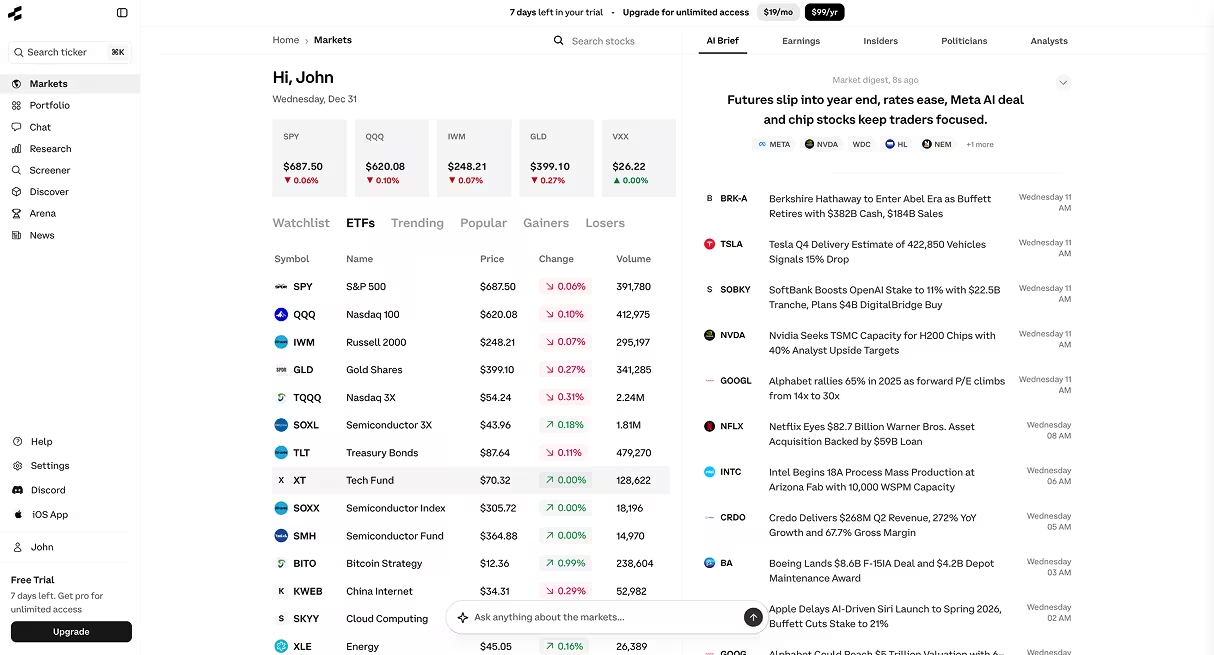
If you want to dig into AT&T's fiber subscriber trends and how they compare to the legacy wireline decline, you can pull up the AT&T stock page on Rallies.ai to see financial data and run your own analysis.
What about AT&T's business wireline segment?
This is the part of the AT&T business model that often gets overlooked, but it matters. Business Wireline provides connectivity and managed services to enterprise customers, government agencies, and wholesale clients. Think dedicated fiber connections, VPN services, cloud networking, and cybersecurity.
The challenge here is structural decline. Many of these legacy enterprise services, particularly traditional voice and older data products, are shrinking as businesses migrate to cloud-based and software-defined networking solutions. AT&T still generates substantial revenue from this segment, but the trend line has been negative for years.
Some portions of business wireline are growing, particularly newer offerings around managed security and fiber-based enterprise connectivity. But they haven't been growing fast enough to offset the decline in legacy products. For investors, this segment is best understood as a cash contributor that's slowly eroding rather than a growth driver.
How AT&T's business model changed after divesting media
Any discussion of AT&T revenue streams is incomplete without acknowledging the company's dramatic pivot away from media. AT&T previously owned WarnerMedia, which included HBO, Warner Bros. studios, CNN, and other media properties. The idea was to bundle content with connectivity and compete with companies like Disney and Netflix.
That strategy didn't work out as planned. AT&T spun off WarnerMedia and merged it with Discovery to form Warner Bros. Discovery. The result is that AT&T today is a much more focused telecommunications company than it was during its media experiment.
Why does this matter for understanding how AT&T makes money? Because the revenue mix is now almost entirely connectivity-based. There's no entertainment segment inflating the top line or complicating profitability analysis. What you see now is a cleaner picture: wireless, fiber, and enterprise networking. That focus makes the business easier to evaluate, though it also means AT&T's growth story depends heavily on execution within telecom rather than diversification into adjacent industries.
Which parts of AT&T's business are growing vs. shrinking?
Let's be direct about the growth picture across AT&T's segments:
- Growing: Wireless service revenue (driven by postpaid subscriber additions and higher average revenue per user), fiber broadband subscribers, and select enterprise connectivity products.
- Stable: Prepaid wireless, which tends to fluctuate with competitive intensity in the value segment.
- Shrinking: Legacy wireline (DSL, U-verse), traditional business wireline services (voice, older data products), and equipment revenue margins as device subsidies compress profitability.
The overall trajectory for AT&T depends on whether the growing pieces can outpace the declining ones. Historically, telecom companies in AT&T's position have been able to manage this transition, but the pace matters. If fiber subscriber growth accelerates and wireless service revenue holds steady, the declining legacy segments become less relevant over time.
For a broader look at how telecom companies compare on these metrics, you can use the Rallies.ai stock screener to filter by sector and financial characteristics.
How to evaluate AT&T's revenue quality
Not all revenue is created equal. When analyzing AT&T's business model, pay attention to the quality of each revenue stream, not just its size.
What makes a revenue stream high quality?
Recurring revenue from subscriptions (wireless plans, fiber broadband) is generally more valuable than one-time or transactional revenue (equipment sales). Here are a few dimensions to consider:
- Recurring vs. transactional: Monthly service fees are more predictable than equipment revenue, which fluctuates with device upgrade cycles.
- Margin profile: Wireless service revenue tends to carry higher margins than equipment sales. Fiber broadband margins improve as the subscriber base scales over a fixed network investment.
- Churn rate: Lower churn means more durable revenue. Fiber customers tend to churn less than DSL customers. Postpaid wireless churns less than prepaid.
- Growth trajectory: A segment generating less revenue but growing steadily may be more valuable than a larger segment in decline.
ARPU (Average Revenue Per User): Total service revenue from a customer segment divided by the number of subscribers. Rising ARPU suggests a company is extracting more value from its existing base, either through price increases or upselling premium plans.
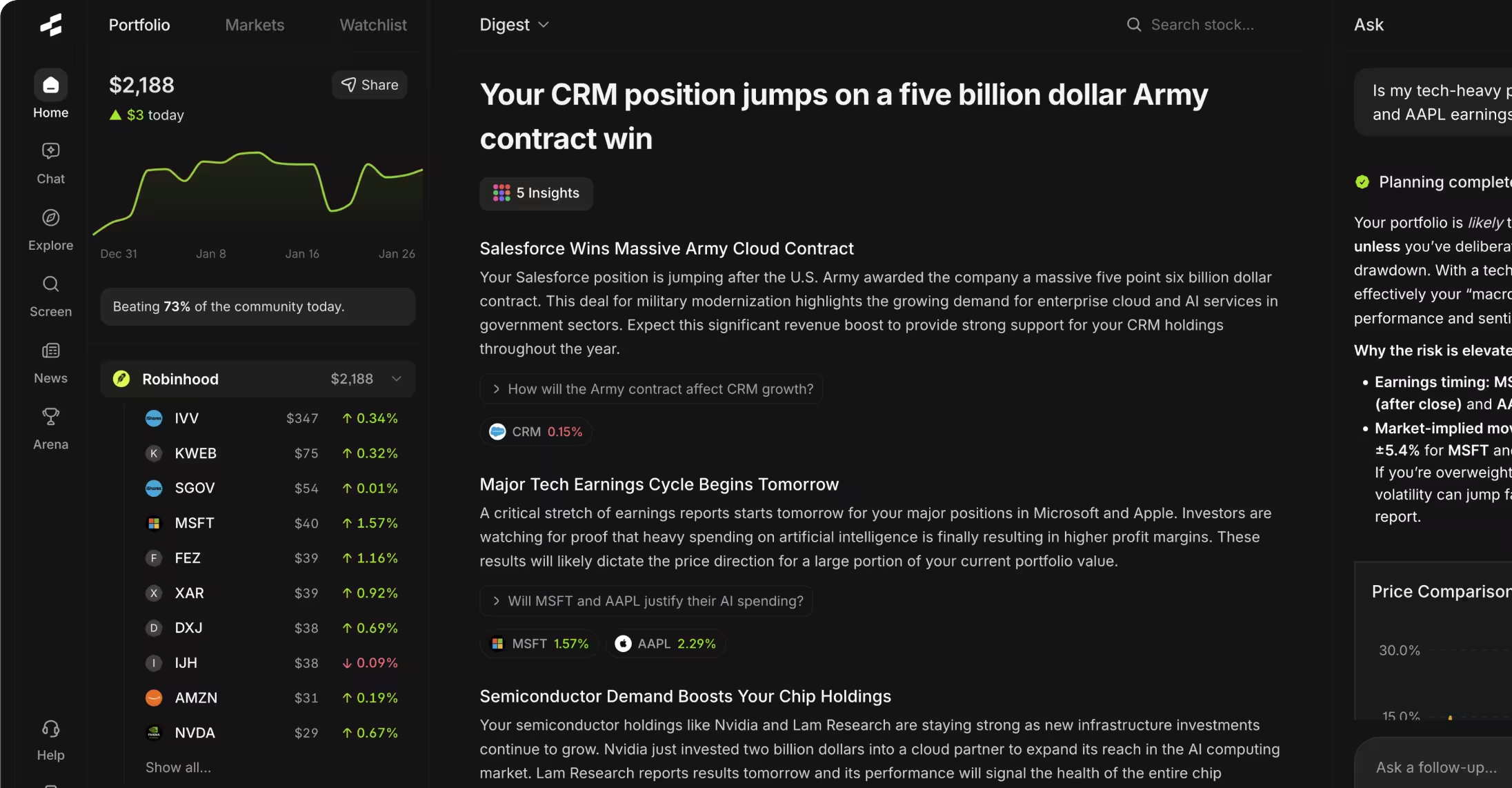
When you're researching how T makes money, looking at these quality indicators alongside raw revenue numbers gives a more complete picture. You can explore financial metrics and ask follow-up questions using the Rallies AI Research Assistant.
Try it yourself
Want to run this kind of analysis on your own? Copy any of these prompts and paste them into the Rallies AI Research Assistant:
- Break down how AT&T makes money — what are their main revenue streams beyond wireless, and which parts of the business are growing vs. shrinking?
- Break down how AT&T makes money — what are their biggest revenue streams and what's growing fastest?
- Compare AT&T's revenue mix and margin profile to Verizon's — which company has a stronger growth trajectory in fiber and wireless?
Frequently asked questions
What is AT&T's biggest revenue stream?
Wireless service revenue from the Mobility segment is AT&T's largest revenue stream by a wide margin. This includes monthly plan fees from postpaid and prepaid subscribers. Equipment revenue from phone sales and financing also falls within Mobility but carries much lower margins.
How does the AT&T business model differ from Verizon's?
Both companies generate the bulk of their revenue from wireless services. The main differences lie in their wireline strategies and past diversification attempts. AT&T has invested heavily in fiber broadband expansion and previously ventured into media ownership before divesting those assets. Verizon has focused more on its Fios fiber product and wireless network quality. Comparing their segment-level financials side by side can reveal meaningful differences in growth and margin profiles.
Is AT&T still a media company?
No. AT&T divested its WarnerMedia assets, which included HBO, Warner Bros., and CNN. The company is now a pure-play telecommunications provider focused on wireless, fiber broadband, and enterprise connectivity services.
What are AT&T's main revenue streams beyond wireless?
Beyond wireless, AT&T generates revenue from Consumer Wireline (primarily fiber broadband and legacy DSL), Business Wireline (enterprise connectivity, managed security, and legacy voice services), and its Latin America wireless operations in Mexico. Fiber broadband is the most notable growth area outside of wireless.
How does AT&T make money from fiber?
AT&T invests in building fiber-optic network infrastructure that passes residential locations. When homeowners or renters in those areas subscribe to AT&T Fiber internet service, they pay a monthly fee. The economics improve over time as more subscribers connect to an already-built network, which increases revenue over a relatively fixed cost base.
Is AT&T's legacy wireline business a problem for investors?
The decline in legacy wireline services (DSL, U-verse, traditional enterprise voice) has been ongoing for years and is widely expected to continue. The question for investors is whether growth in fiber and wireless can more than offset this decline. Tracking the pace of fiber subscriber additions relative to legacy subscriber losses is one way to monitor this dynamic.
What metrics matter most when evaluating AT&T revenue streams?
Wireless service revenue growth, postpaid net subscriber additions, postpaid churn rate, fiber net subscriber additions, ARPU trends, and free cash flow are among the most commonly tracked metrics. These indicators help investors assess both the top line and the sustainability of AT&T's dividend and debt reduction plans.
Bottom line
Understanding how AT&T makes money comes down to separating the growing pieces from the shrinking ones. Wireless service revenue and fiber broadband are the two engines driving the business forward, while legacy wireline services continue to fade. The company's decision to exit media and refocus on connectivity simplified the story, but execution on fiber expansion and wireless retention will determine whether the growth segments can carry the weight.
If you want to go deeper on telecom business models and revenue analysis, explore more stock analysis guides or run your own breakdown using the Rallies AI Research Assistant.
Disclaimer: This article is for educational and informational purposes only. It does not constitute investment advice, financial advice, trading advice, or any other type of advice. Rallies.ai does not recommend that any security, portfolio of securities, transaction, or investment strategy is suitable for any specific person. All investments involve risk, including the possible loss of principal. Past performance does not guarantee future results. Before making any investment decision, consult with a qualified financial advisor and conduct your own research.
Written by Gav Blaxberg, CEO of WOLF Financial and Co-Founder of Rallies.ai.